
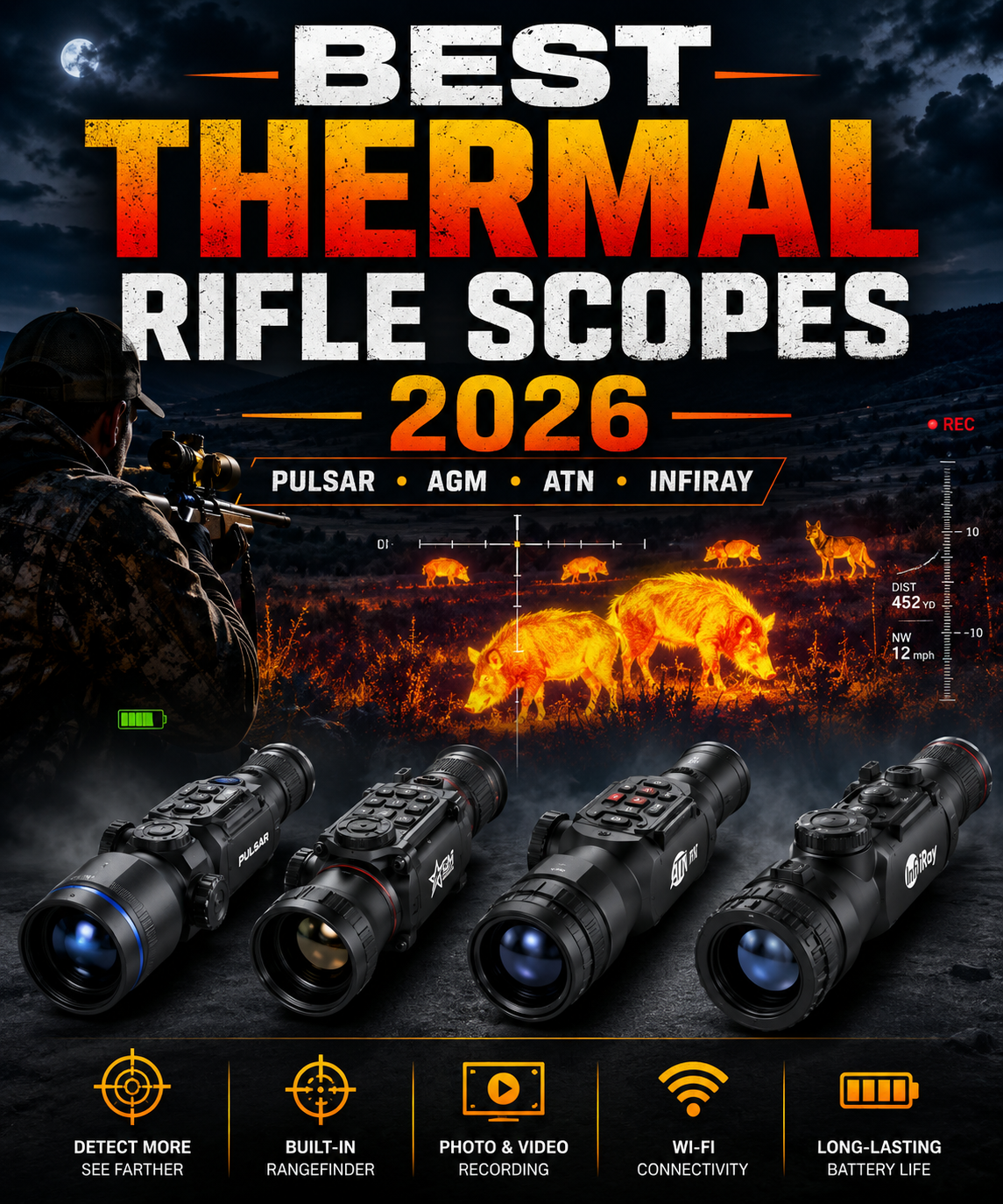
For hunters, predator callers, hog hunters, and land managers, a thermal rifle scope is no longer a luxury—it is one of the most effective tools available for locating and identifying game in complete darkness, fog, brush, and challenging weather conditions. Today's best thermal scopes combine high-resolution sensors, laser rangefinders, onboard video recording, ballistic calculators, and wireless connectivity into a single optic.
The most important features when shopping for a thermal imaging weapon scope are sensor resolution, NETD sensitivity, detection range, magnification range, laser rangefinder capability, and battery life. While dozens of thermal optics exist, four manufacturers consistently dominate the premium market: Pulsar, AGM, ATN, and InfiRay.
Best Thermal Rifle Scopes Available Today
Best Overall
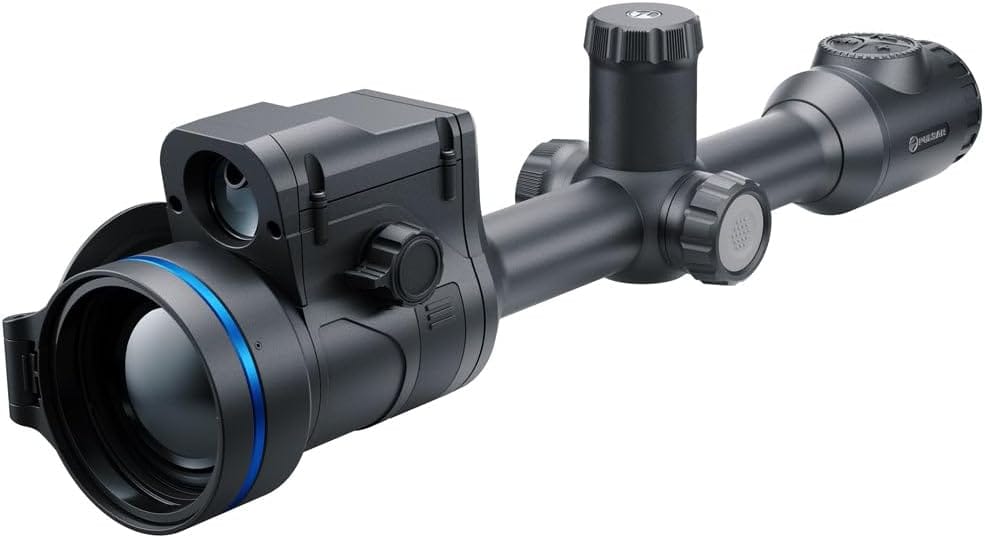
Pulsar Thermion 2 LRF XG60 Thermal Imaging Scope
The Thermion 2 LRF XG60 is widely considered one of the most advanced hunting thermals currently available. Pulsar designed this optic to resemble a traditional rifle scope while packing cutting-edge thermal technology inside.
Key Features:
- 4x to 24x magnification
- Integrated laser rangefinder
- Large 60mm germanium objective lens
- Exceptional image detail at long distances
- High display resolution on a quality AMOLED screen
- Video and photo recording
- Wi-Fi connectivity through the Pulsar Stream Vision app
Why it stands out:
The Thermion 2 excels at long-range predator and hog hunting. A 50 Hz-class refresh rate helps maintain a smoother image during scanning and moving shots. Its image quality remains impressive even when digitally zoomed, and the built-in rangefinder provides accurate distance measurements without requiring separate equipment.
Best Value Thermal Scope
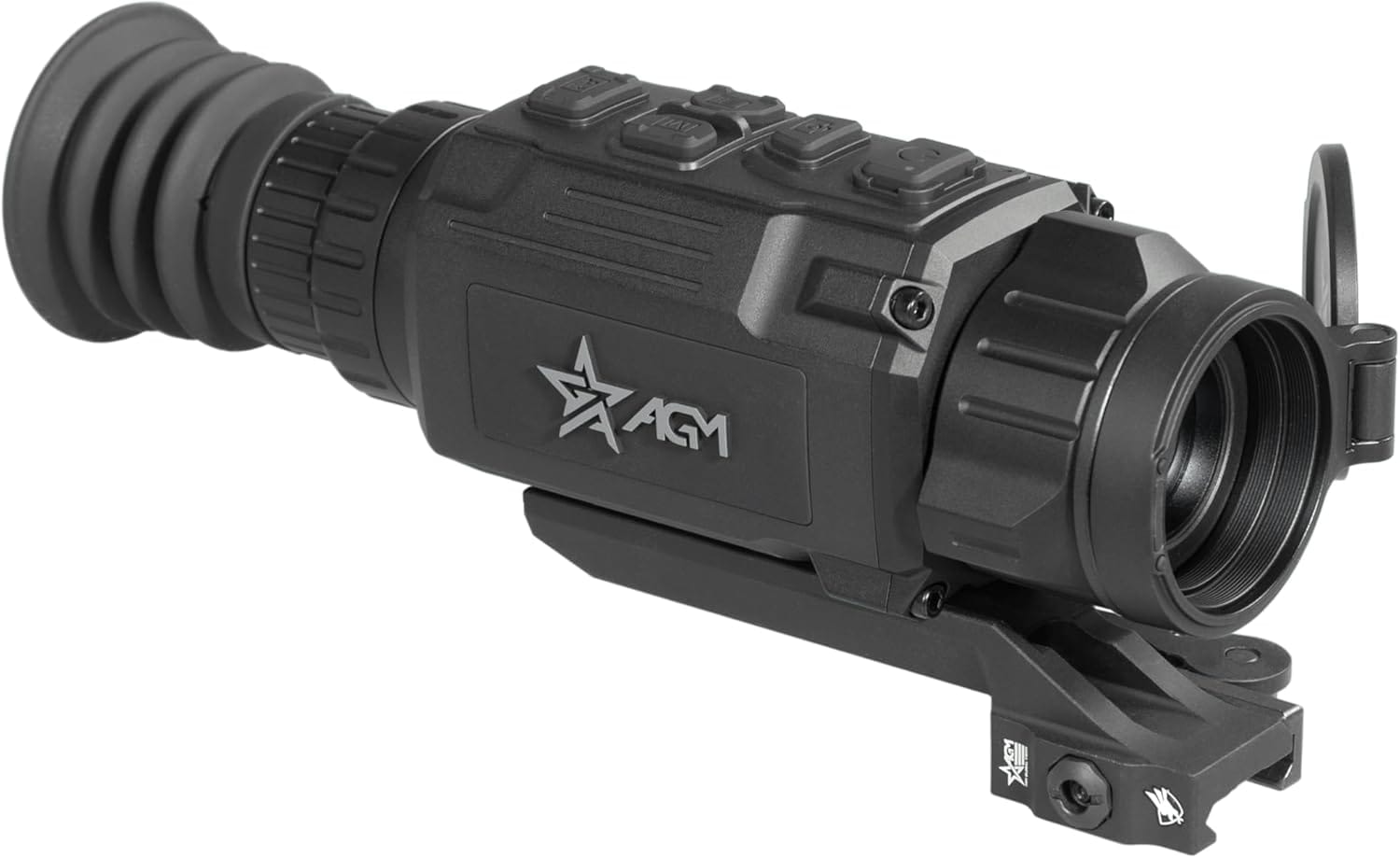
AGM Rattler V3 LRF 50-640 Thermal Imaging Riflescope
AGM has become one of the fastest-growing thermal manufacturers by delivering premium features at more affordable prices.
Key Features:
- 640×512 thermal sensor
- Integrated laser rangefinder
- 3.5x base magnification
- Sub-15mK NETD sensitivity
- Rechargeable battery system
- Compact hunting-friendly design
Why it stands out:
The Rattler V3 series delivers image quality previously reserved for optics costing thousands more. It also suits mobile hunters who want a compact form for easier carry and handling in the field. The combination of a 640 sensor, low NETD rating, and laser rangefinder makes it one of the strongest values in thermal hunting today. Thermal scopes are often grouped by intended use, and this model fits the compact-mobility family rather than a long-range precision platform.
Best Traditional Scope Design
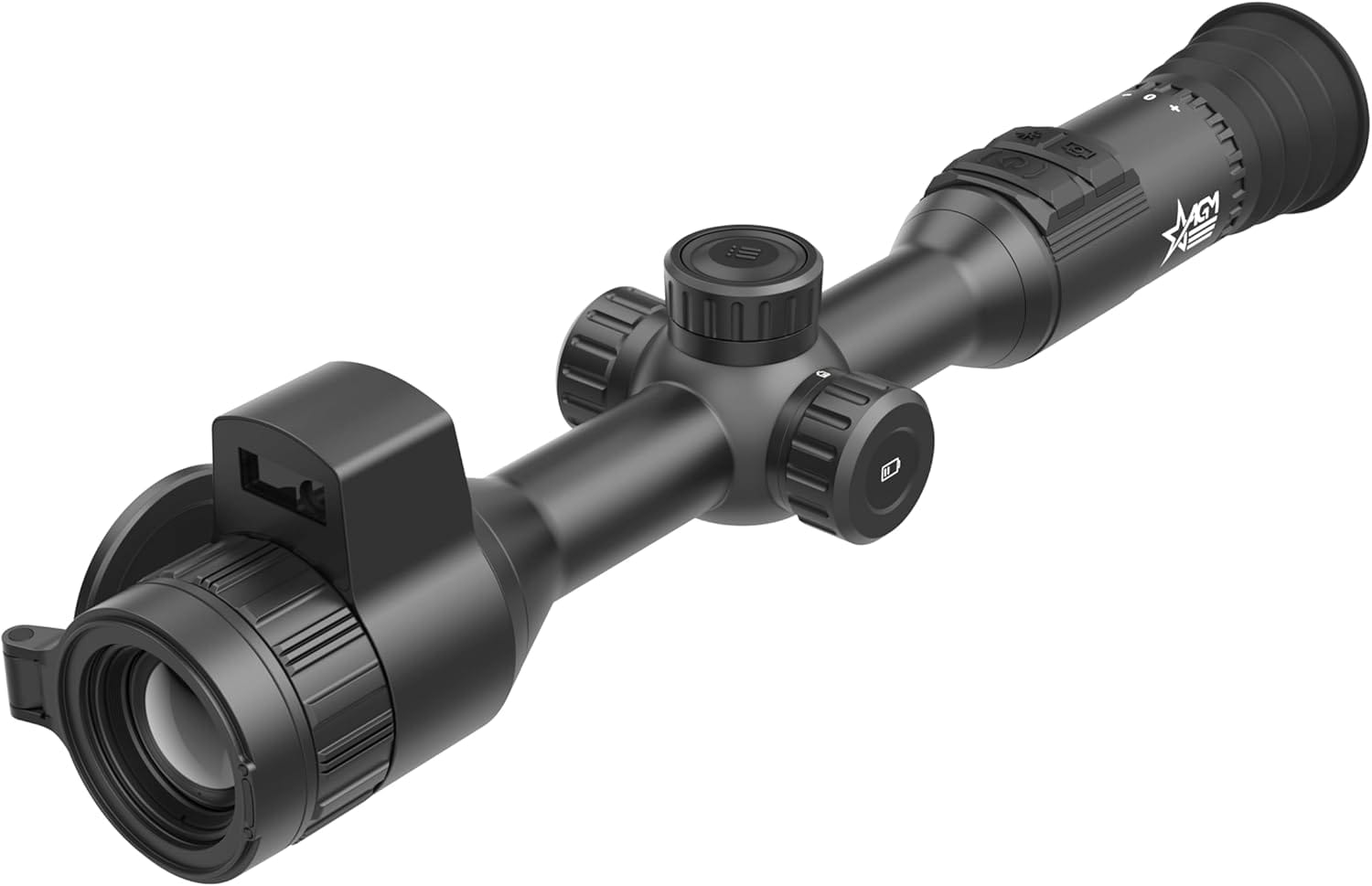
AGM Adder V2 35-384 Thermal Imaging Riflescope
The Adder V2 series was designed for shooters who prefer the feel and mounting characteristics of a conventional riflescope.
Key Features:
- Traditional 30mm-style tube profile
- Enhanced thermal sensitivity
- Ballistic calculator
- Long battery life
- Multiple reticle options
- Video recording capability
Why it stands out:
Many hunters transitioning from daytime optics appreciate the Adder’s familiar design. That familiar layout also supports intuitive controls for users moving over from daytime scopes. It balances performance, ergonomics, and affordability exceptionally well.
Best Smart Thermal Scope
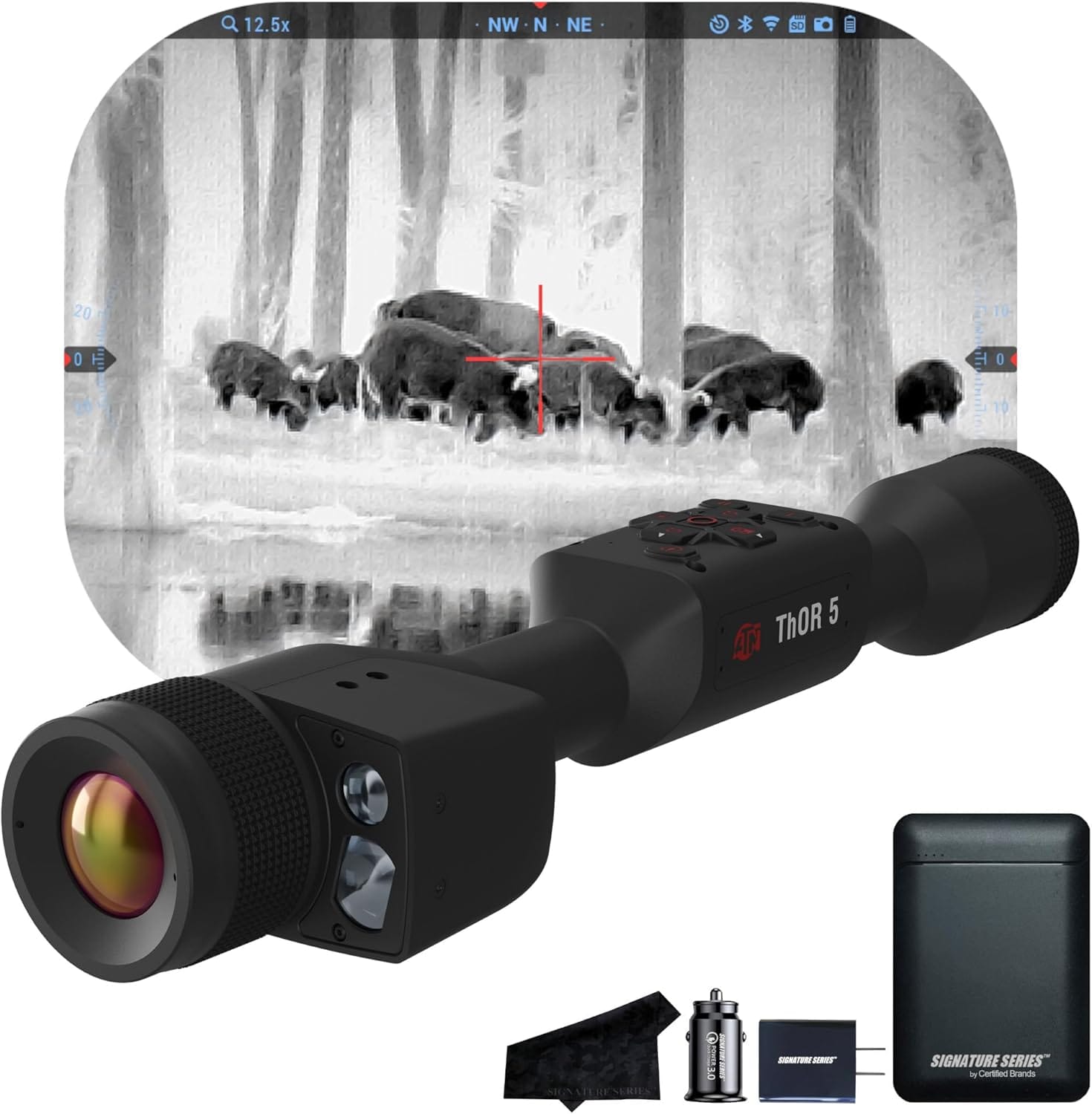
ATN ThOR 5 LRF Thermal Scope
ATN pioneered the “smart scope” concept and continues to lead in advanced digital features.
Key Features:
- Integrated ballistic calculator
- Smart Mil-Dot reticle system
- Recoil-activated video recording
- Wi-Fi streaming
- Laser rangefinder models available
- HD video and image capture
Why it stands out:
Hunters who enjoy technology will appreciate the extensive feature set. The interface is designed for intuitive operation when adjusting settings in the dark. Once distance data is entered, the ballistic tools can improve shot placement. The ThOR 5 combines thermal imaging with smart shooting assistance, making it especially attractive for long-range hunters.
Best High-Resolution ATN
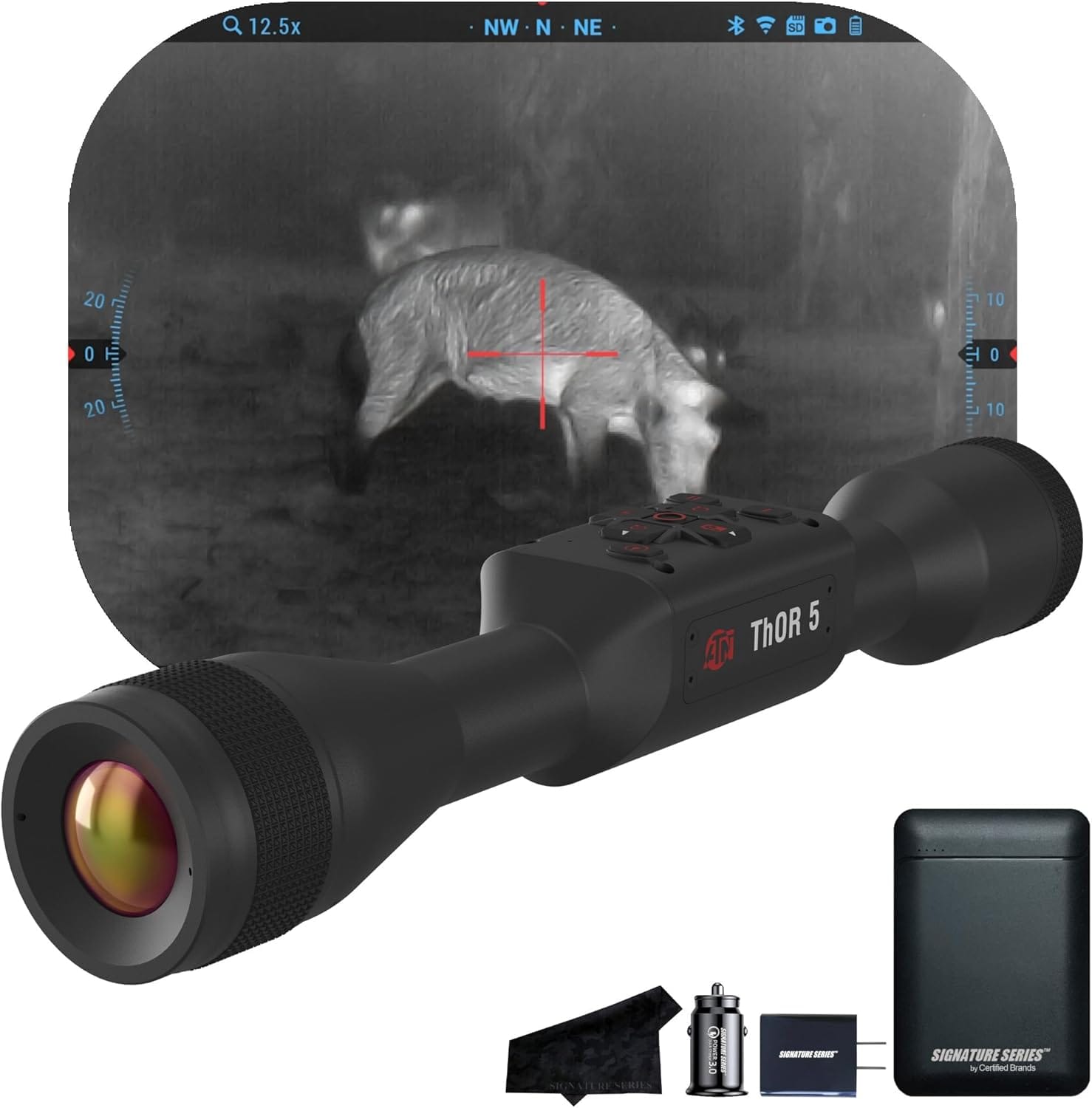
ATN Thor 5 640 Thermal Scope
The 640-series ThOR 5 models offer substantially improved image detail compared to 320-resolution units.
Key Features:
- 640×480 sensor
- 60Hz refresh rate
- Multiple magnification options
- Smart rangefinding features
- Video recording
- Long battery runtime
Why it stands out:
For hunters pursuing coyotes, hogs, and other predators at extended ranges, the additional resolution provides noticeably better target identification and greater detail. A 640×480-class sensor is a common benchmark for hunters who want better image clarity and target identification at distance.
Best Premium Thermal Platform
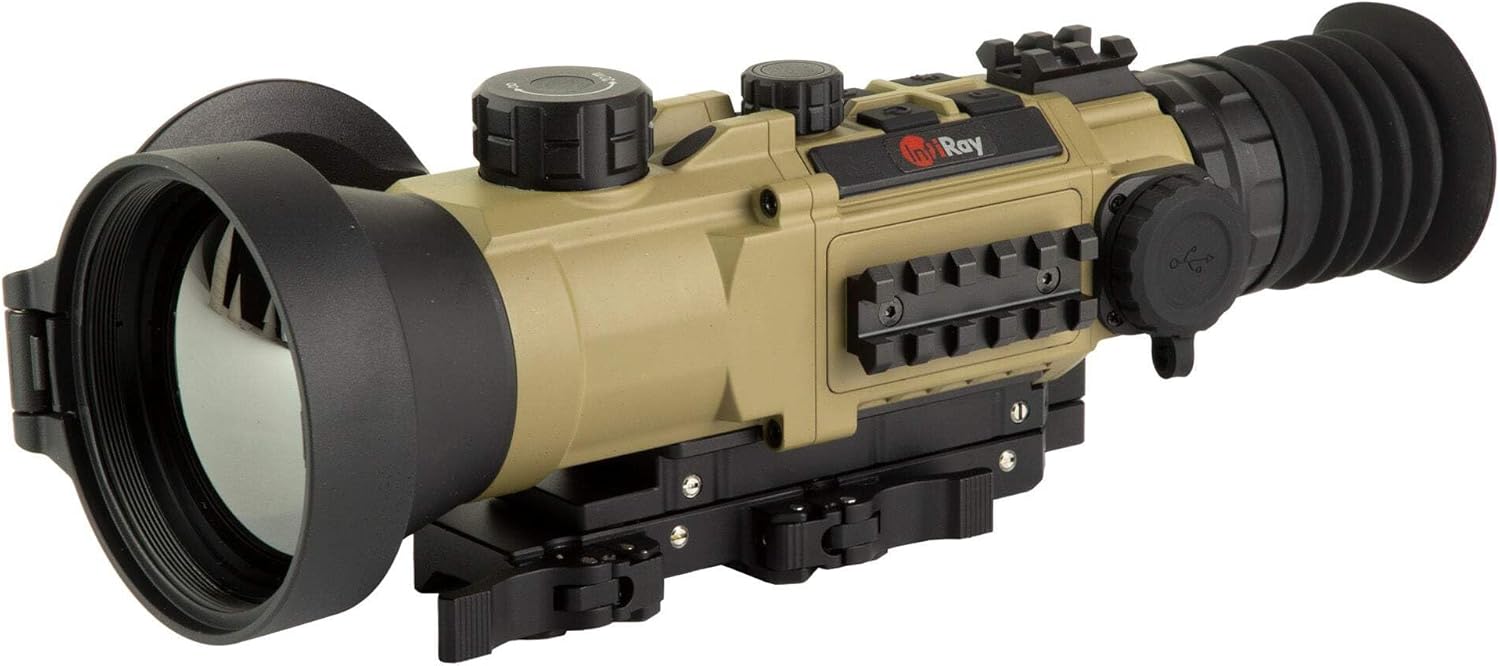
Although specific configurations vary, InfiRay’s RICO and Hybrid lines have earned an excellent reputation among serious night hunters as dedicated thermal scopes for their image-processing and detection capabilities.
Key Features:
- Industry-leading thermal sensitivity
- Advanced image enhancement
- High-end 640-resolution sensors
- Long detection ranges
- Premium OLED displays
- Professional-grade construction with strong recoil resistance
Why it stands out:
InfiRay scopes are frequently chosen by hunters who prioritize image clarity above all else. Their thermal processing often produces exceptionally crisp images in difficult environmental conditions. The platform is built for zero retention under hard field use.
Thermal Scope Comparison Table
Feature | Pulsar Thermion 2 LRF XG60 | AGM Rattler V3 LRF 50-640 | AGM Adder V2 35-384 | ATN ThOR 5 | InfiRay RICO Hybrid |
|---|---|---|---|---|---|
Best For | Premium hunting | Best value | Traditional feel | Smart features | Maximum image quality |
Thermal Sensor | High-resolution XG | 640×512 | 384×288 | 320–640 options | 640-class premium |
Laser Rangefinder | Yes | Yes | Available on select models | Available | Available |
Video Recording | Yes | Yes | Yes | Yes | Yes |
Ballistic Calculator | Limited | Limited | Yes | Yes | Available |
Wi-Fi/App Support | Yes | Yes | Yes | Yes | Yes |
Price Range | Premium | Mid-High | Mid-Range | Mid-High | Premium |
Understanding Thermal Scope Specifications
Sensor Resolution
The thermal sensor acts as the camera inside the scope, using a specialized microbolometer to measure temperature differences and form the image.
- 256×192: Entry level
- 384×288: Good hunting performance
- 640×480 or 640×512: Premium image quality, with higher resolution sensors producing stronger thermal image quality
For serious predator hunting, many hunters consider 384 resolution the minimum and 640 resolution the sweet spot. Better sensor resolution improves target detail and overall thermal image quality, especially at extended ranges. Thermal scopes also offer multiple color palettes that optimize contrast as terrain and weather change.
NETD Rating
NETD measures thermal sensitivity.
- Under 35mK: Good
- Under 20mK: Excellent
- Under 15mK: Elite
Lower NETD numbers allow the scope to distinguish smaller temperature differences and provide cleaner images during humid or rainy conditions. Lower NETD also helps preserve reliable detection in low contrast environments. Thermal contrast can decrease when ambient heat increases in warm or humid conditions.
Laser Rangefinders
Integrated rangefinders have become one of the most useful thermal features because they help estimate distances more accurately at typical night-hunting ranges.
The maximum distance is the detection range, meaning how far a scope can spot a heat source, while identification happens at a shorter range, where the target's species and behavior can be recognized.
Both Pulsar and AGM offer excellent LRF-equipped models, while ATN combines LRF systems with ballistic calculators for automatic holdover assistance and better shot placement.
Frequently Asked Questions
How do thermal scopes differ from night-vision scopes?
Thermal scopes and night-vision scopes both allow you to see in the dark, but they work in completely different ways: thermal scopes detect thermal signatures, while night-vision scopes rely on ambient light. Night-vision optics amplify ambient light, while thermal scopes operate in complete darkness by detecting thermal differences. Thermal scopes also use germanium or chalcogenide lenses to gather infrared energy before the image is displayed. Choosing the right one depends on how and where you hunt.
Are thermal scopes legal for hunting?
Laws vary by state and species. Always check your local wildlife regulations before hunting with thermal optics. Legality can also depend on intended use, since thermal devices are used not only for hunting but also for search and rescue and predator control.
Is 384 resolution enough?
Yes. A quality 384 sensor can successfully identify and engage predators and hogs. In dense cover, a 384 sensor is often enough for close-range work, while a 640 sensor helps more at distance. However, 640 sensors offer noticeably improved detail at longer distances.
How far can a thermal scope detect an animal?
Premium scopes can detect heat signatures beyond 2,000 yards, although positive identification typically occurs at much shorter distances. For most hunting applications, around 1,000 yards is a solid benchmark, while some premium models can exceed 3,000 yards on deer-sized targets. Field of view matters too: 50-60 mm lenses improve reach and detail, while 35 mm lenses provide a wider view and are easier to manage in rough terrain.
Are thermal scopes better than night vision?
Thermal imaging scopes detect heat, allowing animals to be seen through darkness, light brush, fog, and camouflage, and they remain effective in poor visibility and low light because they do not rely on visible light. Digital screen quality and thermal scopes feature digital color palettes that optimize contrast based on surrounding terrain and weather, which affects how clearly the shooter sees heat differences. Night vision relies on available light and excels at showing environmental detail. Background conditions such as fog or low light can still reduce thermal contrast even when visible light is limited.
Which thermal scope brand is best?
With so many models, the best thermal scope depends on your budget and intended use.
Pulsar is a premium pick, AGM is a strong value option, ATN stands out for smart features, and InfiRay is known for high-end optical performance.
Thermal optics are also useful beyond hunting, including tracking residual body heat after a shot to aid recovery and identifying the thermal signatures of lost or stranded individuals in search-and-rescue operations.
Final Thoughts
The thermal market has evolved rapidly, and today’s hunters have access to capabilities that were once reserved for military and law enforcement users. The most capable thermal scope is the one that matches your target game and terrain, rather than simply the one with the highest price. If budget is not a concern, the Pulsar Thermion 2 LRF XG60 remains one of the most complete thermal riflescopes on the market. Hunters seeking the best performance per dollar should look closely at AGM’s Rattler V3 and Adder V2 platforms. Technology-focused shooters will appreciate ATN’s ThOR 5 lineup, while image-quality enthusiasts continue to gravitate toward InfiRay’s premium RICO series. Order today!
For most hunters a quality 640-resolution thermal scope with an integrated laser rangefinder provides the ideal combination of detection capability, target identification, and long-range precision for extended sessions, especially when strong power management supports dependable field use. Most hog hunters and other night hunters benefit from a capable thermal scope with reliable battery life and practical rangefinding rather than unnecessary extras. Order today!