
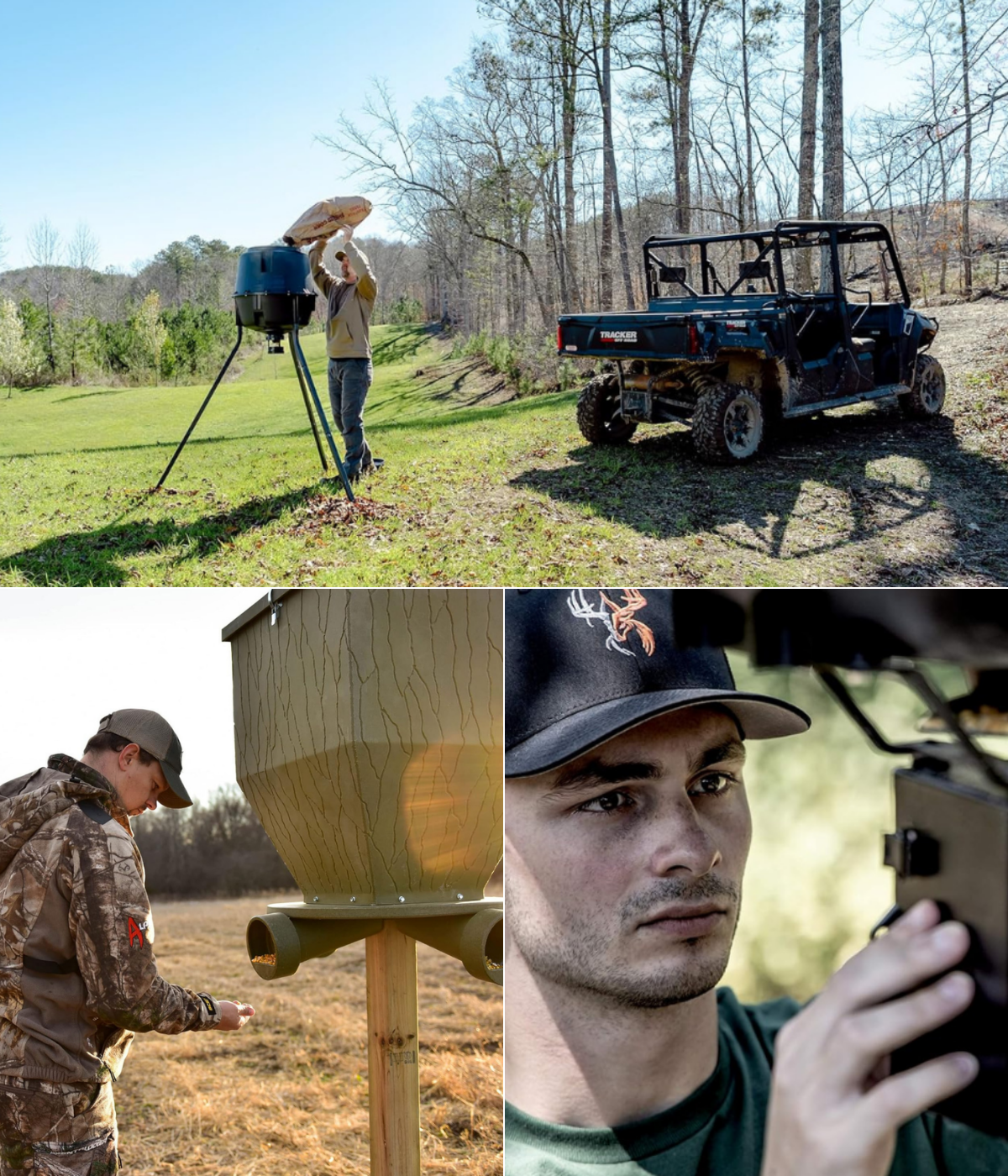
Deer feeders play a critical role in wildlife management, trail camera strategy, and ethical hunting practices. Whether you’re managing a private property, preparing for hunting season, or simply supporting healthy deer populations, choosing the right deer feeder can make a major difference in attraction consistency and feed efficiency.
Deer feeders are designed to attract deer to specific areas, making it easier for hunters and wildlife enthusiasts to view and observe these animals. Many people love the experience of watching deer up close, whether for hunting or simply for the enjoyment of wildlife observation.
In this complete guide, we’ll break down the different deer feeder styles, types of feed dispersion, total feed volume, and programming features—helping you select the best feeder for your land, budget, and goals. Deer feeders can be used year-round for observing wildlife or hunting purposes.
What Are Deer Feeders and Why Are They Used?
Deer feeders are devices designed to distribute supplemental feed at controlled times and locations. They are commonly used to:
- Pattern deer movement
- Support herd nutrition during harsh seasons
- Improve trail camera activity
- Reduce pressure on natural food sources
Supplemental feeding can lead to larger litter sizes and higher fawn survival rates. However, concentrating deer at feeders increases the risk of disease transmission, so sanitation measures are important.
Modern deer feeders are engineered for efficiency, durability, and precise control—making them far more effective than traditional ground feeding. Choosing reliable deer feeders is essential for consistent results and effective wildlife management.
Deer Feeder Styles Explained
Choosing the right style of deer feeder depends on terrain, herd size, and maintenance preferences.
Gravity Deer Feeders
Gravity feeders dispense feed continuously as deer eat.
Best for:
- Low-pressure areas
- Minimal maintenance
- Long-term feeding locations
Pros:
- No batteries or electronics
- Simple and reliable
- Cost-effective
Cons:
- No timed control
- Can lead to overfeeding or waste
Hanging Deer Feeders
Hanging feeders are suspended from trees or poles and use gravity or timed dispersion.
Best for:
- Smaller properties
- Preventing hog or raccoon access
- Quick setups
Pros:
- Keeps feed off the ground
- Reduces non-target animal access
- Easy installation
Cons:
- Limited feed capacity
- Requires sturdy mounting points
Tripod Deer Feeders
Tripod feeders elevate the feed container using three legs for stability.
Best for:
- Uneven terrain
- Mid-size to large deer populations
Pros:
- Improved feed visibility
- Reduces moisture exposure
- Stable in rough conditions
Cons:
- More expensive
- Heavier to transport
Free-Standing (Stand & Fill) Deer Feeders
These large, heavy-duty feeders are designed for high-capacity feeding.
Best for:
- Large properties
- Herd management programs
- Long intervals between refills
Pros:
- Massive feed volume
- Long battery life
- Highly programmable
Cons:
- Higher upfront cost
- Requires ATV or truck access
Types of Feed Dispersion Systems
Feed dispersion controls how far and how evenly feed is spread.
Spin-Cast (Broadcast) Dispersion
Spin-cast systems use a rotating plate to fling feed in a circular pattern.
Coverage: 10–30 feet
Best for: Corn and pellets
Advantages:
- Wide feeding area
- Encourages multiple deer to feed at once
Automatic deer feeders scatter corn kernels across the ground at specific times to draw deer out of hiding. Autonomous spin-cast feeders enhance control over feeding times and can optimize deer activity for hunting. With some systems, users can 'strike'—that is, activate or trigger the feeder remotely—to deliver feed at optimal times.
Directional Dispersion
Directional systems push feed in a specific direction.
Coverage: Focused zone
Best for: Trail camera placement and wind control
Advantages:
- Better camera angles
- Reduced feed waste
Gravity Flow Dispersion
Feed drops straight down as deer consume it.
Coverage: Very limited
Best for: Protein pellets and mineral feeds
Advantages:
- Minimal feed loss
- Simple mechanics
Total Feed Volume: Choosing the Right Capacity
Feed capacity determines how often you need to refill your feeder.
Small Capacity Feeders (50–100 lbs)
- Ideal for small properties
- Easy to transport
- Best for short-term feeding
Medium Capacity Feeders (200–350 lbs)
- Most popular option
- Balances size and convenience
- Supports moderate deer traffic
Large Capacity Feeders (500–1,000+ lbs)
- Designed for serious land management
- Fewer refills required
- Ideal for high deer density areas
Pro Tip: Larger feeders save time long-term, especially during peak season.
Programming Features: Smart Control for Better Results
Modern deer feeders offer programmable controls for precise feeding schedules.
Digital Timer Programming
Most timers allow:
- Multiple feed times per day
- Adjustable run duration (1–30 seconds)
- Seasonal schedule changes
Daylight-Only Feeding Modes
Prevents nighttime waste and encourages daylight movement.
Solar-Powered Feeders
Solar panels recharge batteries, reducing maintenance and downtime.
App-Controlled & Bluetooth Feeders
Advanced feeders allow:
- Smartphone scheduling
- Real-time monitoring
- Battery and feed level alerts
These features are especially useful for remote properties and are designed with the user's needs and peace of mind in mind, supporting quick, reliable decision-making.
Customer assistance is available if you need help with the setup and operation of app-controlled or Bluetooth feeders.
Key Factors to Consider Before Buying a Deer Feeder
- Property size and terrain
- Local wildlife regulations
- Deer population density
- Feed type (corn, pellets, protein)
- Ease of access for refilling
WILDGAME INNOVATIONS Quick-Set 225 lb Game Feeder with Digital Timer | Durable Tripod Corn/Pellet Hunting Feeder with 1-4 Available Feed Times & 30-feet Radius
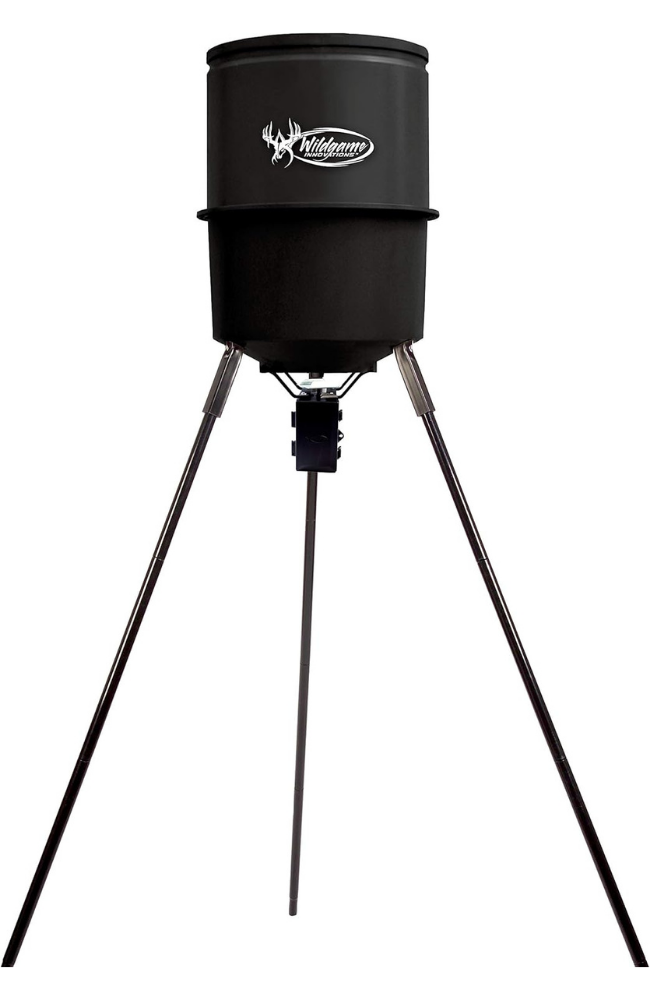
WILDGAME INNOVATIONS
Quick-Set 225 lb Game Feeder with Digital Timer | Durable Tripod Corn/Pellet Hunting Feeder with 1-4 Available Feed Times & 30-feet Radius
- HIGH PERFORMANCE - Attract and pattern deer and other game with the Wildgame Innovations Quick-Set feeder with timer; Durable and easy to use, this tripod pellet and corn feeder is equipped with a built-in funnel that ensures accurate feed dispersal
- LARGE CAPACITY - The Wildgame Innovations Quick-Set deer feeder offers a 225-pound capacity and a 30-foot feed radius. You can fill your hunting game feeder with plenty of corn or pellet feed without worrying about clogs or hang-ups
- DIGITAL TIMER - The programmable timer is customizable with up to 4 daily feed times of 5, 10, 15, or 20 seconds each, depending on your preference. This feature allows you to attract game animals to specific areas during optimal hunting times
- RELIABLE CONSTRUCTION - Designed for long-term use in hunting environments, the Quick-Set feeder is built tough with heavy-duty coated legs and a galvanized steel spinner plate. The dependable entry-level poly barrel feeder provides above-average results
- QUICK ASSEMBLY - The quick-assemble deer feeder requires minimal effort and takes only 15-20 minutes of your time before it is fully operational. This hunting equipment is light enough to easily move and test multiple feeding locations
Feeders help deer recover from stress and survive winter conditions when natural food is scarce.
Moultrie Deer Feeder Standard - 30-Gallon - Moultrie Quick-Lock Hopper System - Digital Timer Control - 200 lb. Feed Capacity
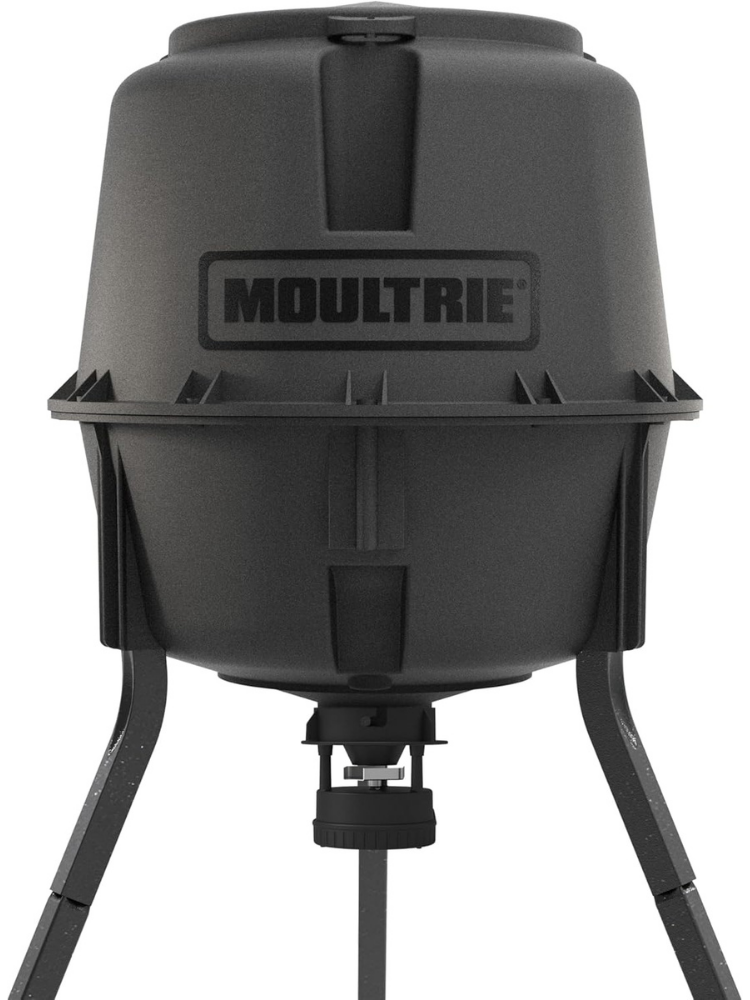
Moultrie
Deer Feeder Standard - 30-Gallon - Moultrie Quick-Lock Hopper System - Digital Timer Control - 200 lb. Feed Capacity
- REMOTE PROGRAMMING VIA MOULTRIE APP: Upgrade your game management with Bluetooth connectivity and the Moultrie mobile app. Set feed times, durations, and frequency from up to 300 feet away—no need to visit the feeder directly. Gain full control without disturbing your hunting area or leaving scent behind.
- DURABLE 200LB. UV-RESISTANT POLYMER HOPPER: Engineered for reliability, the 30-gallon tapered hopper holds up to 200 lbs of feed. Constructed from rugged, UV-resistant polymer for long-term use in sun, rain, and wildlife-heavy environments. Easy ground-level access for fast filling.
- FLEXIBLE POWER OPTIONS: Operates on 4 or 8 AA batteries (not included), giving you extended runtime and flexibility without complex wiring or solar dependencies.
- CUSTOMIZABLE DIGITAL TIMER FOR ACCURATE FEEDING: Schedule up to 4 feed events daily, each lasting 1–20 seconds. Precision digital timer ensures consistent food delivery to attract and retain deer and other wildlife, enhancing your hunting success over time.
- QUICK-LOCK SYSTEM WITH METAL SPIN PLATE: The Quick-Lock modular system allows easy assembly and part swaps without tools. A wind-resistant metal spin plate ensures feed reaches the ground efficiently, even in harsh conditions. Built for rugged outdoor performance.
Banks Outdoors Feedbank 300 lb. Capacity Deer and Wildlife Feeder
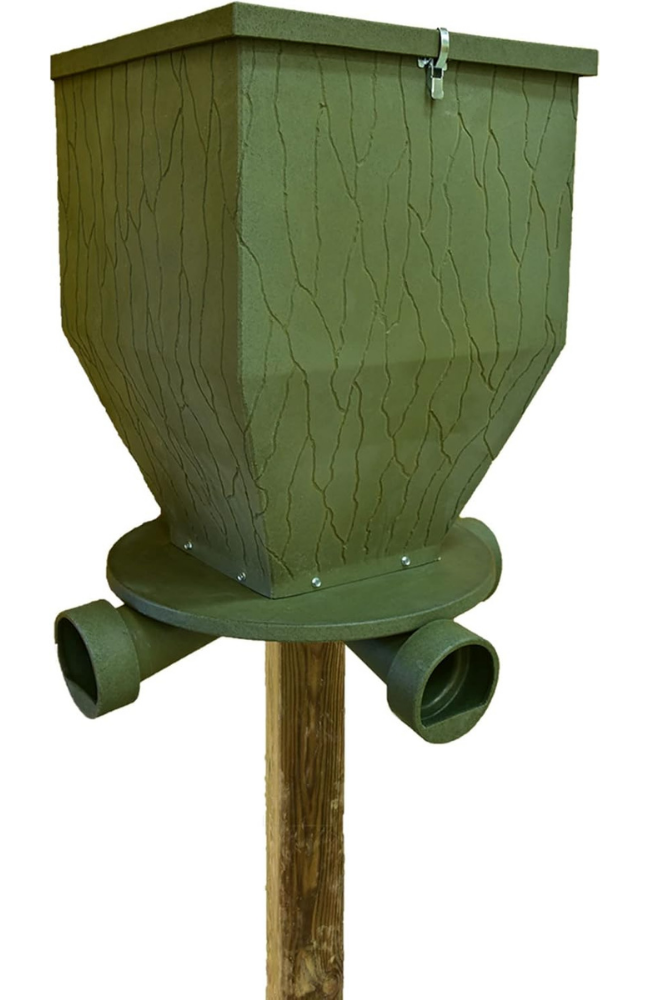
- Mounts on one 8-foot 4×4 (not included), set 3 feet into the ground.
- A single post won’t interfere with or damage antler growth.
- Adjustable feeding ports allow you to control the flow of feed.
- Large, watertight cover makes filling easy and keeps feed fresh.
- Feed ports stand at an optimal height of 42 inches.
FAQs
Are deer feeders legal everywhere?
No. Laws vary by state and region. Always check local hunting and wildlife regulations before installing a deer feeder.
How often should a deer feeder dispense feed?
Most land managers use 1–3 feedings per day, adjusting them based on deer activity and season.
What feed works best in deer feeders?
Whole corn is the most common, but protein pellets are better for herd health and antler growth.
Do deer feeders attract unwanted animals?
Yes. Raccoons, hogs, and birds may access feeders unless designs include guards or elevated platforms.
How long do deer feeder batteries last?
Battery life ranges from 3 months to over a year, depending on usage, motor size, and solar support.
Final Thoughts
Deer feeders are powerful tools for wildlife management when chosen and used correctly. By understanding feeder styles, dispersion systems, total feed volume, and programming options, you can create a feeding strategy that supports healthy deer populations while improving observation and hunting success. Deer feeders are available in a variety of types and capacities to suit different needs, from a simple gravity feeder to a fully programmable, high-capacity system. In addition to hunting, deer feeders can also be used for wildlife photography and general wildlife observation. As a final tip, avoid sudden large introductions of high-carbohydrate feed in winter to prevent digestive issues in deer. Investing in the right deer feeder saves time, reduces waste, and delivers consistent results season after season. Order today!