
A foldable drone changes everything about how you capture moments from the sky. Instead of lugging bulky equipment or skipping aerial shots entirely, you simply grab a compact aircraft from your backpack, unfold the arms, and fly. This guide walks you through what makes foldable designs different, which features actually matter, and how to pick the right model for your goals and budget in 2026. There are dozens of foldable drone models available, catering to a wide range of needs and budgets.
The foldable design not only makes drones easier to transport but also enables advanced software features such as subject tracking and 3-axis electronic image stabilization for smooth footage.
Foldable drones offer superior portability, convenience, and rapid deployment compared to traditional fixed-frame drones.
Quick Overview: What Makes a Foldable Drone Different?
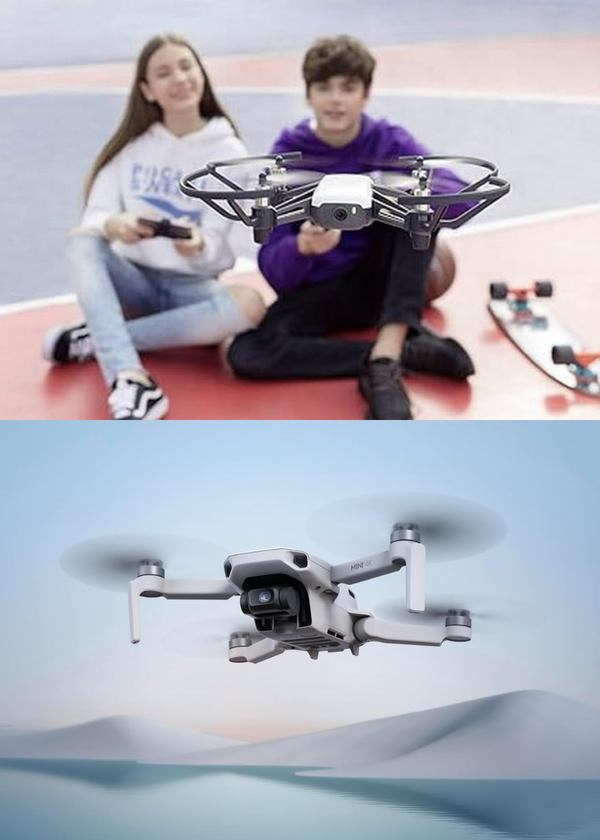
Foldable drones feature mechanical arms that collapse or rotate inward against the central body, dramatically reducing overall dimensions for storage and transport. Unlike fixed-arm predecessors such as the older DJI Phantom series—which measured around 500mm diagonally and required bulky protective cases—modern foldables shrink from flight-ready sizes of 200-400mm down to folded footprints of 100-200mm. This foldable design means your drone fits into a camera bag, shoulder sling, or even a jacket pocket.
Key advantages of foldable drones:
- Compact size for travel: Models like the DJI Mini 4K fold to just 148x94x56mm, making them easy to slip into carry-on luggage or a daypack. Compare this to older rigid frames requiring dedicated hard cases.
- Fast setup and deployment: Most pilots go from case to air in 20-60 seconds. Arms unfold symmetrically, click into position, and you simply press a button to launch.
- Protected gimbal transport: The folding mechanism typically shields the camera and gimbal during transit, reducing vibration damage by an estimated 40% compared to exposed setups.
- Airline compliance: Sub-249g foldables meet carry-on limits in most countries without special paperwork. Even heavier enterprise models under 1.5kg total fit overhead bins per 2026 IATA guidelines.
Concrete weight tiers to know:
- Sub-249g recreational drones: The DJI Mini 4K (249g) avoids FAA registration for casual use while delivering 4K/30fps video and 31 minutes of flight time.
- Mid-weight GPS camera drones (400-800g): Models like the DJI Air 3 (720g) offer 46-minute flights, 48MP sensors, and advanced tracking features.
- Enterprise foldables (thermal scans, crop surveys, and professional inspections)will.
This classification matters because consumer drones now serve everyone from first-time pilots capturing backyard fun to professionals conducting roof inspections. The foldable format makes all of this accessible without sacrificing core flight capabilities like GPS stability, remote control precision, or smooth video recording.
Main Use Cases: From Social Clips to Farm Surveys
By 2026, foldable drones will cover an impressive range of applications—from casual selfies to commercial thermal surveys. The technology has matured to the point where a single lightweight aircraft can serve as your travel companion, your real estate marketing tool, or your agricultural scout.
Travel vlogging and urban exploration: Content creators filming in cities like Tokyo or Barcelona rely on quick unfolds for spontaneous shots. The compact design means you can capture a 10-second establishing shot of the Gothic Quarter without hauling dedicated equipment. Sub-250g models fly legally in more locations with simplified rules. Foldable drone cameras are also highly suitable for online content creation, making them ideal for social media, streaming, and instant sharing of footage.
Hiking and outdoor adventures: U.S. national parks present unique challenges. Yosemite and Grand Canyon ban drones entirely per NPS rules updated in 2023, but permitted areas like Great Sand Dunes allow sub-250g foldables under visual line-of-sight conditions. Always check restrictions before your trip using official apps. Many foldable drones now feature advanced obstacle-avoidance technology, helping them detect and avoid obstacles like trees during flight and reducing the risk of collisions in outdoor environments.
Backyard family videos and city-park flying: Budget quadcopter options like the Vivitar SkyHornet (720p HD, 11-minute flight time, around $40-60) handle casual use for kids and beginners. Local ordinances vary—NYC parks require permits for drones over 250g, so know your rules. Many foldable drones can connect directly to a phone for control, content transfer, and settings adjustments, making them easy and versatile for family use.
Self-flying pocket cameras: A content creator can use a HoverAir X1-style drone (125g, 2.7K/30fps, 11-minute flight) to record TikTok or Instagram Reels during solo workouts. With palm takeoff and AI-powered follow-me tracking, there’s no controller needed—just grab the drone, launch from your hand, and let it capture the action. Some foldable drones also offer gesture selfie features, allowing users to take photos by performing specific gestures for hands-free operation. Voice control is another modern feature found in many models, enhancing ease of use—especially for beginners—by allowing simple spoken commands to control the drone.
Professional applications: Real estate agents deploy 4K models like the Potensic ATOM 2 (249g, 8K photo/4K video, 32-minute flight, around $280) for suburban home tours with ActiveTrack subject following. Agriculture professionals use thermal foldables like the Autel EVO II Dual 640T V3 for crop stress detection via NDVI mapping, scanning 100-acre fields in a single 20-30-minute flight. Roof and solar panel inspections favor 30+ minute endurance units with high-resolution cameras to identify defects at 0.5cm/pixel resolution.
Buyer profiles in 2026:
Profile | Budget | Typical Use | Example Features |
|---|---|---|---|
First-timers/Kids | Under $100 | Fun, learning | 720p, headless mode, one key takeoff |
Travelers/Hobbyists | Under $500 | Social content, travel | 4K, GPS, 20-30 min flight |
Advanced users | Over $500 | Pro video, inspections | 4K/60, obstacle avoidance, waypoints |
Core Features to Look For in a Foldable Drone
Feature sets vary dramatically from $20 toy drones to $800+ premium foldables. Some foldable drones offer zoom capabilities, allowing for closer inspection or creative framing during flight. Understanding what specs actually matter helps you avoid overpaying for marketing hype or underbuying for your needs.
Camera Resolution and Video Quality
Typical tiers start at 720p/1080p for entry-level toys, escalate to 2K for mid-range, and reach 4K and above for serious creators. The catch: many camera drones advertise 4K but differ greatly in sensor size and bitrate. A toy sensor at 1/4-inch yields noisy low-light images, while a 1-inch sensor on premium models captures cinematic dynamic range. The DJI Mini 4 Pro delivers 4K/60 HDR with a 1/1.3-inch CMOS sensor at a 150 Mbps bitrate—vastly superior to budget “4K” claims that interpolate from lower resolutions.
Stabilization Systems
Basic electronic image stabilization (EIS) in budget models crops the frame and uses gyro data, effective up to 10-15km/h winds. Mid-range drones ($100-300) often include 2-axis mechanical gimbals. Premium foldables like the DJI Mini 4K feature 3-axis gimbals for rock-steady 4K/30fps even in 10m/s gusts, with a tilt range of ±90° and a pan of ±60°. The difference in footage quality is immediately visible—mechanical gimbals eliminate the jello effect and micro-vibrations that ruin otherwise great shots.
Flight Time and Batteries
Advertised flight time of 40-60 minutes usually means 20-30 minutes in real-world conditions with moderate wind, accounting for the 15-20% battery reserve needed for auto return home. Combo kits like the DJI Mini 3 Fly More (3 batteries, bag, charger) deliver a total of 90 minutes of flying time. Li-ion cells at 2450mAh power compact models, while enterprise drones use LiPo for faster charging cycles.
Transmission Range and Live Feed
Budget Wi-Fi FPV drones offer 1-3km range with 200ms latency, often interfered with by 2.4GHz congestion. Premium systems like OcuSync 4 provide 10-20km video transmission with 1080p/60fps and latency under 120ms. However, FAA and EASA regulations mandate visual line of sight, limiting practical use to around 500m regardless of radio capability.
Safety and Navigation Features
A GPS foldable drone holds position within 0.5m accuracy and enables Return to Home at low battery (typically 20-30%). Optical flow positioning handles indoor or low-GPS environments using downward-facing cameras and ToF sensors. Many foldable drones feature advanced obstacle-avoidance technology to prevent collisions during flight. Omnidirectional obstacle sensing on higher-end models like the DJI Air 3S uses 6 fisheye cameras for 20m forward detection at speeds up to 15m/s. The DJI Mini 5 Pro features a 1-inch CMOS sensor and omnidirectional obstacle sensing for enhanced awareness in all directions. These features don’t replace pilot judgment but significantly reduce crash risk.
Folding Mechanism Quality
Premium hinges made of carbon fiber or aluminum achieve 10,000+ cycles without developing slop. Cheap plastic hinges can loosen after just 50-100 folds, risking asymmetric thrust and unstable hover. Test for firm arm lock with an audible click—if arms wobble even slightly, long-term stability suffers.
Types of Foldable Drones by Budget & Skill Level
Understanding where different foldable drones fall in the market helps you set realistic expectations and find the best value for your situation. DJI drones, particularly the Mavic series, are widely considered the premier foldable drones on the market due to their advanced features and user-friendly experience. Foldable drones offer superior portability, convenience, and rapid deployment compared to traditional fixed-frame drones, making them an excellent choice for users who value ease of transport and quick setup.
Under $100: Toy and Beginner Foldables
Entry-level quadcopters like the Revell Stunt Copter (720p, 10-minute flight, around $30) suit kids learning basic drone flying. These models rely on barometer altitude hold rather than GPS, offer headless mode for simplified control, and include fun features like 360° flip tricks and 3 speed modes. Don’t expect precise hover or a reliable auto-return—these are for indoor fun and backyard practice. The Holy Stone HS210 represents this tier well: 720p camera, suitable for beginners, and priced to make crashes less painful.
Holy Stone HS210T Drone, 2 IN 1 MINI Indoor Drone with Land & Fly Mode, Four Posture Deformations RC Quadcopter with 3D Flip, Auto Hovering
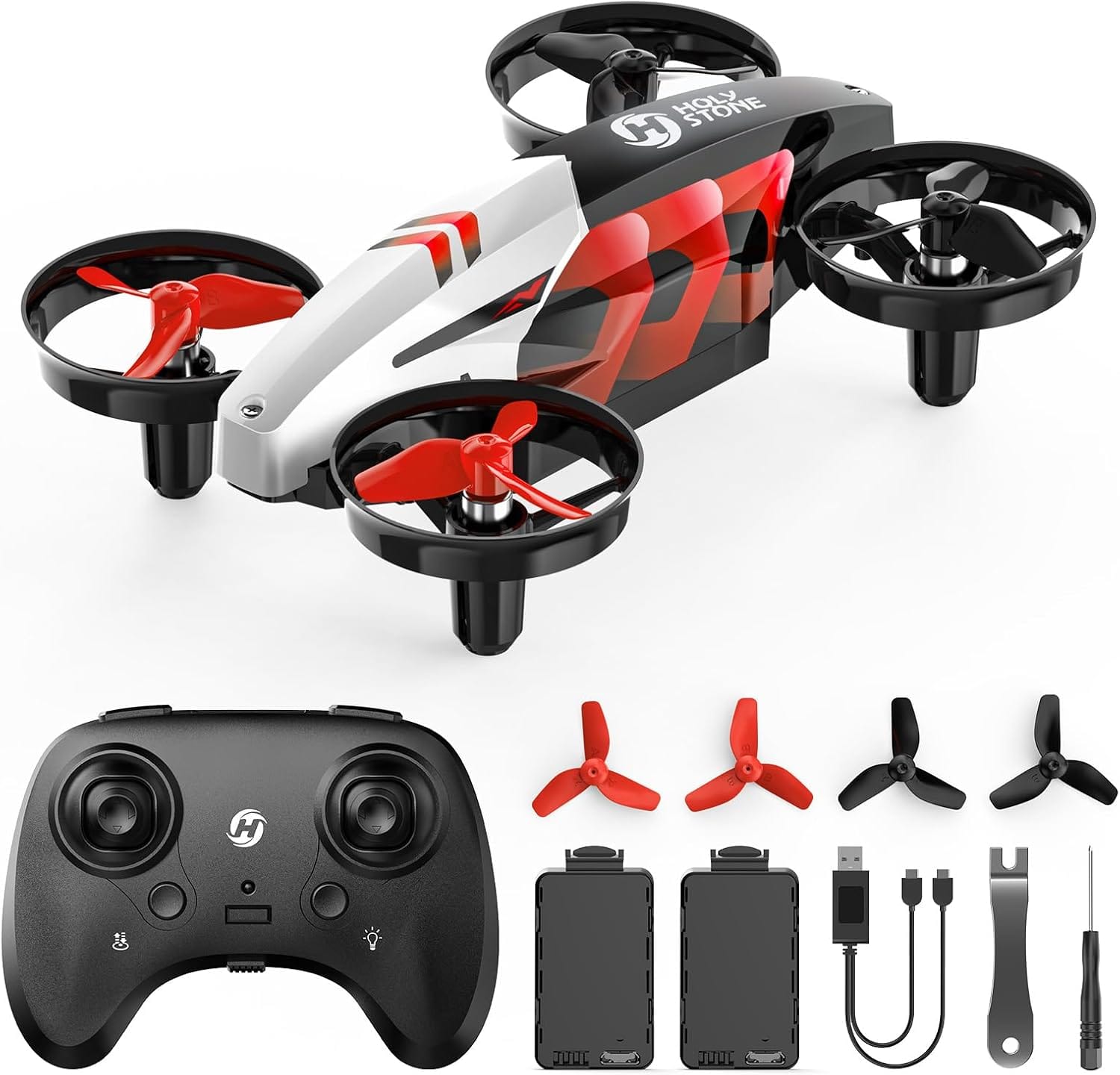
- Ground Race Mode: More than just a drone - this mini drone for kids also works as a remote control car! Experience the thrill of drifts and spins, and enjoy endless fun for kids and adults. Thanks to the 2.4 GHz remote control, multiple drones can compete against each other simultaneously or engage in exciting air battles.
- Sky Flying Mode: Discover stunning 3D somersaults, circular flights, and four different flight postures at the touch of a button. This small indoor drone makes impressive aerobatic flights easy - for joy and excitement, young and old alike.
- Easy and fun drone toy for children: with one-key takeoff/landing and altitude-hold, the Holy Stone HS210T can be launched and kept stable in the air. Three speed modes offer flying fun for beginners and advanced users alike.
- ENDLESS FUN GUARANTEED - The mini drone is powered by an advanced modular battery - safe, easy to charge, and with overcharge protection. Included are two rechargeable batteries, providing up to 16 minutes of flight time.
- Safety and durability: thanks to the robust propeller protectors made of durable ABS nylon, the drone is optimally protected for maximum safety during play. The emergency stop function also helps to keep control in any situation.
- All-sided safety for children: the improved overcharge-protected modular battery is safer and easier to install and charge. The 360° propeller protection ensures maximum safety when flying. HS210F weighs <249g, is C0 certified, and can fly in multiple places.
- IMPORTANT NOTE: If you use multiple drones at the same time, switch and pair each Holy Stone drone individually with its own remote control. So you avoid possible frequency interference when starting at the same time.
$100–$300: First Real Camera and GPS Drones
This tier introduces legitimate HD camera quality and basic GPS features. The Holy Stone HS720G (advertised as 4K with EIS, true 1080p output, GPS RTH, 26-minute flight time, and around $220) exemplifies what’s available. Many drones here market “8K” resolution through interpolation—ignore that hype and focus on actual sensor specs. Expect foldable arms, 20-30 minute flight times, and apps that work reasonably well.
Holy Stone HS720G GPS Drones with Camera for Adults 4K, 2-Axis Gimbal, 120°FOV, Brushless Motor, 5G WiFi Transmission, Optical Flow, Follow Me, Smart Return Home, Professional FPV Drone for Beginner
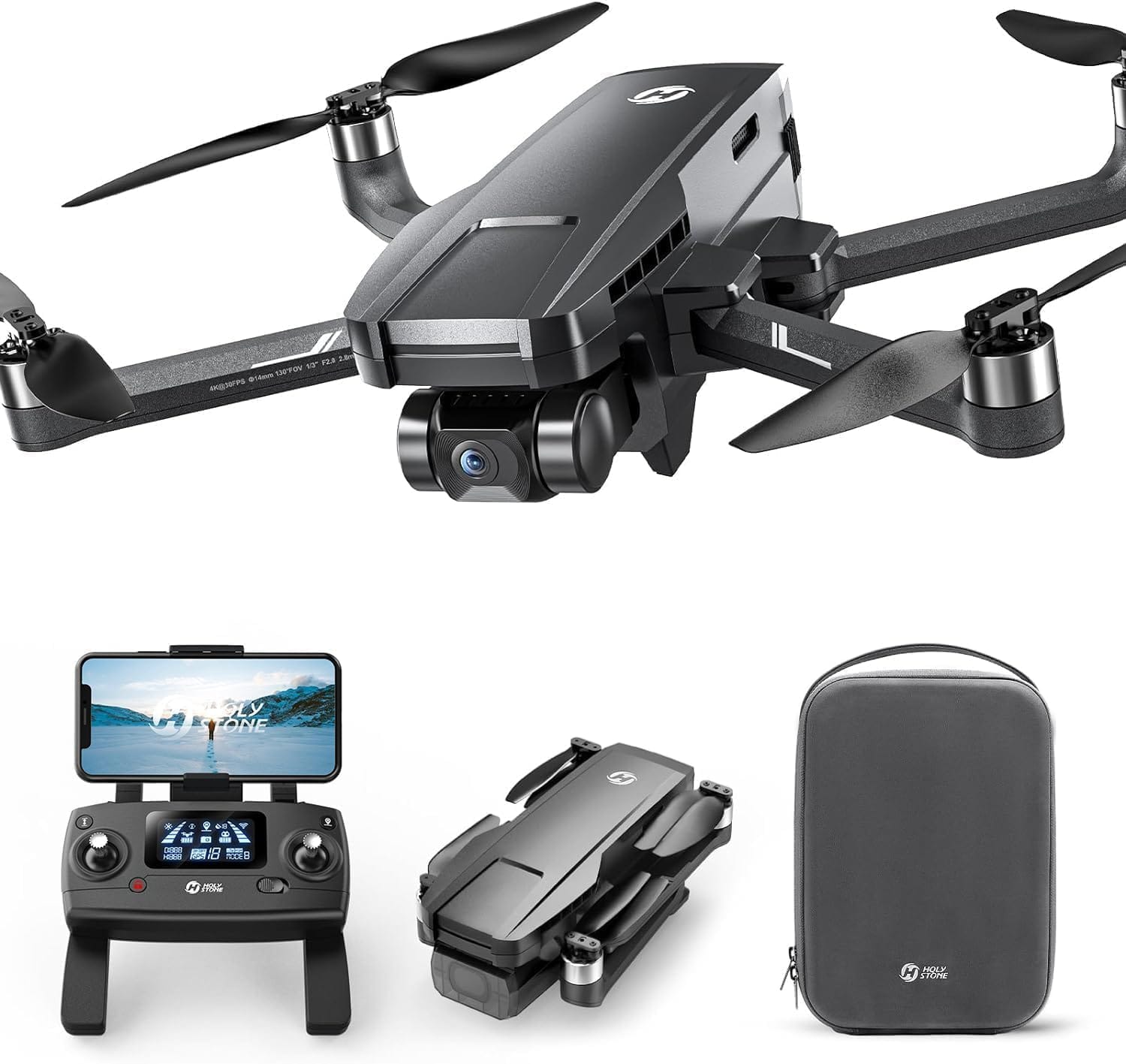
- 2-Axis Gimbal with 4K EIS Camera: With 2-axis motorized gimbal and 4K EIS (Electric Image Stabilization) Camera, HS720G FPV drone guarantees stunning and vivid footage in a bird's-eye view without missing any details. It’s your ticket to the sky.
- High-tech Outdoor Performance: The powerful brushless motors and a max battery life of 26 minutes ensure HS720G drones for adults stable flight and have enough time to compose the perfect pictures. The maximum range of the remote control is 999 meters.
- All-Round Functions: Follow Me, Tap Fly, and Point of Interest enable intelligent flights for the HS720G Wi-Fi FPV drone, freeing your hands. Your perfect memories will start right when you switch on the HS720G.
- User-Friendly: Multiple functions, such as Headless Mode, Automatic Take-off, Altitude Hold, and Optical Flow Positioning, are designed for novices. Being a drone pilot has never been this easy.
- Powerful GPS Module: The GPS module and Optical Flow Positioning make HS720G camera drones safer and more reliable, with extraordinary anti-interference capabilities, enabling you to fly farther and more stably. You can have a blast outdoors with your kids or friends without the disturbance and restrictions of distance.
- Great Travel Companion: The intuitive, advanced foldable design of the HS720G GPS drone and the carrying case ensure the pilot has complete freedom to go wherever he wants. At less than 380 grams, the weight of the HS720G is about as much as a can of Coke. HS720G can definitely be the ideal travel companion.
$300–$600: Travel and Prosumer Foldables
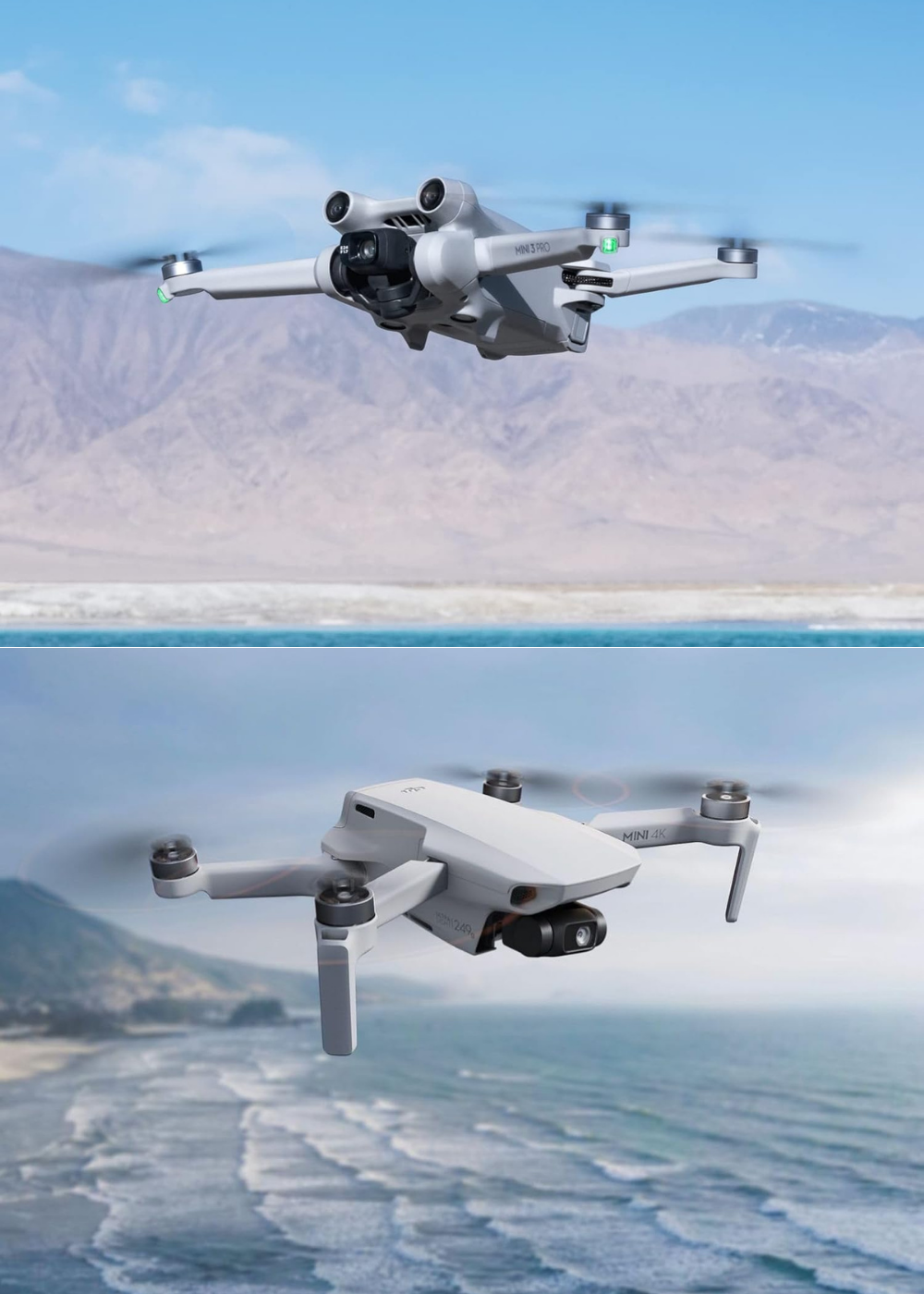
The sweet spot for serious hobbyists arrives here. The DJI Mini 4K ($299, 249g, 4K/30 3-axis gimbal, 31-minute flight, Level 5 wind resistance to 10.7m/s) sets the standard. The Mini 3 Pro (around $469 used in 2026, 4K/60, omnidirectional obstacle avoidance) adds professional-grade safety features. These drones, equipped with reliable apps, firmware updates, and robust ecosystems, justify the price premium over budget options.
DJI Mini 4K Camera Drone Combo, Drone with 4K UHD Camera for Adults, Under 249 g, 3-Axis Gimbal Stabilization, 10km Video Transmission, Auto Return, 2 Batteries for 62-Min Max Flight Time, QuickShots
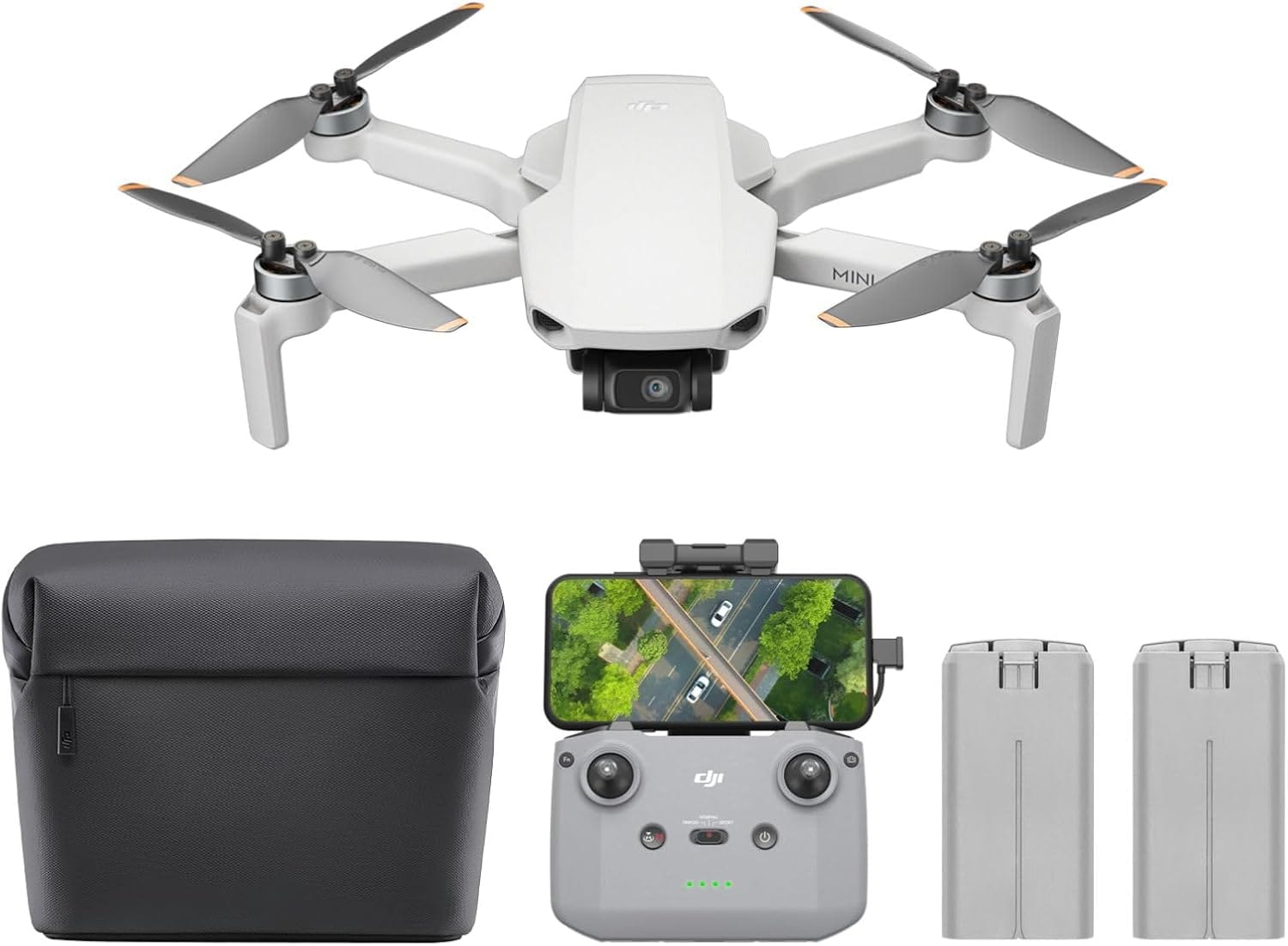
- No Registration Needed - Under 249 g, this 4 K camera drone for adults does not require FAA registration or Remote ID for recreational use. Visit the FAA's official website for requirements related to drone registration and Remote ID. [1]
- 4K Ultra HD & 3-Axis Gimbal for Cinematic Quality Shooting - Capture stunning moments in any light—sunrises, sunsets, and night scenes with crystal-clear 4K resolution. Thanks to the 3-axis gimbal, you can capture cinematic-quality footage with this advanced drone.
- 38 kph (Level 5) Wind Resistant - This drone for adults maintains stable flight even in Level 5 winds. Brushless motors deliver greater power and enable takeoff at altitudes up to 4,000 meters.
- 10km Max HD Video Transmission-up to 10 km (32,800 feet) [2] of HD video transmission and has excellent anti-interference capabilities, giving you the ability to freely explore vast landscapes and see more clearly.
- Due to a platform compatibility issue, the DJI Fly app has been removed from Google Play. To improve your product usage experience, please log in to the DJI official website to download the latest version of DJI Fly.
- Uninterrupted Creation with Extended Battery Life - Choose from 1-battery set (31-min), 2-battery set (62-min), or 3-battery set (93-min). [3] Say goodbye to battery anxiety and let nothing hold you back.
- Beginner-Friendly and Safe - DJI Mini 4K supports one-tap takeoff/landing, GPS Return to Home (RTH), and stable hovering, making it easy for novices to operate. Additional in-app learning resources help you master flight quickly.
$600+: Premium and Enterprise Foldables
Professional capabilities arrive in this range. The DJI Air 3 ($1,099, 720g, dual-camera with 48MP wide and 50MP 3x telephoto, 46-minute flight with O4 20km transmission) handles serious video work. The Mavic 3 Pro ($2,199, Hasselblad 4/3 CMOS, 5.1K/50fps, 43-minute flight) delivers cinema-grade images.
DJI Mini 3 Pro (DJI RC), Mini Drone with 4K Video, 48MP Photo, 34 Mins Flight Time, Less than 249 g, Obstacle Sensing, Return to Home, FAA Remote ID Compliant, Drone with Camera for Adults
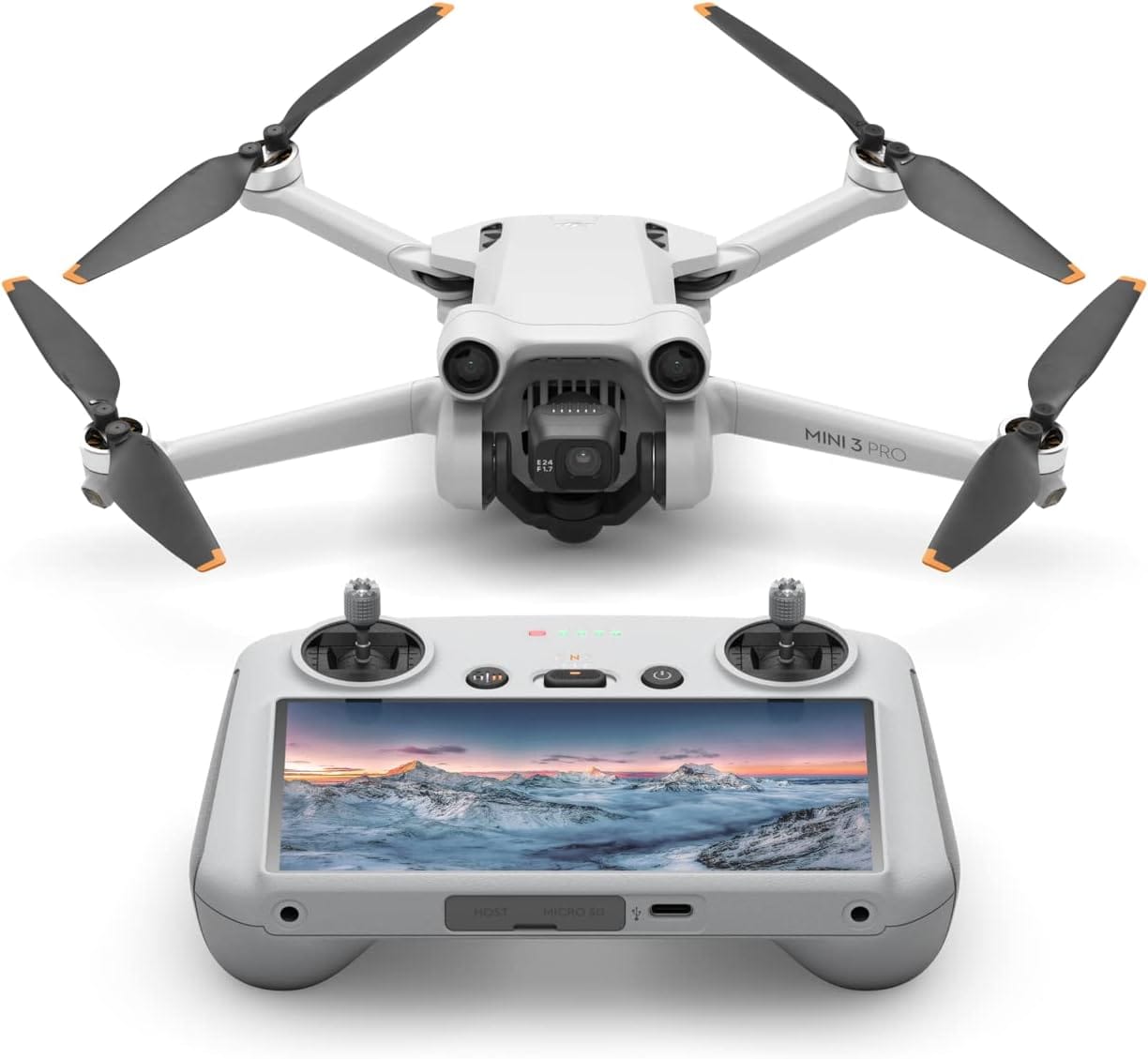
Care-free Creation - Weighing less than 249 g, Mini 3 Pro doesn't require registration in most countries and regions. The foldable and compact design also makes it easy to carry on any adventure. Max Ascent Speed 8 m/s
Seriously Pro Shots - Capture your world in remarkable detail with 4K/60fps video and 48MP photos. The advanced camera system supports dual native ISOs and an f/1.7 aperture for high-quality imagery, day and night.
Perfect Portraits in a Tap - The redesigned DJI Mini 3 Pro offers True Vertical Shooting for portrait shots, ideal for social media. The gimbal rotates 90 degrees, so you don't have to compromise image quality.
Sweet Air Time - Enjoy an extended flight time of up to 34 minutes and capture and explore more of your surroundings.
Fly with Confidence - DJI Mini 3 Pro features tri-directional obstacle sensing and APAS 4.0, bringing unrivaled safety to the Mini series.
Create and Share On the Go - DJI Mini 3 Pro offers an extensive range of intelligent features, including FocusTrack, True Vertical Shooting, and MasterShots. At about 380 grams, the HS720G weighs less than.
Includes the new DJI RC, which has the DJI Fly App pre-installed and a built-in 5.5-inch HD display for crisp viewing even in direct sunlight. Max Wind Speed Resistance 10.7 m/s (Level 5)
Accessories and Upgrades for Foldable Drones
Enhancing your foldable drone setup goes far beyond the aircraft itself—smart accessories and thoughtful upgrades can dramatically improve your drone flying experience, boost safety, and unlock new creative possibilities. Whether you’re a beginner just starting out or a seasoned pilot looking to push the limits of aerial photography, the right gear makes all the difference.
Foldable vs. Non-Foldable Drones: Is Portability Worth It?
By 2026, approximately 95% of consumer drones will use foldable designs (per Drone Industry Insights data), but specialized platforms still exist for specific use cases.
Advantages of foldables:
- 50-70% volume reduction compared to fixed-arm equivalents
- Gimbal recess protection during transport
- Impulse shots possible—unfold to air in 25 seconds vs. 2+ minutes for assembly-required rigs
- Fits standard carry-on luggage and overhead bins
- Lightweight options under 250g simplify regulations in most countries
Trade-offs to consider:
- Hinges add 20-50g weight and introduce potential failure points
- User forums report that 5-10% of field issues relate to hinge looseness over time
- Smaller battery capacity limits endurance compared to equally priced fixed frames
- No modular FPV upgrade path for racing enthusiasts
Real-world scenario: A photographer packing for a weekend city trip can slip a DJI Mini 4K kit (total 600g) into a sling bag for rooftop shots in Barcelona. The same photographer would likely leave a Phantom 4 Pro+ (1.4kg case) at home due to size and hassle. For 90% of casual pilots, this portability wins decisively. Dedicated FPV racers or cinema crews needing heavy payloads may still prefer rigid frames designed around goggles or gimbal rigs.
Regulations & Safety Tips for Foldable Drones (U.S. & Beyond)
A foldable design doesn’t change your legal obligations—weight, camera capabilities, and use case determine requirements. These rules evolve, so always verify current regulations before flying.
FAA weight thresholds (U.S. 2026):
Registration is required for drones over 250g at $5 for three years, with a free TRUST test for recreational pilots. Sub-249g recreational drones like the DJI Mini 4K avoid registration requirements, which explains why manufacturers target this weight so precisely.
Remote ID requirements:
Most new camera drones over 250g sold after 2023 must broadcast Remote ID, transmitting identification and location data 1-3km. Some sub-250g models without cameras are exempt, but most foldable camera drones include Remote ID compliance regardless of weight.
Altitude and airspace rules:
The 400ft AGL ceiling applies to recreational flying in the U.S., along with visual line-of-sight requirements. Common no-fly zones include airports (5-mile radius), stadiums during events, and many national park areas. Use official apps like FAA B4UFLY before every flight session.
International travel considerations:
EU rules use CE class markings (C0 for under 250g drones in the A1 open category). UK CAA maintains similar frameworks. Sub-250g foldables typically face simplified rules across 100+ countries, but often still require operator registration or ID. Research before you pack.
Practical pre-flight safety:
- Check the folding arms for a secure lock before each flight
- Verify propellers for chips, bends, or stress whitening
- Calibrate the compass in open areas away from metal structures
- Avoid crowds and leverage auto return home at 20-30% battery
- Use obstacle avoidance as backup, not primary collision prevention
How to Choose the Best Foldable Drone for You
Selecting the right foldable drone comes down to matching your goals, environment, and budget to available features. Here’s a systematic approach.
Start with your primary goal:
Goal | Minimum Specs | Budget Range |
|---|---|---|
Fun flying for kids | 720p, altitude hold | $30-80 |
Social media clips | 2K+, 3-axis gimbal | $300-500 |
Semi-pro video | 4K/60, GPS, obstacle sensing | $600-1,200 |
Inspection/mapping | 30+ min flight, thermal option | $1,500+ |
Assess portability priorities:
Must the drone fit in a jacket pocket? Consider HoverAir X1-class micro foldables (folded dimensions around 5 x 10 x 2.5 cm). If a small shoulder bag works, DJI Mini 4K-class models (folded 14x9x5cm) offer better camera quality. Factor in the total kit weight, including the remote controller, spare batteries, and carrying case.
Match to your environment:
Calm backyard flying suits lightweight sub-250g models. Windy coasts or mountain locations demand heavier, more powerful drones with higher wind ratings—the Holy Stone HS600D-class can handle 10 m/s gusts. Urban parks with tight restrictions favor sub-250g compliance.
Plan your budget and upgrade path:
- $150 tier: Basic 1080p GPS drone, good for learning
- $300 tier: 4K sub-250g travel drone, serious hobby use
- $600 tier: Omnidirectional obstacle sensing, pro-adjacent quality
- $1,000+ tier: Dual cameras, enterprise features, thermal options
Investing more upfront typically yields better camera sensors, more reliable companion apps, and safer GPS/Return to Home features that justify the cost over the years of use.
Consider brand ecosystem:
Established brands like DJI, Autel, and Parrot offer better firmware support, available ND filters, and third-party accessory compatibility. Ultra-budget brands may lack spare parts availability and software updates within months of purchase. The price difference pays for longevity.
Build a comparison shortlist:
For sub-250g priorities: HoverAir X1, DJI Neo, Potensic ATOM SE
For mid-range GPS-equipped: DJI Mini 4K, Autel Nano+, Holy Stone HS720G
Care, Maintenance & Longevity of Foldable Drones
Folding hinges and gimbals are moving parts requiring attention if you want your drone to last beyond a single season.
Folding and unfolding best practices:
Open arms fully until they audibly click into position. Never twist arms or force them past their natural range. Avoid picking up the drone with a single folded arm—this stresses the hinges unevenly. Keep sand and dust away from hinge joints; a soft brush clears debris effectively.
Battery health management:
Store Li-ion and LiPo packs at 40-60% charge if not flying for several weeks. Avoid leaving batteries fully charged in hot vehicles—heat rapidly degrades cells. DJI smart batteries auto-discharge to 50% after about 10 days of inactivity. Cycle stored batteries every 3 months minimum.
Propeller inspection and replacement:
Replace props showing chips, bends, or whitening at the base (a sign of heat stress). Low-noise foldable props cost around $10 per set from quality manufacturers. Fresh propellers are critical for stable flight and safe speed performance.
Cleaning the obstacle-sensing and sensors:
Use microfiber cloths and 70% isopropyl alcohol for lens cleaning. Avoid harsh chemicals. Keep optical flow sensors and obstacle-sensing cameras clear for accurate tracking and stable hover performance.
Firmware and app updates:
Update at home with stable Wi-Fi, never in the field before an important flight. Start by identifying your primary use case, setting a realistic budget, and shortlisting 2-3 models that match your priorities. Check every 20-30 flights for new versions.
Final Thoughts
Foldable drones have become as normal as action cameras for capturing life from new perspectives. The technology delivers real fun, professional capability, and creative freedom in a package you can grab on your way out the door. Choosing the right model now—whether a $299 travel companion or a $1,000 content creation tool—sets you up for firmware updates and evolving ecosystems through 2027 and beyond. Start by identifying your primary use case, setting a realistic budget, and shortlisting 2-3 models that match your priorities. Your next great shot is waiting. Order today!