
A Leupold rangefinder is an essential tool for hunters who demand fast, accurate distance readings on everything from reflective targets to soft game animals across steep terrain. Leveraging advanced laser technology and smart ballistic functions, Leupold rangefinders help you account for angles, improve your effective range, and get more value from every shot.
Why Leupold Rangefinder Matters
Leupold has built a reputation around building rugged, accurate rangefinders that prioritize reliable distance readings over gimmicks.
For hunters and shooters, that matters because the right distance and angle calculation often determines whether a shot connects cleanly or misses entirely.
- Leupold rangefinders use laser technology to measure the distance to your target in fractions of a second, even in challenging light or terrain.
- Many models are purpose-built for hunting, with modes that account for angles, real ballistic performance, and the type of target you’re ranging.
How Rangefinders Work
Understanding how rangefinders work is essential for hunters who want to make every shot count, no matter the terrain or distance. At their core, rangefinders use a simple yet highly effective process: a laser beam is emitted toward your target—whether it’s a reflective object, a deer, or a tree—and the device measures the time it takes for the laser to bounce back. This time-of-flight calculation is what allows the rangefinder to display an accurate distance reading almost instantly.
The technology behind modern rangefinders is designed to work fast and reliably, even in challenging conditions. When you press the button, the laser travels to the target and returns, and the rangefinder’s internal processor calculates the exact distance based on how long the round trip takes. This process is not only quick but also highly precise, giving hunters the confidence to adjust for steep angles, varying terrain, and different target heights.
Top brands like Leupold, Sig Sauer, Zeiss, Leica, Swarovski, and Vortex offer a wide range of models, each with features tailored to specific hunting needs. Some rangefinders are optimized for long-range shooting in open country, while others excel in dense woods or steep mountain terrain. Features such as angle compensation, fast laser returns, and clear, easy-to-read displays make it simple for hunters to get the information they need, when they need it most.
Choosing the right rangefinder means considering the type of terrain you’ll be hunting, the typical distances to your targets, and the features that matter most for your style of hunting. For example, if you often hunt in areas with steep angles, a model with advanced angle compensation is ideal. If speed is critical, look for a rangefinder known for fast readings and quick target acquisition. And if you value durability, select a model built to withstand tough conditions.
Ultimately, a quality rangefinder is an essential tool that offers real value to hunters. It takes the guesswork out of distance estimation, helps you adjust for terrain and target height, and ensures that every shot is as accurate as possible. By understanding how rangefinders work and choosing the ideal model for your needs, you can make the most of your time in the field and increase your chances of a successful hunt. Whether you’re shopping for your first rangefinder or looking to upgrade, focus on the features and performance that will help you work smarter and hunt with confidence.
Reflective Targets vs Game Animals
Not all targets reflect laser energy the same, and Leupold builds that reality into how its rangefinders are specified and displayed.
When you read specs on a Leupold model, you’ll see different maximum distances listed for reflective targets, trees, and deer-sized game so hunters can choose realistically.
- Reflective targets like metal plates allow the laser to bounce back stronger, so the displayed maximum distance will be the longest.
- Softer, darker objects like animals, brush, and trees absorb more light, so Leupold clearly separates those numbers so you can accurately account for your real-world hunting use.
Steep Angles, Terrain, and True Distance
Where Leupold rangefinders really stand out is in how they calculate usable distance on steep angles and complex terrain.
Instead of just showing straight line-of-sight range, many models use True Ballistic Range (TBR) or similar angle-compensation functions to give an effective shooting distance you can dial or hold for.
- Angle-compensating Leupold models calculate how height differences between you and the target affect bullet or arrow drop, so you don’t have to manually adjust.
- This is ideal for western hunting, tree-stand setups, and any situation where the shot takes place at a steep uphill or downhill angle over broken terrain.
Key Features Hunters Should Look For
Modern Leupold rangefinders offer a lot of features, but hunters really benefit from those that make distance readings fast, simple, and consistent.
The right model will feel intuitive in the field, from the way information is displayed to how quickly it locks onto the object that matters.
- Magnification and display: Most hunting-focused Leupold units use 5x–6x optics with bright OLED or TOLED displays so ranges are clearly displayed in low light.
- Modes and functions: TBR/W, BOW, and LOS modes, plus wind and ballistic groups on advanced models, help you match the rangefinder to your rifle or bow setup.
- Speed: Leupold’s DNA-style ranging engines are built for fast readings, so the time it takes to get a number is minimal when an animal is moving.
- Build and filters: Durable bodies, weather resistance, and options like fog and “leaf” filters help the laser work through adverse conditions, brush, and clutter between you and the target.
Leupold vs Other Rangefinder Brands
Hunters today can choose from several strong rangefinder brands, each with different strengths in price, optics, and connected features.
Leupold focuses heavily on ballistic realism and hunting-specific functionality, while others may lean more into connected apps or pure long-range performance.
Popular Hunting Rangefinder Brands
Brand | Core Focus/Strengths (Hunting Use) | Notable Offerings for Hunters |
|---|---|---|
Leupold | Angle-compensated distance, hunting-specific modes, rugged build. | RX series rangefinders with TBR/W and bow modes for rifles and archery. |
Sig Sauer | Fast laser engines and integrated electro-optics; some models can link with scopes to adjust point of aim automatically. | KILO series rangefinders popular among hunters needing long-range capability. |
Zeiss | Premium glass and rangefinding binoculars with excellent optics and long-range accuracy. | Victory RF rangefinding binoculars suited for serious mountain and western hunters. |
Leica | High-end glass, compact form factor, and very precise rangefinding; strong in RF binoculars. | Geovid Pro rangefinding binoculars used by many dedicated big-game hunters. |
Swarovski | Top-tier optics and rangefinding integration, especially for long days behind the glass. | EL Range binoculars combining spotting and laser ranging in a single tool. |
Vortex | Solid performance and strong warranty at approachable price points. | Ranger and Razor rangefinders frequently chosen as value-focused hunting options. |
Buying a Leupold Rangefinder: What Really Matters
Choosing the right Leupold model comes down to how and where you hunt, plus what distance you realistically need to cover.
Hunters should start by defining their maximum ethical range and typical terrain, then match those needs to the features and ranging specs displayed for each product.
- Match the model to your weapon: Some Leupold rangefinders are optimized for rifle ballistics and longer distances, while others are built around bow speeds and closer shots.
- Check real-world ranges: Use the deer, tree, and reflective target distances listed for each model to understand what you can expect on actual game, not just metal plates.
- Consider value and budget: Higher-end models offer more functions and longer range, but even mid-range Leupold rangefinders can offer strong value for most hunters when you balance price and performance.
- Shop reputable outlets: Buying from trusted dealers and brand partners ensures you get authentic products, warranty support, and reliable shipping and stock information.
Leupold RX-1400I TBR/W Gen 2 w/Flightpath Rangefinder, Black/Gray
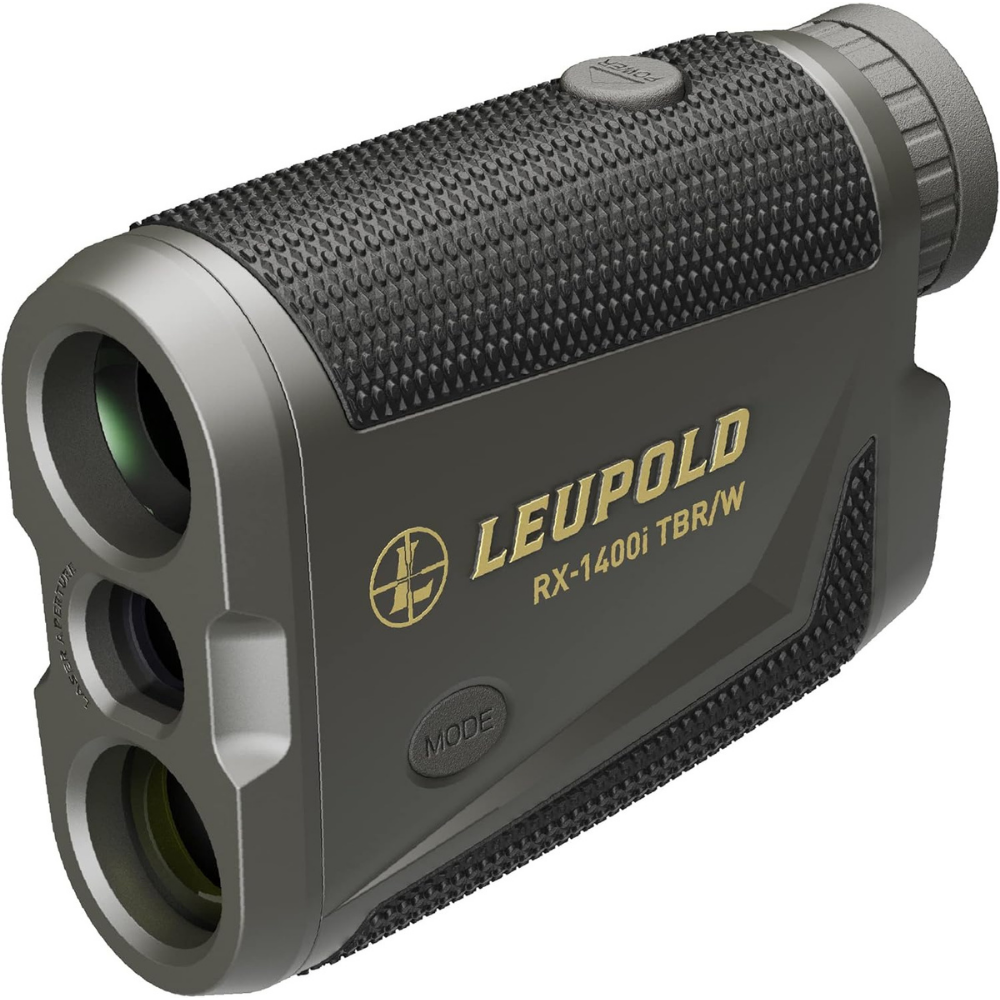
- Model #183727 - RX-1400i TBR/W Gen 2 w/Flightpath
- True Ballistic Range / Wind (TBR/W) technology provides ballistically calculated ranges for extremely accurate shots at longer distances and steeper angles. It can also generate a hold point for a 10-mph wind at a 90-degree angle out to 800 yards.
- Selectable Bow mode with Flightpath technology allowing you to see potential arrow obstructions and calculates angle-compensated ranges for archers
- Boasts 1,400-yard ranging distance on reflective objects and 1,200 yards on trees
- Selectable TOLED displays use bright red numbers and letters and have adjustable brightness settings to optimize readability in changing light conditions.
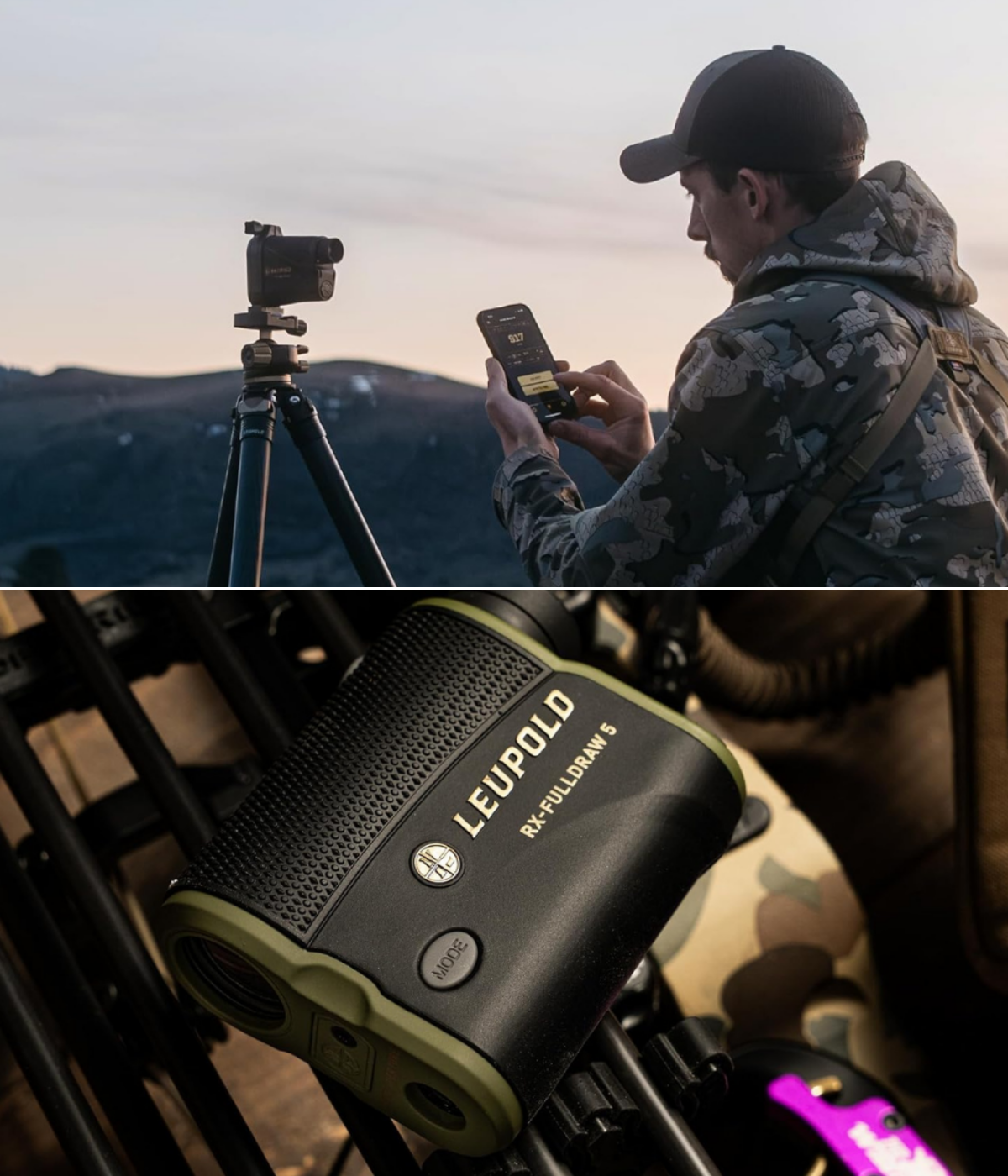
Leupold RX-FullDraw 5 Rangefinder with DNA with Black/Green OLED
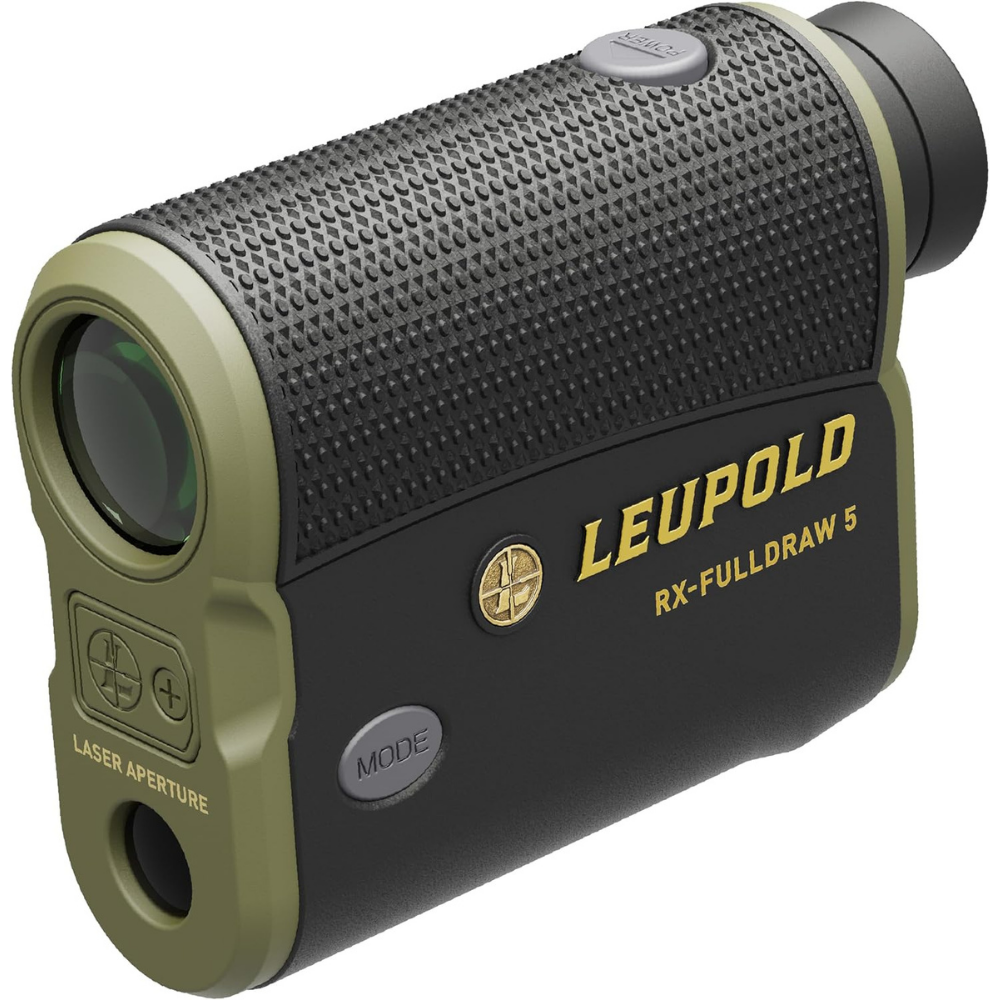
- Model #182444 - RX-FullDraw 5 Rangefinder
- Archer's Advantage bow ballistics uses your arrow weight, arrow velocity, and peep height to calculate more accurate ranges for steep angle and long distance shots.
- Flightpath technology uses your bow's ballistics to display the highest point of your arrow's flight, so you can take tighter shots with more confidence.
- Selectable OLED displays use bright red characters and have adjustable brightness setting for best in class light transmission for use in low light conditions.
- Last Target mode ensures the rangefinder reads the farthest target in the laser's path, so grasses and twigs don't interfere with an accurate range.
Leupold RX-5000 TBR/W with DNA Black, Red OLED
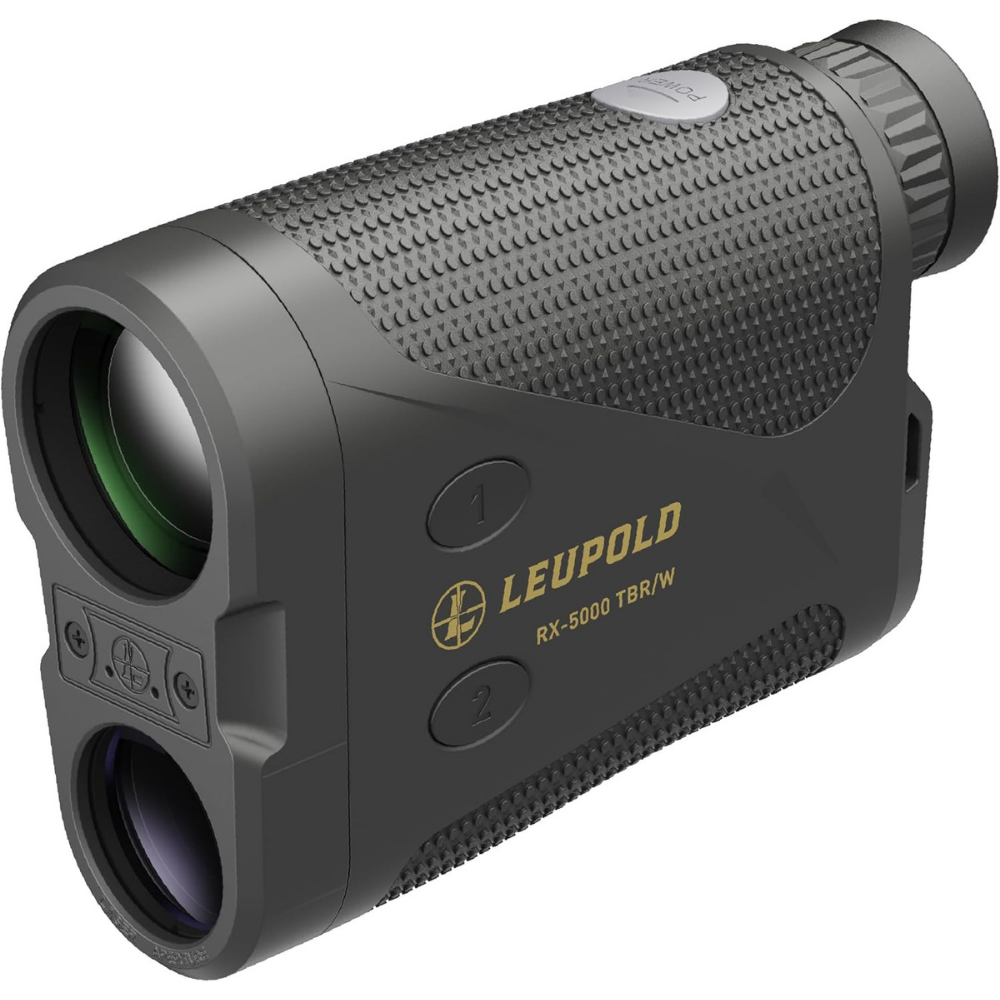
- Model #184681 - RX-5000 Rangefinder, TBR/W with DNA
- With Pinning, in conjunction with the Leupold Control App, you can remotely place GPS waypoints on digital maps like on X Hunt. Use it to mark property boundaries, navigate through harsh terrain, and easily track and recover downed animals.
- True Ballistic Range / Wind (TBR/W) technology provides ballistically calculated ranges for extremely accurate shots at longer distances and steeper angles. It can also generate a hold point for a 10-mph wind at a 90-degree angle out to 800 yards.
- Last Target mode ensures the rangefinder reads the farthest target in the laser's path, so grasses and twigs don't interfere with an accurate range.
- Long Range Mode boosts the rangefinder's power by gathering laser pulses over several seconds, allowing you to range over 5,000 yards on trees and deer-sized game. That measures out to be almost three miles.
FAQs
What makes a Leupold rangefinder different from cheaper rangefinders?
Leupold rangefinders are designed around consistent, accurate distance calculations that account for realistic targets and terrain rather than just marketing-range numbers on reflective objects.
They also offer durable builds and hunting-focused functions like TBR/W and bow modes that many budget rangefinders lack.
How do Leupold rangefinders handle steep angles while hunting?
Many Leupold models calculate True Ballistic Range, which uses the angle and line-of-sight distance to display an effective shooting distance you can actually dial or hold for.
This means whether you are above or below your target, the rangefinder helps you account for gravity’s real effect on your projectile.
Are Leupold rangefinders good for both rifle and bow hunting?
Certain Leupold units are dual-purpose, offering rifle-oriented TBR/W modes and dedicated bow modes so you can switch depending on your setup.
If you focus on one discipline, you can also choose a model optimized for your primary weapon to get the most efficient functions.
How do Leupold rangefinders compare to Sig Sauer, Zeiss, Leica, Swarovski, and Vortex?
Leupold emphasizes angle-aware, hunting-specific ranging and rugged construction, while Sig Sauer leans into integration with smart optics, and Zeiss, Leica, and Swarovski focus heavily on premium optics and rangefinding binoculars.
Vortex typically offers good performance and warranty at lower price points, making it attractive to value-conscious hunters.
Can a Leupold rangefinder help in low visibility or cluttered terrain?
Leupold’s ranging engines, along with features like fog-oriented modes and smart filtering, are built to cut through adverse conditions and ignore background obstacles whenever possible.
This helps the unit lock onto the correct object faster when brush, branches, or haze are in the way.
Final Thoughts
For serious hunters, a Leupold rangefinder is more than a gadget; it is an essential field tool that turns guesswork into data-driven shot decisions.
By focusing on realistic target distances, angle compensation, fast laser performance, and hunting-specific functions, these models offer strong value and help ensure your time, effort, and tag all work toward an ethical, accurate shot. Order today!