
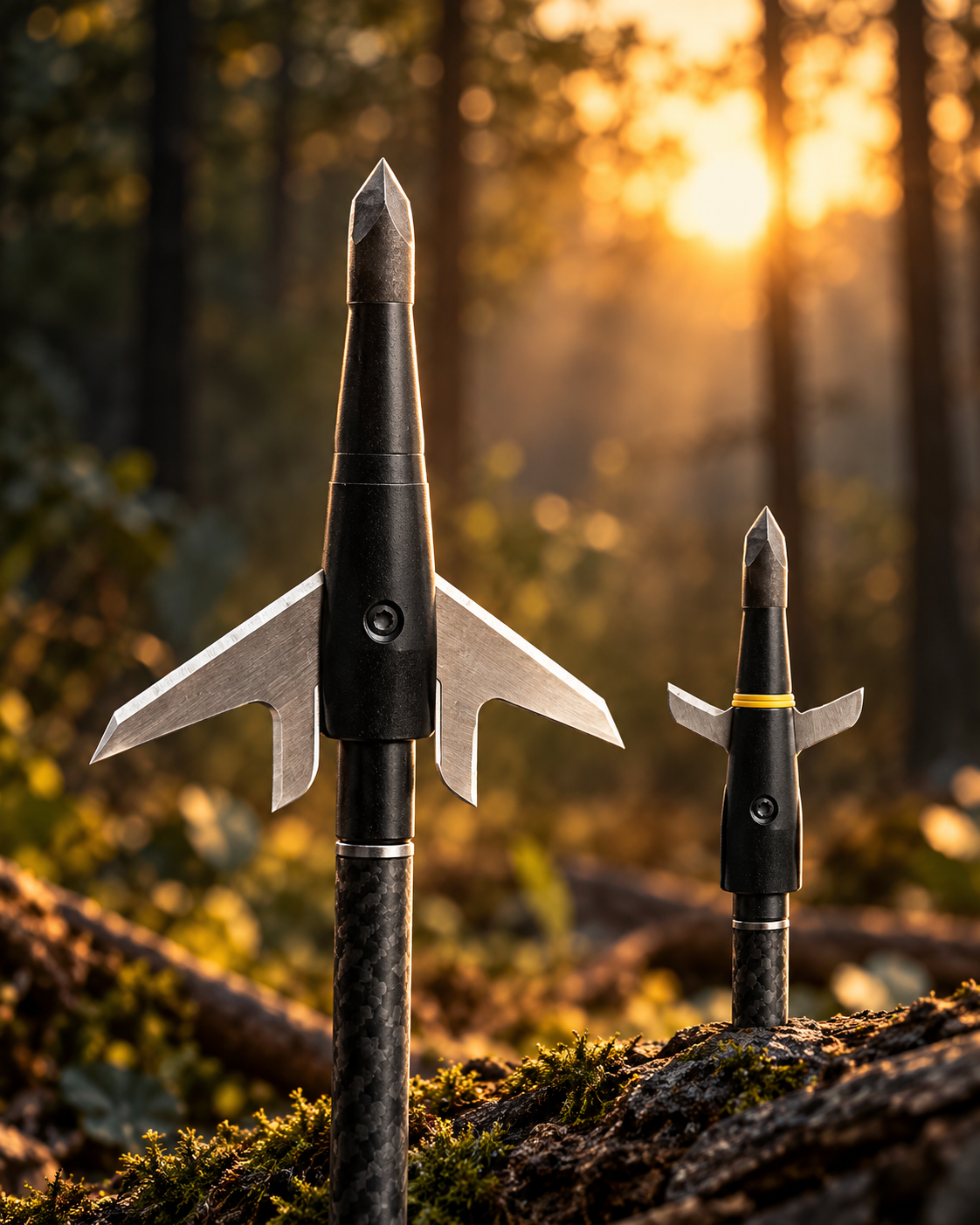
The quick take: The Swhacker Broadhead most hunters mean here is the Swhacker #201: a 100-grain, two-blade mechanical broadhead with a 1.75-inch cutting diameter after deployment, built to expand reliably on impact. It remains a strong option for compound bow hunters who want a substantial cut without jumping to a 2-inch head, and it sits within a wider Swhacker line that also includes 125- and 150-grain broadheads, with other models reaching cutting diameters up to 3 inches. Its smaller wing blades start the cut and open the larger blades. That design matters if you're balancing flight, penetration, and cutting width for your setup, and this page covers the #201's specs and design, real-world performance, how it compares with other broadheads, fit with different bow setups, replacement blades, durability, price, and what to check before you buy. The linked Zen Bowhunter review reports good penetration and field results, but those are the author's experiences with his setup, not a guarantee for every bow or shot.
- Includes 3 broadheads
- 100-grain expandable 2-blade broadhead
- "Opens so fast, you can hear the shack"
- Included Components: Hunting, Airsoft and Paintball; Archery - Youth; archery-broadheads
- Sport Type: hunting
- Each set includes 3 broadheads
- 100 Grain Expandable 2-Blade Broadhead
- Blade: .032" thick, stainless steel, honed razor-sharp
- Ferrule: Anodized aircraft aluminum for durability
- Hardened high-carbon steel point
Shop: Swhacker #201 100-grain, 1.75-inch broadhead on Amazon. Check the selected size and model before ordering; Amazon also carries other Swhacker broadheads.
What makes the #201 expandable broadhead different?
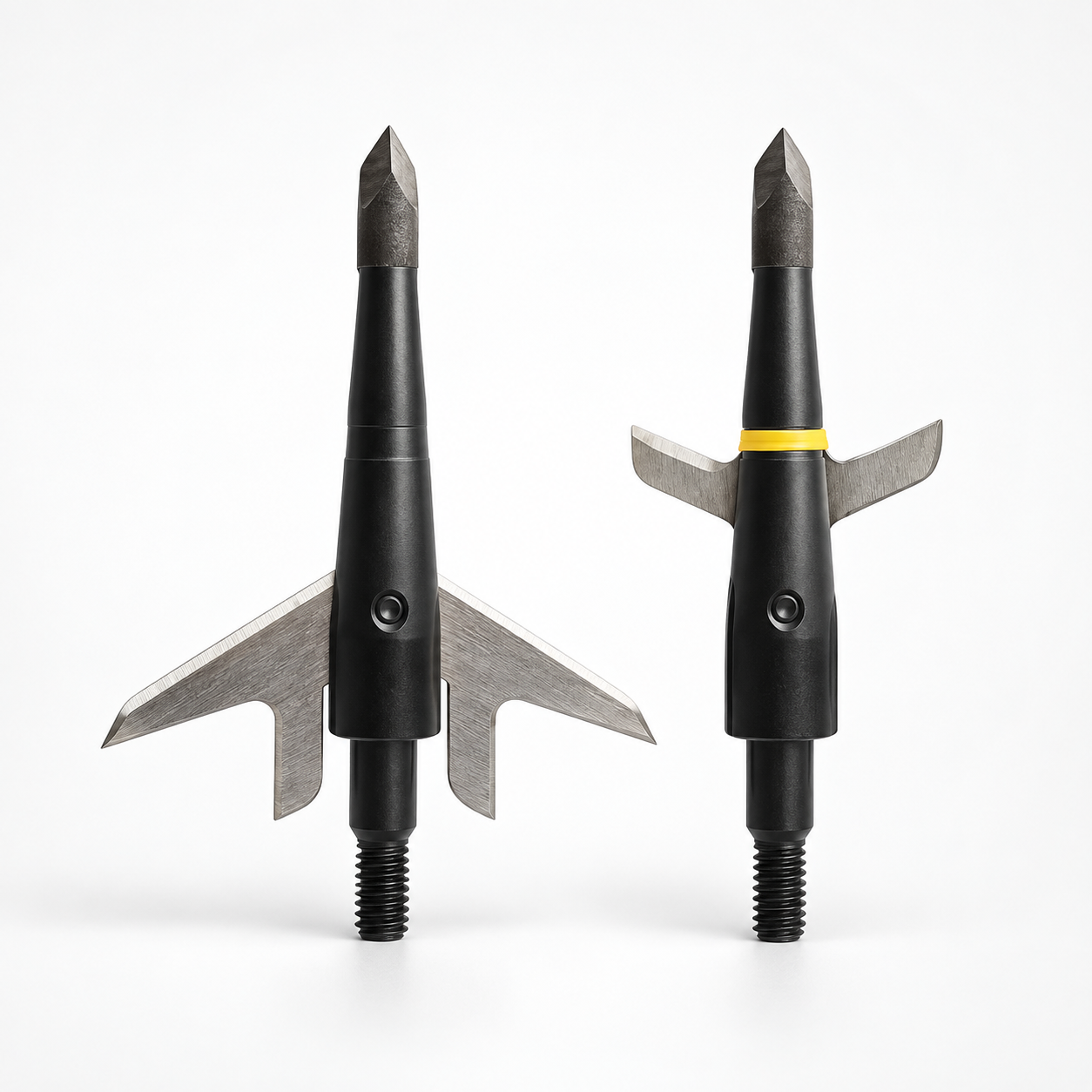
The Swhacker's two separate cutting edges do different jobs. Small wing blades make the first cut and trigger deployment, while the larger main blades stay sharper until they open inside the body cavity to the stated 1.75-inch cutting diameter. That unique blade design helps the main cutting edges avoid initial contact with hide and bone. Swhacker calls this its “slice-twice” design. When the blades open inside the animal, that two-slice technology creates a wider wound channel, more internal hemorrhaging, and effective damage to internal organs.
The #201 has a 1-inch closed-cutting profile and a hardened-steel point, according to retailer specifications. The commonly listed three-pack includes a practice head, although packaging and included accessories can vary by seller. Replacement blades are sold as the #203 kit; confirm compatibility and what is included before purchasing.
Specification | Swhacker #201 |
|---|---|
Type | Two-blade mechanical broadhead |
Weight | 100 grains |
Cut in flight | 1 inch |
Cut after deployment | 1.75 inches |
Blade thickness | Listed as .032 inch by a #201 retailer; Swhacker's current replacement-blade listing says .031 inch |
Typical package | Three broadheads; some listings include a practice head |
How did it perform in the field: devastating performance?
Most reviewers call the #201 the preferred expandable broadhead after comparing it with heads from Rage, Muzzy, and NAP. Reports include a complete pass-through on a Coues whitetail at 50 yards, which is the kind of field report behind claims of strong accuracy at longer distances and reliable pass-throughs, though it is still anecdotal; some have used the 1.75-inch Swhacker on a mule deer. Those reports are useful firsthand observations, but the article does not provide a controlled test protocol or enough measurements to establish that the #201 penetrates farther than every alternative. Users also often connect that kind of penetration to a massive blood trail, more blood, and minimal tracking distance, especially when the shot gets through the chest cavity at a hard angle.
The practical attraction is straightforward: a modest closed profile for consistent flight and precision, a wider cut on impact, and a replaceable-blade design. Still, no mechanical head is a shortcut around tuning. Shoot the actual hunting head, or a matching practice tip or practice points, into an appropriate target before the season to fine-tune your sight, shot placement, and confidence, confirm impact against your field points, and inspect every blade and retaining component before a hunt.
Who should consider it for a compound bow?
Consider the #201expandable broadheadsexpandablebroadheads for ethical killsbroadhead kills when they want a wider cut on deer-sized game. Its cut sits between narrower mechanical heads and 2-inch Swhackers, giving hunters another way to balance cutting width with their own arrow setup, with the #201 discussion here focused more on deer than on large game such as elk.
Consider a fixed blade instead if you prefer a head that needs no deployment mechanism, especially when working with a lower-energy setup; lighter setups under 50 lbs are commonly steered toward fixed blade options. Bow draw weight alone does not tell the whole story: arrow mass, speed, tuning, impact angle, and target all matter. Follow your bow, arrow, and broadhead makers' compatibility guidance and local hunting rules, especially if you may use the same setup for deer or elk and want a broadhead intended for ethical, effective harvests on each animal.
Do not mistake the #219 for the #201 just because both are 100-grain, 1.75-inch Swhackers. Swhacker markets the #219 as a crossbow broadhead. The #207 is a different 100-grain model with a 2-inch cut. Confirm the model number in the listing, not just the brand and grain weight, because the exact model also affects quality and price comparisons before ordering.
Verdict
The Swhacker #201 remains a compelling mechanical broadhead for a compound bow hunter who wants a 1.75-inch cut and likes the two-stage blade layout, a design meant to deliver a wider wound channel for faster bleed-outs. The original review makes a persuasive case for that hunter's own setup, while the deciding test for yours is whether a fresh #201 groups where your hunting arrows should, arrives with intact, sharp blades, and gives you confidence in real hunting performance as a great broadhead.
Frequently asked questions
Is the Swhacker #201 a fixed-blade broadhead? No. Its main blades deploy on impact; the smaller wing blades cut and help open them.
Can I use the #219 as a substitute? The #219 is marketed for crossbows. Confirm manufacturer compatibility before using any crossbow head on a compound bow.
Do mechanical broadheads always fly like field points? No. They may be easier to tune than some fixed heads in a particular setup, but the actual point of impact must be verified with your own bow and arrows, and proper tuning from the stand matters as much as broadhead choice if you want great results.
Can the blades be replaced? Swhacker's #203 replacement blade kit lists the #201 as compatible. Follow the maker's instructions for replacement and retaining components. These heads are not built for sharpening; after impact with bone or if a blade gets bent, replacement blades or a fresh head is the safer route.
Do I need to inspect the head after a shot? Yes. Swhacker broadheads can withstand heavy impacts without failure, but even tough heads should be inspected after impact, especially if the head can stick in the target or ground.