
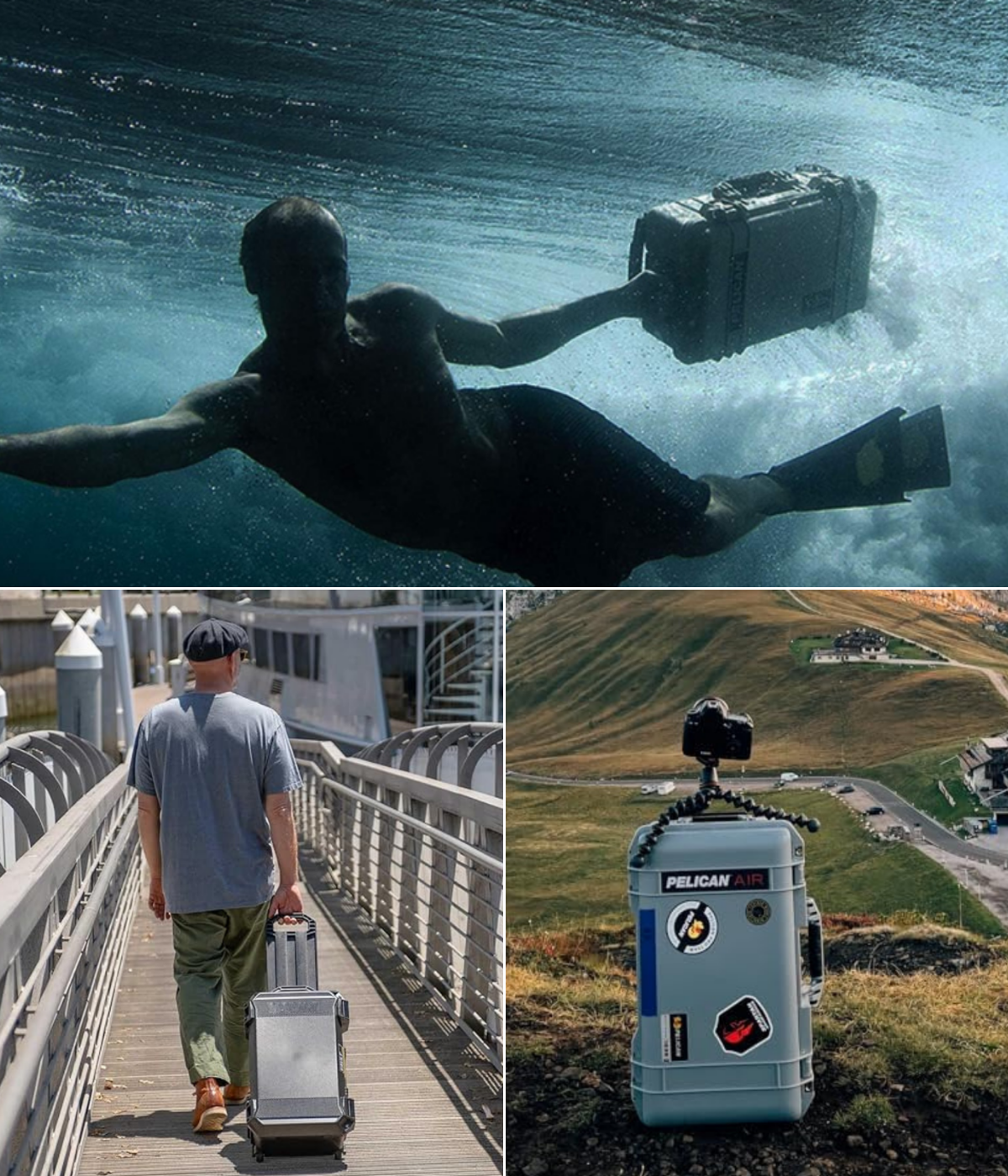
If you’ve ever hauled a fully loaded range bag from the parking lot to the bench, you already know the problem: straps dig in, zippers fail, and the bottom eventually tears out. That’s why more shooters and hobbyists are repurposing something built for serious abuse—a Pelican-style hard camera case—and turning it into a rolling range bag that’s comfortable to move, incredibly durable, and easy to organize.
Discover the unique durability, water resistance, and protective features that set Pelican camera cases apart from the rest.
This guide explains why a Pelican camera case works so well, what to look for before you purchase, how to set it up for your gear, and whether the pricing makes sense compared to traditional range bags.
Why a Pelican Camera Case Makes a Great Rolling Range Bag
Comfort: Roll Instead of Carry
The biggest “comfort” upgrade is simple—wheels and a pull handle. Instead of a shoulder strap cutting into you, your load glides across pavement and packed gravel. If you typically carry:
- multiple handguns or accessories
- several boxes of ammo
- hearing/eye protection, tools, targets, and cleaning supplies
…then switching to rolling transport can be a game-changer, especially for longer walks or heavier days.
Pro tip: Look for a longer pull handle and larger wheels if you often cross gravel, grass, or uneven terrain.
Durability: Built Like a Tank (Because It Is)
Traditional soft range bags fail in predictable places: seams, zippers, straps, and the bottom panel. Pelican-style camera cases are designed to survive drops, crushing, rain, and travel abuse. Many are also:
- dust resistant
- water resistant (some are truly waterproof)
- reinforced at corners
- fitted with robust latches instead of zippers
If you’re tired of “buying another bag,” this is the type of durability that can pay for itself.
Organization: A Camera Case Is Basically a Modular Gear Vault
Camera cases are made for expensive equipment, so they’re designed around custom layouts. The best ones come with padded dividers you can reconfigure as your setup changes.
That means you can create dedicated spaces for:
- eye/ear protection
- magazines and speed loaders
- tools, multi-tool, markers, stapler
- cleaning kit and oil
- gloves, small med kit
- targets, tape, pasters
- batteries/chargers (if you run electronic ears/optics)
Instead of digging through a black hole of nylon pockets, you’ll know exactly where everything is.
What to Look for When Buying a Pelican-Style Camera Case for Range Use
Size: Don’t Overbuy—But Don’t Go Too Small
Most people regret going too small first. Your case should fit:
- your “always” items (eyes/ears, tools, staples)
- your typical ammo load
- space for day-to-day extras (gloves, tape, spare batteries)
Rule of thumb: Choose a size that looks slightly larger than you think you need, but still fits comfortably in your vehicle's trunk.
Wheels & Handle: The Comfort and Convenience Checklist
For rolling range bag use, prioritize:
- smooth-rolling wheels (bigger is better for rough ground)
- sturdy telescoping handle with minimal wobble
- reinforced wheel housing (cheap cases crack here first)
If you can, read reviews that specifically mention wheel durability—rolling cases live or die by their wheel design.
Divider System: Pick “Padded Dividers” Over Foam (Most of the Time)
Many hard cases include pick-and-pluck foam, which is fine if your loadout never changes. But for a rolling range bag, padded dividers are usually better because:
- You can reconfigure compartments
- They’re easier to clean and adjust
- They don’t shed foam bits over time
If you do choose foam, consider a top tray organizer or pouches to keep small items from disappearing into carved cavities.
Lockability and Latches
Hard cases typically have strong latches and may include lock holes. Pelican camera cases feature Press and Pull latches for secure closure, with a press mechanism that keeps the case tightly sealed and easy to open when needed. Pelican Air cases also feature Press-and-Pull latches for added security. Additionally, Pelican cases are equipped with stainless steel hasps for padlocks, allowing you to secure firearms and expensive gear. While your needs vary by location and storage habits, from a pure product standpoint, latches are a big advantage over zippers because they:
- don’t snag
- don’t split
- don’t fail under heavy load
How to Set Up a Pelican Camera Case as a Rolling Range Bag
Step 1: Create “Zones”
A good layout prevents shifting and protects delicate items.
Try this structure:
- Zone A: Quick-access essentials (ears/eyes, timer, tape, marker)
- Zone B: Tools and maintenance (multi-tool, small screwdriver set, lube, cloth)
- Zone C: Ammo and accessories (boxes, loaders, spare parts)
- Zone D: Cleanup/comfort (gloves, wipes, snacks, water)
Step 2: Use Pouches for Small Stuff
Even with dividers, tiny items migrate. Add:
- zip pouches for batteries and ear tips
- a small hard parts box for springs/screws
- a slim document sleeve for targets and notes
This is the difference between “organized” and “perfectly dialed.”
Step 3: Balance Weight for Smooth Rolling
Put heavier items:
- low and close to the wheel side
- evenly distributed left-to-right
A top-heavy case tips more easily and feels awkward to pull.
Quality and Pricing in Today’s Market: What to Expect
Pelican-style camera cases typically fall into three pricing tiers:
Budget Tier: Good Enough for Light Use
You’ll find knockoffs and value brands that look similar for less. They can work if:
- you’re not dragging over rough terrain
- your load is moderate
- you accept that wheels/handles may wear faster
Best for: occasional range trips and lighter setups.
Midrange Tier: The “Sweet Spot”
This is where many buyers land—solid latches, good divider kits, and better wheel systems without hitting premium pricing.
Best for: regular use, heavier loads, and long-term value.
Premium Tier: “Buy Once, Cry Once”
Pelican (and similarly rugged premium options) often justify their price with:
- better materials and fit/finish
- stronger wheel and handle assemblies
- higher confidence in longevity
Best for: frequent use, travel, rough terrain, and anyone tired of replacing bags.
Bottom line: A rolling hard case often costs more upfront than a soft bag, but it can be the cheaper option over time if you’ve replaced bags repeatedly.
Pros and Cons
Pros
- Extremely durable shell and latches
- Rolls easily (comfort upgrade)
- Highly customizable organization
- Weather resistance can be excellent
- Looks clean and professional—less “tactical bag” vibe
Cons
- Hard cases can be heavier when empty
- Some lanes/benches have limited space
- Premium models cost more
- Interior layout takes initial setup time
Pelican 1560 Case
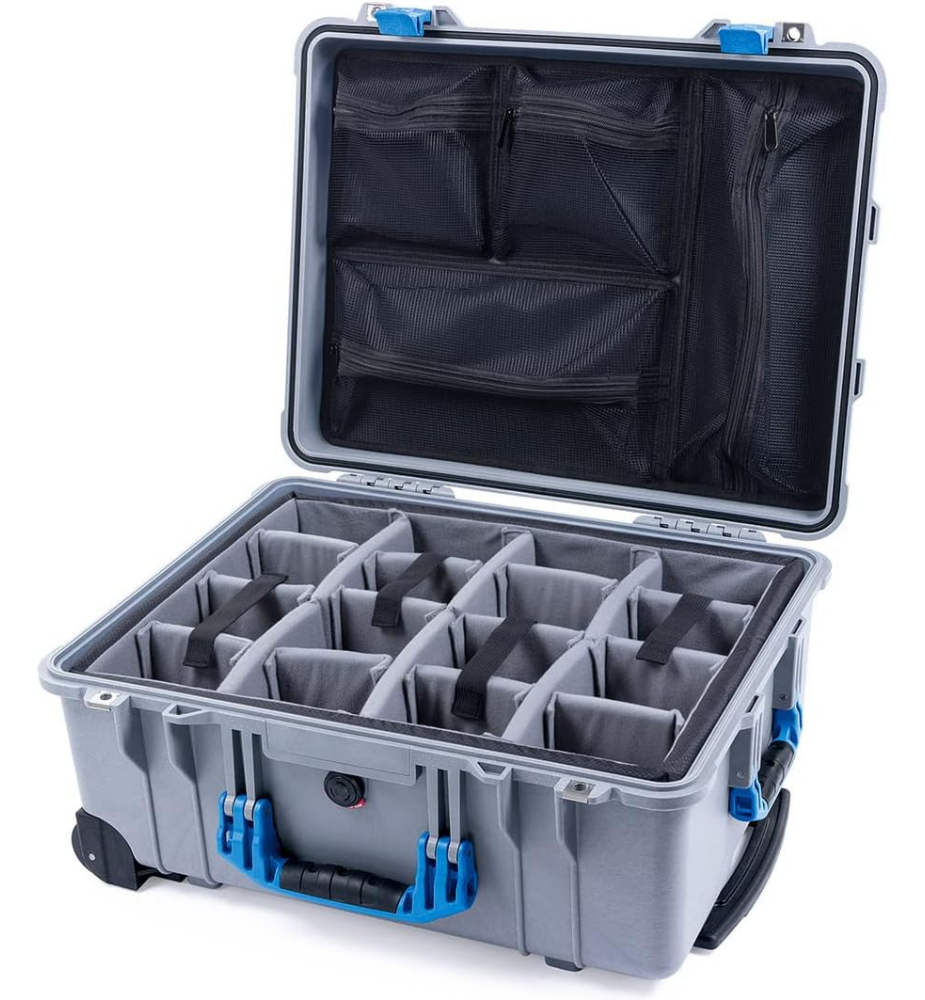
- - Silver Pelican 1560 case with blue handles & latches.
- - Case comes with grey padded dividers, lid foam, & mesh organizer.
- - Inside dimensions of empty case - 19.92" x 14.98" x 9.00"
- - Case has wheels & pull handle.
- - Case is approx. 20 lbs with dividers and an organizer.
Pelican Vault V525 Hard Case
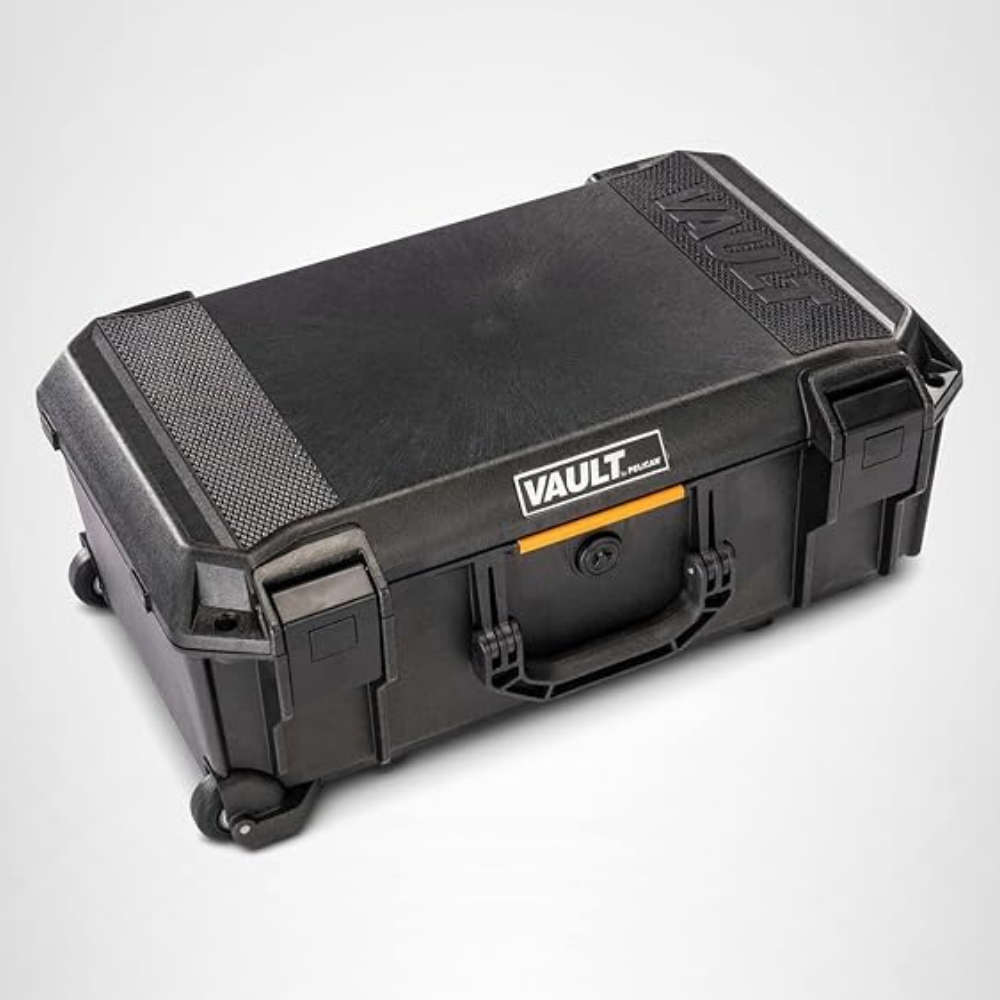
- RUGGED PROTECTION: Crushproof high-impact polymer, heavy-duty handles, push-button latches, stainless steel lock hasps, rolling case with retractable handle
- INCLUDES PADDED DIVIDERS: Soft-touch felt material with cushioned padding, Velcro brand fasteners, and high contrast color. Ideal as a camera, equipment, or drone case
- WEATHER RESISTANT: Cases are sealed against moisture and dust for long-term confidence in harsh conditions
- DIMENSIONS [LWH | inches]: Exterior 22.0 x 14.0 x 9.0 | Interior 19.9 x 10.6 x 7.3 - Meets maximum airline carry-on size
Pelican 1510 Case
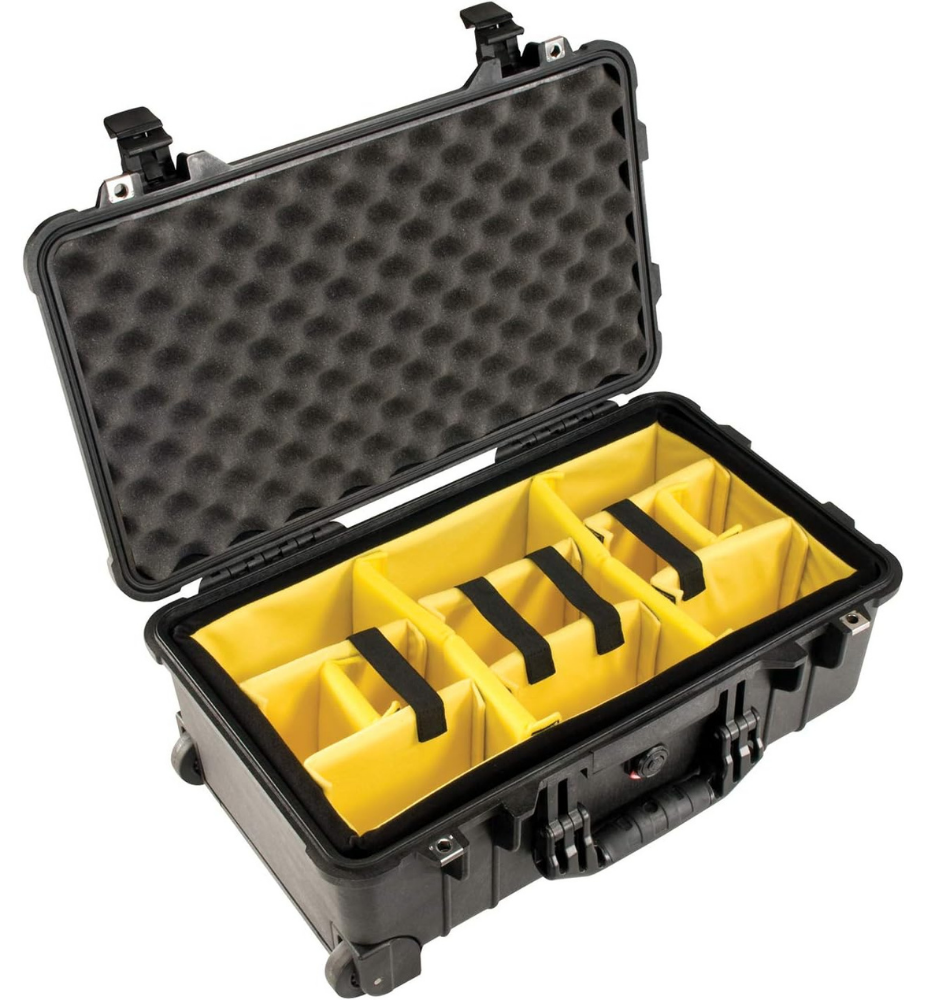
- Watertight with Automatic Pressure Equalization Valve
- Reinforced padlock protectors
- Stainless steel ball bearing wheels
- Single Layer padded dividers with Velcro adjustments; Exterior Dimensions: 22"L x 13.81"W x 9"D (55.9 x 35.1 x 22.9 cm); Interior Dimensions: 19.75" x 11.00" x 7.60" (50.1 x 27.9 x 19.3 cm)
- Foam Layer 1 (Lid)-1.81 inch (Convolute), Foam Layer 2 (Base)-2.63 inch-Pick N Pluck ( 0.75 inch x .50 inch squares), Foam Layer 3 (Base)-2.63 inch ( 0.75 inch x .50 inch squares), Foam Layer 4 (Base)-0.50 inch (Solid)
Pelican Air 1535 Case
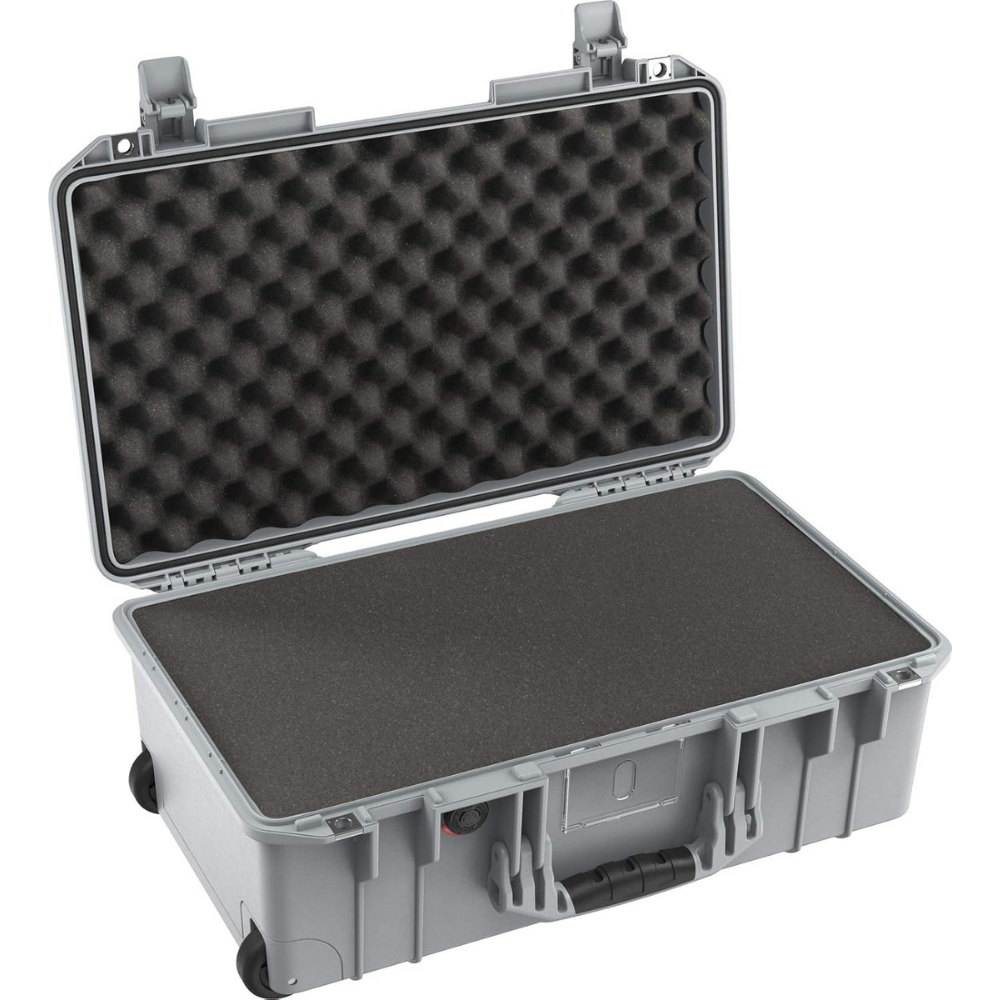
- PREMIUM MULTI-PURPOSE HARD CASE: Crushproof, dustproof, watertight, universal hard case for the best protection and dry box storage of camera, dive gear, equipment, electronics, drones, and more. Lockable and TSA-approved
- FEATURES: Watertight, crushproof, and dustproof hard case. Pelican Air cases are up to 40% lighter than traditional cases. Has an O-Ring seal and a pressure equalization valve to balance pressure and keep water out. Includes customizable foam
- DIMENSIONS (LxWxH Inches): Exterior 21.96 x 13.97 x 8.98 | Interior 20.39 x 11.20 x 7.21 - Weight 9.98 lbs
- MADE IN USA: Trusted protection in use by the military, divers, first responders (fire, police, EMT) since 1976
- GUARANTEE OF EXCELLENCE: Comes with Pelican's Lifetime Guarantee of Excellence
FAQs
Can I use any Pelican case, or does it need to be a “camera case” version?
You can use most hard cases, but “camera case” versions are ideal because they usually include padded dividers designed for modular organization.
Is foam better than padded dividers?
Foam is great for a fixed gear; you never change. Dividers are better for a range bag because you’ll likely adjust compartments as your loadout changes (or as you add accessories).
Will a rolling hard case hold up on gravel and uneven ground?
It depends on the wheels. Larger, stronger wheels and reinforced housings perform much better. If your range involves rough terrain, prioritize wheel quality.
Does it get annoying opening latches instead of zippers?
At first, maybe. But many people prefer latches in the long term because they’re consistent, durable, and don’t snag or split like zippers.
What’s the best way to keep small items from getting lost?
Use small pouches, a parts organizer, and dedicate one divider section as a “small items bay.” It keeps everything contained and easy to grab.
Is it worth the higher price compared to a standard range bag?
If you carry heavy loads, walk long distances, or have replaced soft bags before, yes—comfort and durability are usually worth the upgrade.
Final Thoughts: A Rolling Range Bag That Actually Lasts
Using a Pelican camera case as a rolling range bag is one of those upgrades that feels obvious once you try it. You get:
- comfort from rolling instead of carrying
- durability that outclasses most soft bags
- organization that’s easy to customize
- long-term value if you’re tired of replacements
If you want a setup that’s clean, tough, and easy to move—this is one of the best “buy better once” gear decisions you can make. Order today!