
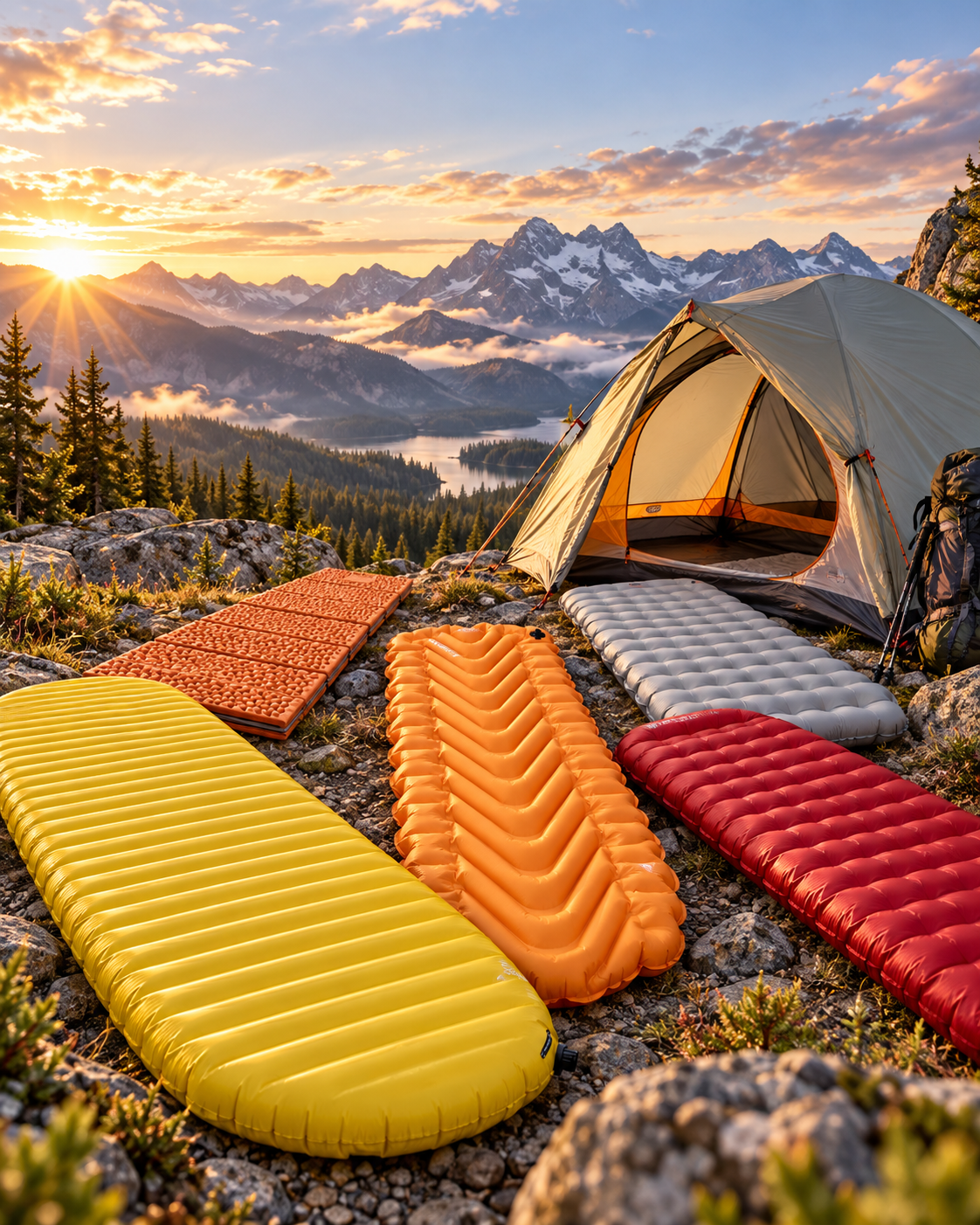
The wrong sleeping pad can ruin an otherwise great backpacking trip. A thin pad leaves your hips and shoulders pressed against the ground, while an under-insulated pad lets cold soil pull heat away from your body all night. The best sleeping pad needs to balance comfort, warmth, packed size, durability, and weight without taking over your pack. The right pad also depends on whether you want a lightweight package for summer backpacking, extra insulation for cold weather camping, or ultimate comfort on shorter backcountry trips.
For most hikers, the Therm-a-Rest NeoAir XLite NXT offers the best overall balance. It is light enough for long-distance travel, warm enough for most three-season trips, and thick enough to keep most sleepers off the ground. Backpackers watching their budget should consider the Klymit Insulated Static V Peak, while ounce counters may prefer the slightly lighter NEMO Tensor Elite. Campers who want supreme comfort may be happier carrying a thicker and more comfortable pad.
This guide covers the strongest choices for different kinds of backpackers, including side sleepers, cold-weather campers, budget shoppers, and hikers who value durability above everything else.
Quick recommendation: Choose an ASTM-tested R-value of roughly 3 to 5 for ordinary three-season backpacking. For winter camping, frozen ground, or sleeping directly on snow, look for an R-value above 5 and preferably around 7 or higher.
Best Backpacking Sleeping Pads at a Glance
Sleeping pad | Best for | Weight* | R-value | Thickness | Construction |
|---|---|---|---|---|---|
Therm-a-Rest NeoAir XLite NXT | Best overall | 13 oz. | 4.5 | 3 in. | Inflatable |
Klymit Insulated Static V Peak | Best budget pad | 1 lb. 6 oz. | 4.2 | 2.5 in. | Inflatable |
NEMO Tensor Elite | Best ultralight pad | 8.5 oz. | 2.4 | 3 in. | Inflatable |
Therm-a-Rest NeoLoft | Best for side sleepers | 1 lb. 9 oz. | 4.7 | 4.6 in. | Inflatable |
Therm-a-Rest NeoAir XTherm NXT | Best for cold weather | 15.5 oz. | 7.3 | 3 in. | Inflatable |
Sea to Summit Pursuit | Best self-inflating pad | 1 lb. 5.3 oz. | 3.0 | 2 in. | Foam/air |
NEMO Switchback | Most durable | 14.5 oz. | 2.0 | 0.9 in. | Closed-cell foam |
NEMO Tensor All-Season | Best quiet all-season option | 14.1 oz. | 5.4 | 3.5 in. | Inflatable |
Big Agnes Rapide SL | Best balance of plush comfort and packability | About 18 oz.** | 4.8 | 4.25 in. | Inflatable |
Sea to Summit Ether Light XR | Best stable air-sprung feel | Varies by size | Varies by model | About 4 in. | Inflatable |
*Weights refer to a regular or regular mummy configuration where available. Sizes and model revisions can change the final weight. **Rapide SL specifications vary by shape and model year, so check the listing before ordering.
Best Overall Backpacking Sleeping Pad
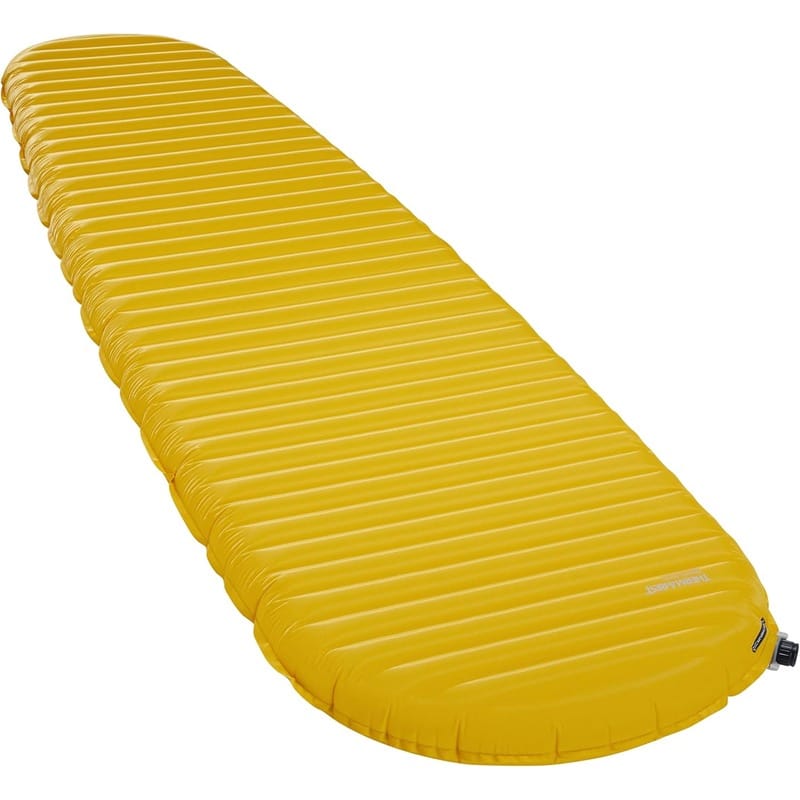
The Therm-a-Rest NeoAir XLite NXT remains the easiest sleeping pad to recommend to the widest range of backpackers. At about 13 ounces in the regular size, it delivers a strong warmth-to-weight ratio without forcing you to accept a paper-thin sleeping surface. Its 3-inch thickness is enough for most back, stomach, and side sleepers, although larger side sleepers may want a wide model or the deeper NeoLoft.
An R-value of 4.5 makes the XLite NXT a genuine three-season pad. It is suitable for cool spring and fall nights, yet it does not carry the weight and bulk of a dedicated winter mat. Therm-a-Rest’s internal reflective layers and triangular baffle system retain heat without relying on bulky insulation.
The WingLock valve is another practical advantage. Its one-way design prevents air from escaping between breaths, works with the included pump sack, and opens widely for quicker deflation. The NXT generation is also substantially quieter than older NeoAir models, though restless sleepers may still hear some crinkling.
Pros
- Excellent balance of weight, warmth, and packed size
- 3-inch cushion supports most sleeping positions
- R-value of 4.5 works for most three-season trips
- Multiple lengths, widths, and shapes available
- Improved noise level compared with older XLite pads
Cons
- More expensive than entry-level pads
- Reflective construction still makes some noise
- Lightweight shell requires reasonable campsite care
Best for: Thru-hikers, weekend backpackers, and buyers who want one high-quality pad for most nonwinter trips.
Best Budget Backpacking Sleeping Pad
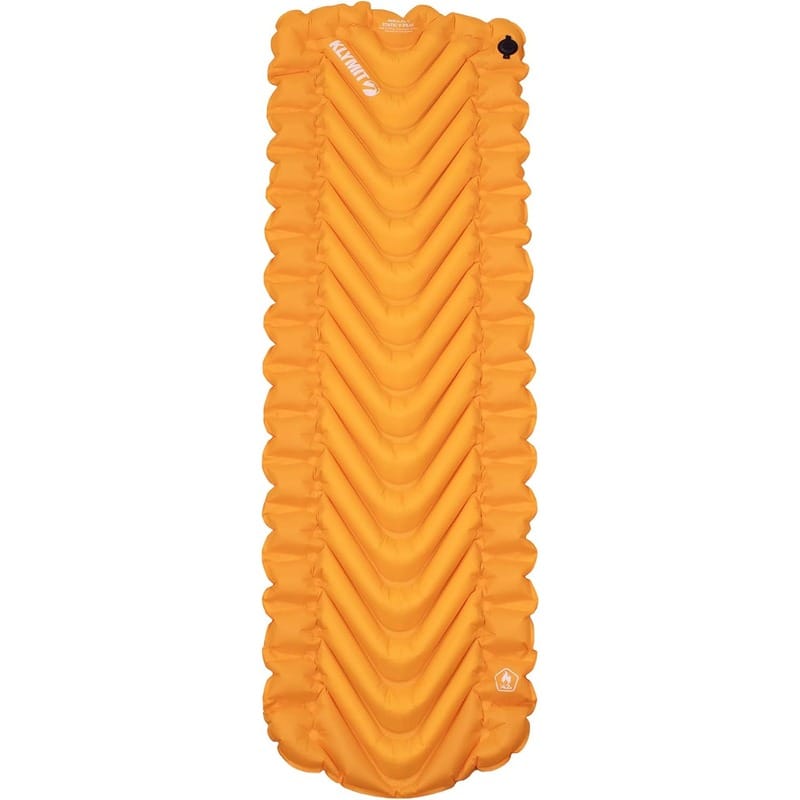
The Klymit Insulated Static V Peak trades a few ounces for a lower price, tougher fabric, and useful cold-weather performance. Its 75-denier polyester shell is considerably heavier than the delicate fabrics used on many premium ultralight pads. That makes it attractive to newer backpackers who do not want to treat their sleeping pad like laboratory equipment.
The V-shaped chambers are designed to limit air movement and keep the sleeper centered. Raised side rails provide a little more security for people who move during the night. Its regular version is also wider than the common 20-inch backpacking standard, giving your arms and elbows more room.
At 2.5 inches thick, it is comfortable enough for many sleepers but not ideal for everyone. A heavier side sleeper may compress the pad at the hips, especially when kneeling or sitting on one small area. Fine-tuning its valve is also less elegant than adjusting the valves on more expensive pads.
Pros
- Strong value for an insulated inflatable pad
- R-value of 4.2 covers most three-season use
- Durable 75D polyester fabric
- Wider sleeping area than many ultralight models
- Side rails help keep sleepers centered
Cons
- Heavier than premium backpacking pads
- Only 2.5 inches thick
- Valve is less convenient for small firmness adjustments
Best for: Beginners, occasional backpackers, and campers who prefer tougher construction over minimum weight.
Best Ultralight Backpacking Sleeping Pad
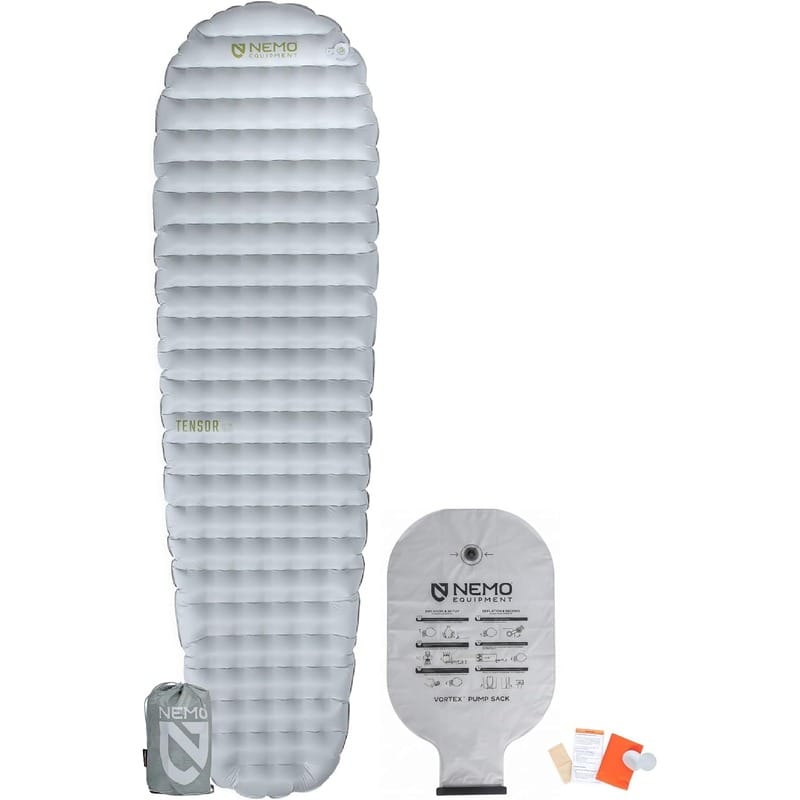
The NEMO Tensor Elite is for backpackers who count every ounce. At approximately 8.5 ounces in the regular mummy version, it weighs dramatically less than most insulated air pads while still providing a full 3 inches of cushion.
NEMO uses a structured baffle layout that spreads body weight across the pad instead of creating the unstable water-bed feeling found in some ultralight models. Its Laylow valve allows quick inflation, rapid deflation, and controlled pressure adjustments. The included pump sack keeps moisture from your breath out of the pad, although strict ultralight hikers may leave it behind.
The major limitation is warmth. An R-value of 2.4 makes this primarily a warm-weather pad. It may work on mild shoulder-season trips, but it is not the right choice for regular camping on cold or frozen ground. The 10D shell is also exceptionally thin, so clearing sharp debris and carrying the repair kit are essential.
Pros
- Exceptionally low weight
- Comfortable 3-inch thickness
- Stable baffle design
- Compact packed size
- Quieter than many foil-insulated pads
Cons
- Low R-value limits cold-weather use
- Thin 10D fabric needs careful handling
- Premium price for a specialized summer pad
Best for: Ultralight hikers, racers, and warm-weather backpackers trying to reduce base weight.
Best Backpacking Sleeping Pad for Side Sleepers
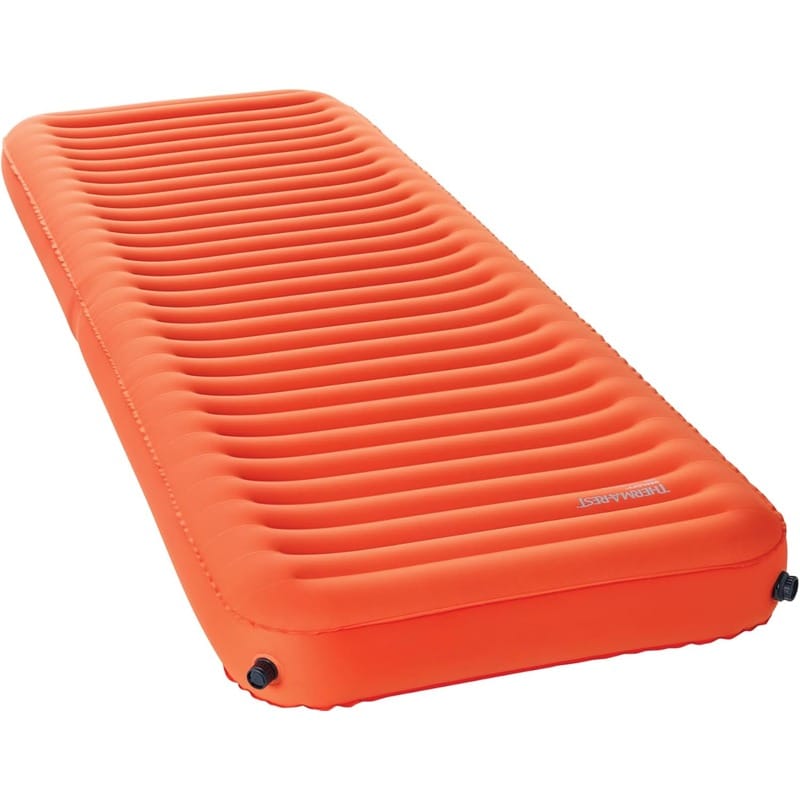
Side sleepers often need more depth than conventional backpacking pads provide. The Therm-a-Rest NeoLoft answers that problem with an unusually thick 4.6-inch profile, vertical sidewalls, and a soft stretch-knit sleeping surface. Rather than balancing on a narrow rounded pad, you get a broad, supportive platform that allows your hips and shoulders to sink in without touching the ground.
The NeoLoft’s R-value of 4.7 gives it enough insulation for three-season travel and some colder shoulder-season nights. Its soft fabric is quieter and feels less plastic-like than the surface of a traditional ultralight mattress. Separate inflation and deflation valves also make setup and packing more manageable.
The tradeoff is easy to see: it weighs about 1 pound 9 ounces and takes up more pack space than the XLite NXT. It is a sensible luxury on short mileage trips, but gram counters and thru-hikers will probably find it excessive.
Pros
- Deep 4.6-inch cushion for hips and shoulders
- Soft, quiet, body-conforming surface
- Vertical walls maximize usable sleeping space
- R-value of 4.7 provides dependable three-season warmth
- Tougher fabric than many ultralight pads
Cons
- Heavy for long-distance backpacking
- Larger packed size
- Tall sides make an accidental roll-off noticeable
Best for: Side sleepers, larger backpackers, and hikers willing to carry more weight for better sleep.
Best Cold-Weather Backpacking Sleeping Pad
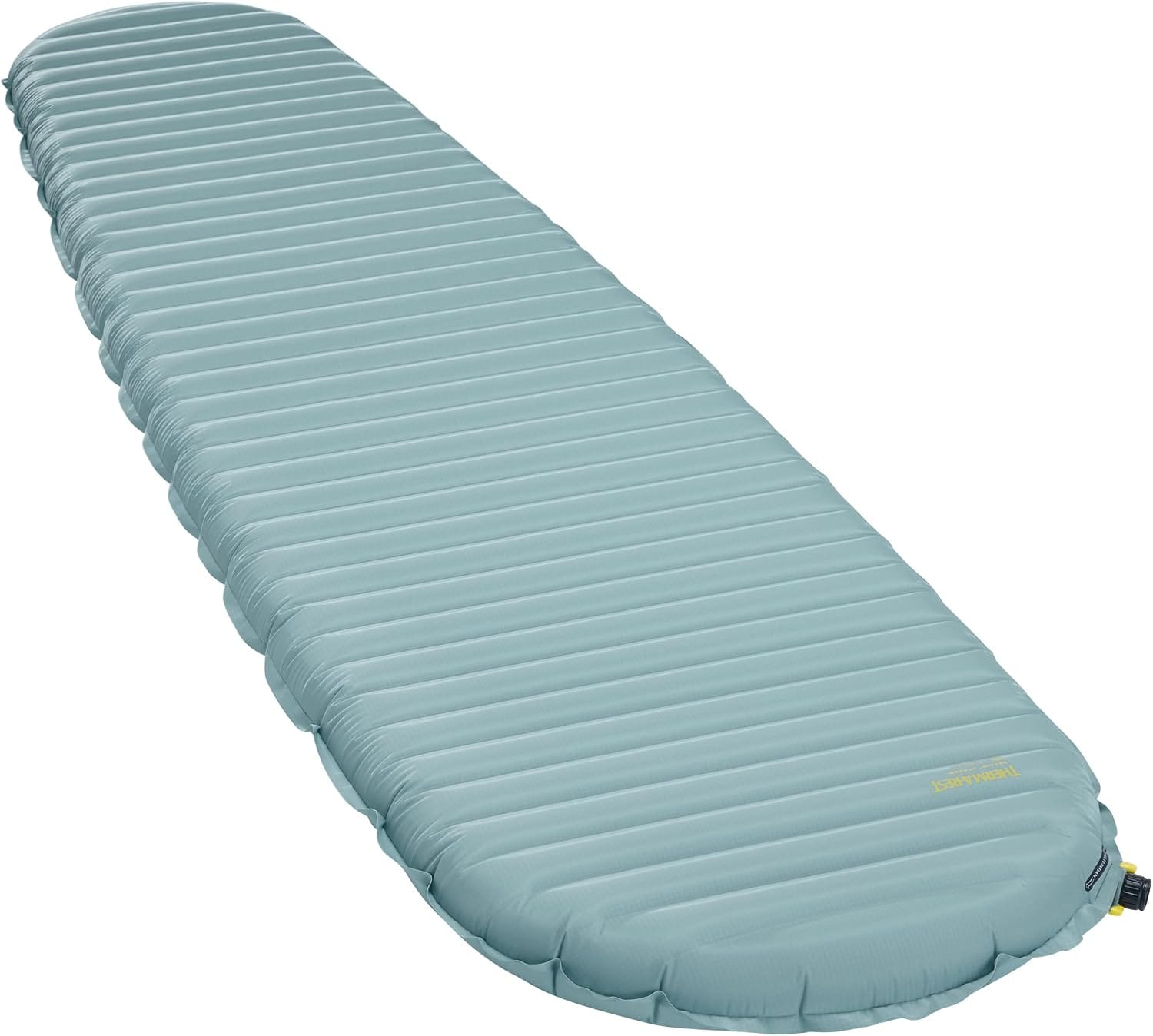
For winter backpacking, the Therm-a-Rest NeoAir XTherm NXT provides outstanding insulation without the bulk normally associated with a four-season sleep system. Its R-value of 7.3 can handle frozen ground and snow, while the regular model weighs about 15.5 ounces.
The pad combines a 3-inch air chamber with multiple reflective thermal layers. Its 70D bottom fabric is notably tougher than the floor material used on many ultralight pads, which matters when a puncture could become a serious cold-weather problem. A 30D top keeps the overall weight reasonable.
The XTherm is not silent, but current versions are less crinkly than earlier generations. Winter campers should use the pump sack rather than blowing directly into the pad. Moisture introduced by your breath can condense or freeze inside an air mattress in subfreezing conditions.
Pros
- Excellent 7.3 R-value
- Remarkable warmth-to-weight performance
- Durable 70D bottom fabric
- Reliable WingLock valve
- Several mummy and rectangular sizes
Cons
- Costs more than a three-season pad
- Some reflective-film noise remains
- Too warm and expensive for summer-only campers
Best for: Winter backpacking, high elevations, shoulder-season travel, and sleeping on snow.
Best Self-Inflating Backpacking Sleeping Pad
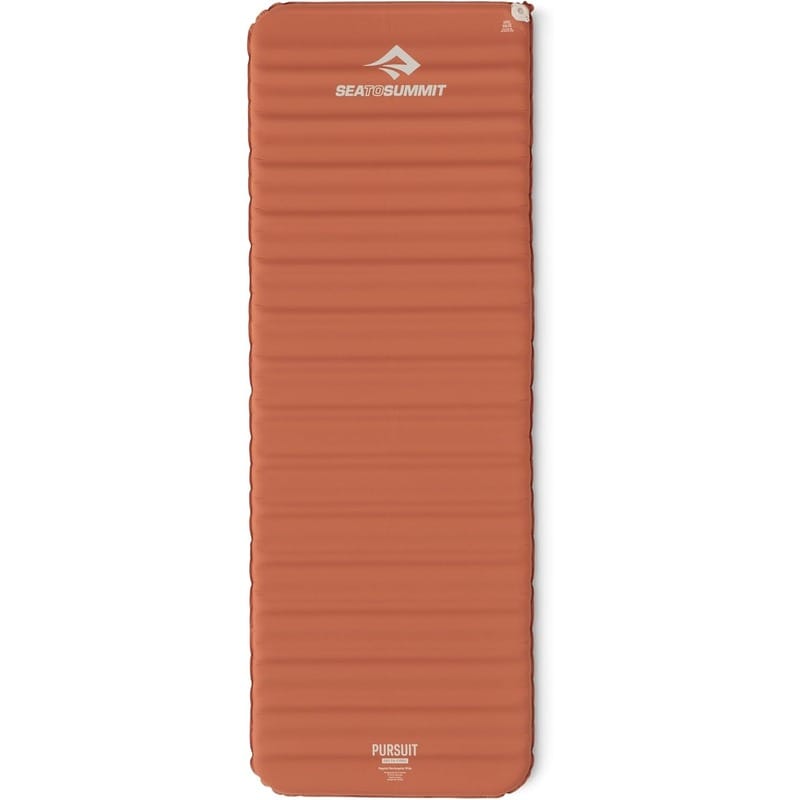
The Sea to Summit Pursuit is a useful middle ground between a pure air mattress and an old-fashioned solid foam pad. Its cored foam interior expands when the valve is opened, reducing the amount of air you must add manually. The foam also creates a quieter, more stable sleeping surface and gives you some insulation even if the pad loses a little pressure.
The regular mummy version weighs about 1 pound 5.3 ounces, has an R-value of 3, and measures 2 inches thick. Those numbers are not class-leading, but the pad prioritizes simplicity and a less crinkly feel. Its reversible XPEL valve holds air out while you roll the mattress, which solves one of the most annoying parts of packing a self-inflating pad.
Do not expect it to inflate to full firmness on its own. Self-inflation normally gets it most of the way there, and you finish with a few breaths. It is also bulkier than a lightweight air-only design.
Pros
- Quiet and stable foam-supported feel
- Partially self-inflating
- Useful one-way deflation valve
- More forgiving than a delicate ultralight air pad
- Available in multiple sizes and shapes
Cons
- Heavier and bulkier than most air pads
- Only 2 inches thick
- Requires extra breaths to reach full firmness
Best for: Light sleepers, traditional self-inflating-pad fans, and backpackers who value ease of use over minimum weight.
Most Durable Backpacking Sleeping Pad
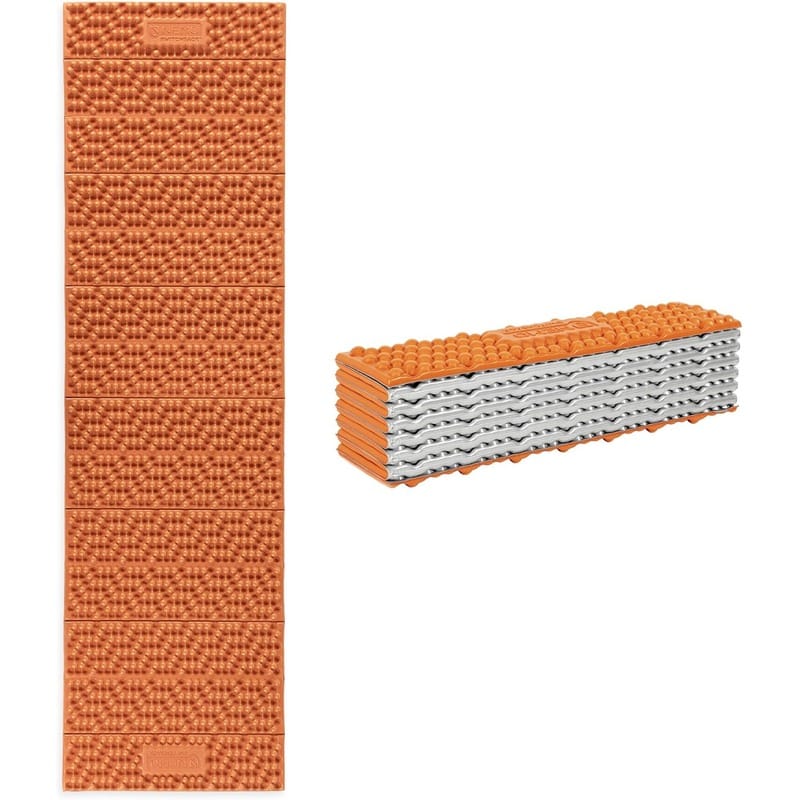
The NEMO Switchback cannot spring a leak, develop a bad valve, or leave you flat on the ground at 2 a.m. This accordion-folding closed-cell foam pad is a dependable choice for rugged trails, desert camps, and thru-hikes where reliability matters more than luxury.
Its dual-density foam places a softer layer against the body and a firmer layer underneath for support. Raised nodes add cushioning, while a reflective film helps return some radiant heat. With an R-value of 2 and less than an inch of thickness, however, it is best used alone in mild weather.
In colder conditions, the Switchback is excellent underneath an inflatable pad. The foam adds insulation, protects the inflatable from sharp ground, and still provides a basic backup bed if the upper pad fails. R-values are generally additive, so pairing an R-2 foam pad with an R-4.5 air pad creates a substantially warmer system.
Pros
- Cannot be punctured or lose air
- Sets up and packs immediately
- Useful as a sit pad during breaks
- Adds warmth and protection under an inflatable
- Affordable and easy to repair or trim
Cons
- Bulky on the outside of a backpack
- Less comfortable than an air mattress
- R-value of 2 is intended for mild conditions when used alone
Best for: Rugged use, desert travel, minimalists, and anyone wanting a backup layer under an inflatable pad.
Best Quiet All-Season Sleeping Pad
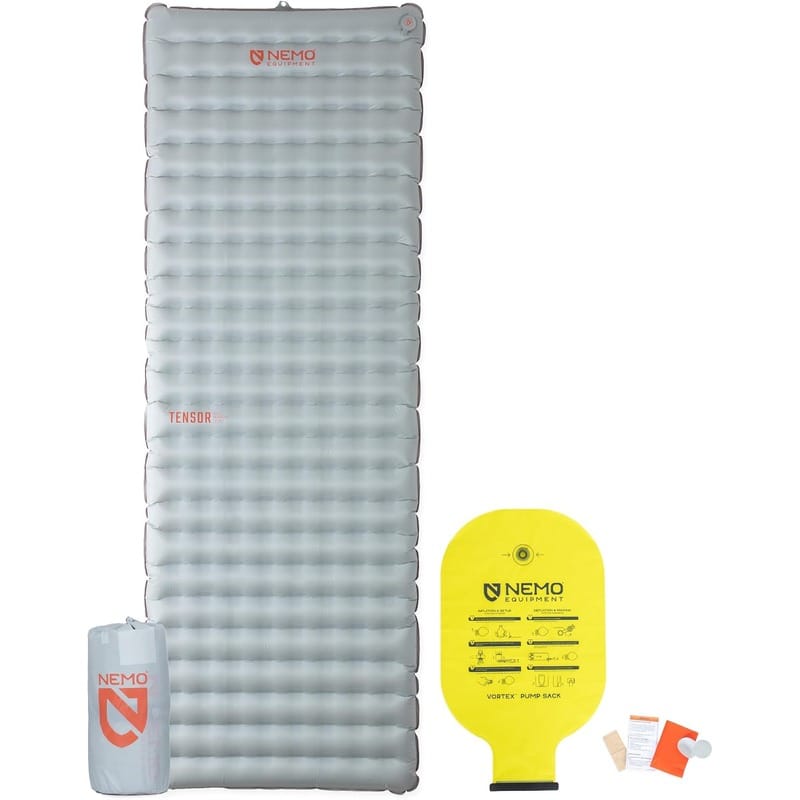
The NEMO Tensor All-Season is one of the best alternatives for sleepers who want more warmth and cushion than a basic three-season pad without moving into a heavy winter mattress. The regular model combines a 5.4 R-value, a 3.5-inch profile, and a packed weight of about 14.1 ounces.
Its suspended Thermal Mirror film is designed to retain heat while avoiding some of the loud potato-chip-bag sound associated with reflective sleeping pads. NEMO’s baffle construction also creates a stable surface that supports back and side sleepers without pronounced rails under the body.
The Tensor All-Season takes more air than a thinner pad, so the included Vortex pump sack is worth using. It speeds inflation, prevents dizziness at the end of a hard hiking day, and helps keep internal moisture low.
Pros
- Strong 5.4 R-value for its weight
- Thick 3.5-inch sleeping surface
- Quiet and stable construction
- Several rectangular and mummy sizes
- Pump sack and repair kit included
Cons
- Requires more inflation than thinner pads
- Costs more than budget three-season models
- Not as warm as a dedicated winter pad
Best for: Three-season hikers who sleep cold, quiet-sleep seekers, and backpackers who want one pad that stretches into shoulder seasons.
Most Comfortable Lightweight Alternative
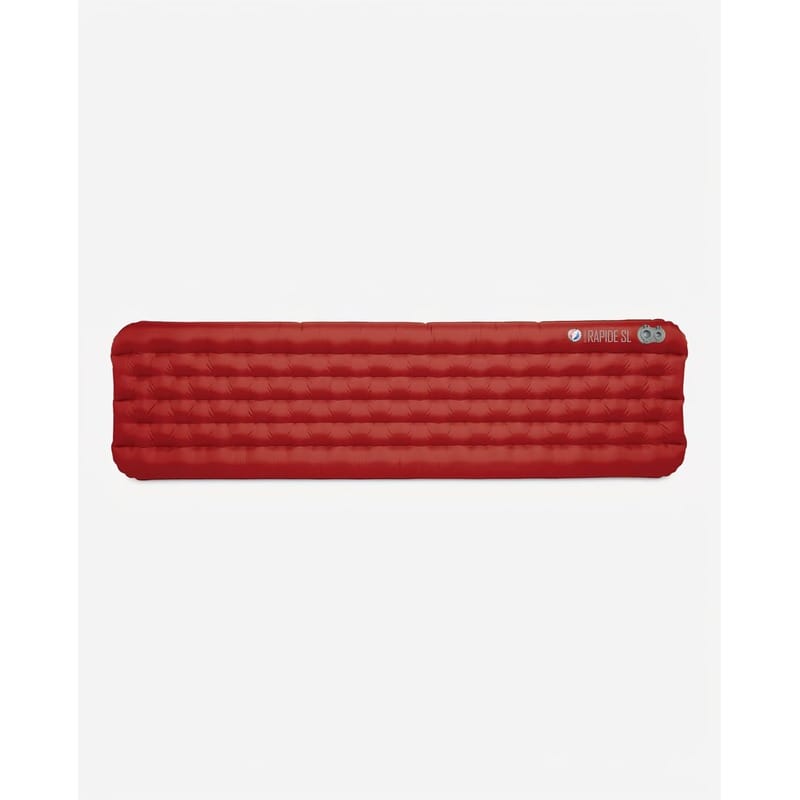
The Big Agnes Rapide SL is one of our favorite sleeping pads for backpackers who want much of the feel of a camping mattress in a trail-friendly package. The 4.25-inch outer rails help cradle the body, while the quilted center chambers provide a stable sleeping area. This construction is particularly helpful when a prominent hip bone tends to bottom out other inflatable pads.
With an ASTM R-value around 4.8 in the current insulated version, the Rapide SL delivers useful three-season warmth and can stretch into chilly shoulder-season trips. It is not the warmest sleeping pad in this guide, but it is warmer and more supportive than many summer-focused ultralight pads. Compared with the NeoLoft, the Rapide SL is generally the more backpacking-oriented choice; compared with an XLite NXT, it gives up some weight savings in exchange for a deeper and more comfortable sleeping surface.
Big Agnes sells mummy and rectangular-shape versions, along with multiple lengths and widths. Check the exact pad width carefully because a regular-wide Rapide SL can be dramatically more relaxing for an active or broad-shouldered sleeper than a narrow 20-inch mummy pad.
Pros
- Thick, supportive chambers provide supreme comfort
- Raised rails help prevent rolling off
- Good R-value for most backpacking trips
- Available in several shapes and widths
- Packs smaller than many comfort-first pads
Cons
- Heavier than true ultralight choices
- Inflation takes longer than with lower-volume pads
- Exact specifications vary by size and model year
Best for: Side sleepers and comfort-focused hikers who still need a reasonably lightweight package.
Best Air-Sprung Comfort
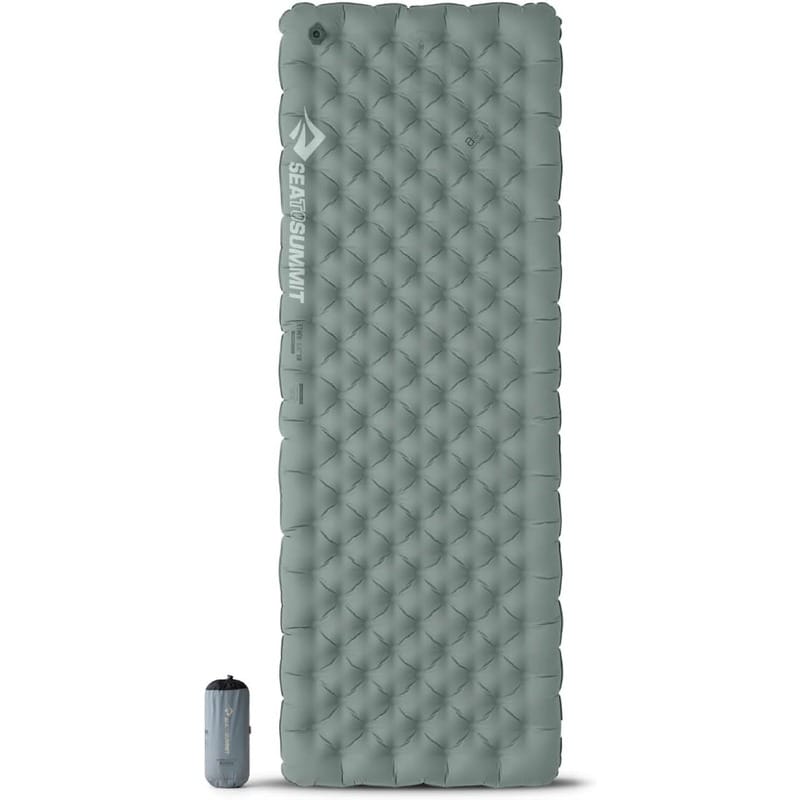
The Sea to Summit Ether Light family uses individual Air Sprung Cells rather than long horizontal or vertical tubes. The result feels more like a field of small supportive springs, allowing the pad to conform around shoulders, knees, and hips. Among other pads designed for comfort, the Ether Light stands out for stability and pressure relief.
The current Ether Light XR line includes different insulation levels, sizes, and shapes. Some versions target three-season use, while the warmer Ether Light XR Pro is designed for cold conditions. Because names and specifications can look similar, confirm the exact R-value and weight instead of assuming every Summit Ether Light listing is the same pad type.
Several Sea to Summit pads also place a PillowLock patch near the head to hold a compatible pillow in position. That is not a built in pillow, but it provides a more secure setup than balancing a loose camp pillow on most pads. Buyers who specifically want a built in pillow should look at other inflatable pads with a raised head baffle, recognizing that the feature can limit sleeping-position choices.
Pros
- Air Sprung Cells distribute pressure evenly
- Excellent comfort for side and active sleepers
- Multiple insulation levels and sizes
- PillowLock can secure a compatible pillow
- Thick sleeping surface smooths uneven ground
Cons
- Model names and specifications require careful checking
- Heavier versions are less appealing for ultralight travel
- High air volume makes a pump sack especially useful
Best for: Hikers who place sleep quality above minimum weight and want an alternative to conventional baffled pads.
What About a Double Sleeping Pad?
A double sleeping pad eliminates the cold and uncomfortable gap that forms between two individual mats. It can provide ultimate comfort for couples, parents sharing with a small child, or hikers who simply want more room. A double pad also keeps blankets and two-person sleeping bags supported across their full width.
For backpacking, the disadvantages are weight, packed volume, and lack of redundancy. If a double inflatable develops a leak, both sleepers lose their mattress. Two individual pads are easier to divide between packs and allow each person to choose a different firmness, pad width, or insulation rating. Couples who still prefer a double model can divide the remaining sleep system, with one hiker carrying the pad while the other carries more of the shelter.
How to Choose the Best Backpacking Sleeping Pad
Understand R-Value
R-value measures resistance to heat flow through the pad. A higher number means more protection from the cold ground. It is not a temperature rating, because your sleeping bag, shelter, clothing, humidity, wind exposure, metabolism, and campsite all affect warmth.
A practical starting point is:
- R 1 to 2.5: Warm summer nights
- R 3 to 4: General three-season use
- R 4 to 5.5: Cold sleepers and shoulder seasons
- R 6 and higher: Winter camping and frozen ground
When stacking pads, their R-values are approximately additive. An inflatable pad rated R 4.5 placed on a foam pad rated R 2 creates a system near R 6.5.
Weight Versus Comfort
A pad between roughly 12 and 18 ounces is a strong target for most backpackers. Going below 10 ounces normally means accepting thinner fabric, a narrow mummy shape, reduced warmth, or a higher price. One pad may be only slightly lighter than another, yet lose significant insulation or durability. Pads over 20 ounces can be worthwhile for side sleepers and short trips, but the extra weight becomes noticeable over long mileage.
Thickness and Sleeping Position
Back sleepers can often use a 2.5- to 3-inch pad comfortably. Side sleepers place more pressure on the hips and shoulders and usually benefit from at least 3 inches of depth. Larger sleepers or anyone with painful pressure points may prefer 3.5 to 4.5 inches.
Do not automatically inflate a pad until it is rock hard. A slightly softer pad can distribute weight more comfortably. Start firm, lie down in your normal position, and release small amounts of air until your body feels supported without touching the ground.
Width and Shape
A 20-inch mummy pad saves weight, but it can feel narrow. Active sleepers often rest their arms on the ground or lose insulation when their legs slide off the tapered foot. A 25-inch-wide rectangular pad is heavier but can make a significant difference in sleep quality.
Choose a pad long enough to support your head and feet in cold weather. Short pads can save several ounces in summer, but your legs resting on cold ground may offset those savings during colder trips.
Inflatable, Self-Inflating, or Foam
Inflatable pads offer the best comfort-to-weight and warmth-to-weight ratios. Their weakness is puncture risk, so carry the supplied patch kit.
Self-inflating pads combine open-cell foam with air. They are quieter and more stable but generally heavier and bulkier.
Closed-cell foam pads are nearly fail-proof and deploy instantly. A simple foam pad is bulky and provides limited cushion, but it is useful alone on summer trips or underneath other inflatable pads in winter. Foam pads also work well as seats during lunch breaks because there is no valve or delicate fabric to damage.
For cowboy camping without a tent floor, first inspect the site carefully for thorns, cactus spines, sharp stones, and wet ground. A foam pad makes a dependable extra layer beneath an inflatable, while a groundsheet protects the sleep system from moisture and abrasion.
Fabric Durability
Fabric denier indicates thread size, not complete strength, but it is still a helpful comparison. A 10D or 15D ultralight shell needs careful campsite preparation. Fabrics around 30D offer a useful balance, while 70D and 75D bottoms are better suited to rough treatment.
Even a tough pad should be placed inside a tent or on a groundsheet after removing thorns, sharp sticks, and pointed stones.
Noise
Reflective internal films can make a crinkling sound when you turn over. Modern designs have improved, but they are not all silent. Light sleepers should look for soft top fabrics, foam-core construction, or quieter suspended-film systems. A sleeping-bag liner or thin layer of clothing between the bag and pad can reduce squeaking.
Critical Features Worth Checking
Beyond weight and R-value, the critical features include a dependable valve, an effective pump sack, usable pad width, durable bottom fabric, a repair kit, and the ability to adjust firmness while lying down. Raised side rails benefit restless sleepers, while a rectangular shape provides more freedom for the arms and feet. A built-in pillow or raised head baffle can be convenient, but separate pillows are easier to position and replace.
The most comfortable sleeping pad is not automatically the best pad for every hike. An affordable pad with dependable insulation may be the right pad for a beginner, while an experienced thru-hiker may accept less cushion to save several ounces. Match the pad type to the trip rather than buying entirely by weight or thickness.
Backpacking Sleeping Pad Care Tips
- Test the pad at home before every major trip.
- Clear sharp debris before pitching the tent.
- Use the pump sack when provided to limit moisture inside the pad.
- Carry the correct repair patches and know how to use them.
- Keep the pad away from campfire sparks and hot cookware.
- Do not leave an inflated pad sealed inside a hot vehicle or tent.
- At home, store self-inflating pads unrolled with the valve open.
- Follow the manufacturer’s storage directions for air pads.
Frequently Asked Questions
What R-value is best for a backpacking sleeping pad?
An R-value around 3 to 5 is a good range for most three-season backpacking. Summer-only hikers can use less insulation, while winter campers should normally choose R 6 or higher. Cold sleepers should select more insulation than the minimum conditions seem to require.
What is a good weight for a backpacking sleeping pad?
About 12 to 18 ounces is a practical range for a comfortable three-season pad. Ultralight models can weigh less than 10 ounces, while thicker comfort-focused or self-inflating pads may weigh more than 20 ounces.
What thickness is best for a side sleeper?
Most side sleepers should start around 3 inches. A 3.5- to 4.5-inch pad is better for larger bodies, broad shoulders, prominent hips, or people who prefer a softer mattress.
Can I use a summer sleeping pad in winter?
Not safely by itself in many winter conditions. A warm sleeping bag does not stop heat loss into frozen ground. You can stack a closed-cell foam pad beneath an inflatable pad to increase total R-value, but the combined insulation should match the expected conditions.
Are inflatable sleeping pads reliable?
Quality inflatable pads can last for years, but no air mattress is puncture-proof. Prepare the sleeping area, use a tent floor or groundsheet, keep pets and sharp gear away, and carry the manufacturer’s repair kit.
Should I choose a mummy or rectangular sleeping pad?
A mummy pad is lighter and packs smaller. A rectangular pad gives active and side sleepers more usable space. If your arms or legs frequently fall off a 20-inch pad, the comfort of a wide rectangular version is usually worth the extra ounces.
Do self-inflating pads fully inflate themselves?
Usually not. The foam expands and draws in most of the air, but several breaths are normally required to reach your preferred firmness. Leaving a compressed self-inflating pad open for longer can improve the initial expansion.
Is a sleeping pad as important as a sleeping bag?
Yes. The insulation beneath your body is compressed inside a sleeping bag and cannot trap much warm air. The pad supplies the insulation between you and the ground, so both pieces must be appropriate for the weather.
What is the warmest sleeping pad for backpacking?
The warmest sleeping pad is normally a specialized winter model with an ASTM R-value around 7 or higher. In this guide, the NEMO Tensor Extreme Conditions reaches R 8.5, while the Therm-a-Rest NeoAir XTherm NXT combines an R-value of 7.3 with especially strong durability and low weight. Staying warm also requires a suitable sleeping bag, dry clothing, an appropriate shelter, and good campsite selection.
What is the best budget sleeping pad?
The Klymit Insulated Static V Peak is our best budget sleeping pad because it combines an affordable price, R-4.2 insulation, a wide sleeping area, and tough 75D fabric. A simple foam pad such as the NEMO Switchback costs less and is nearly indestructible, but it does not offer the same cushion.
Final Thoughts
The Therm-a-Rest NeoAir XLite NXT is the best backpacking sleeping pad for most people because it gets the major decisions right: low weight, compact storage, usable three-season warmth, and enough thickness for a comfortable night.
The Klymit Insulated Static V Peak is a better fit for shoppers who want durable insulated construction without premium pricing. The NEMO Tensor Elite is the standout for summer ultralight travel, while side sleepers should look closely at the deep and quiet Therm-a-Rest NeoLoft. When the ground is frozen or covered in snow, the NeoAir XTherm NXT provides the insulation needed for serious cold-weather use.
Buy for the coldest ground you realistically expect, then choose the lightest pad that still fits your body and sleeping position. Saving a few ounces is not worth much if poor sleep leaves you dragging on the trail the next day. Order today!