
A butterfly knife balisong is a folding knife with two rotating handles that close around the blade, and a butterfly knife balisong training knife is the safer version built for flipping practice with a dull, rounded blade instead of a sharpened edge. For beginners learning to flip safely—and for experienced flippers who want a reliable trainer or a satisfying fidget tool—this guide breaks down what a balisong trainer is, how its safety features work, how to choose one, and which models are worth considering.
The right trainer can help you build coordination, timing, grip control, and muscle memory without the cuts that usually come with the steep learning curve of a live blade. Modern butterfly knives are also used for expressive manipulation and competitive flipping, so a good trainer is not just for basic practice; it is the safest way to repeat tricks, refine technique, and handle a balisong more confidently.
However, not every butterfly knife trainer performs the same. Handle weight, balance, pivot construction, hardware quality, and blade shape can make the difference between a smooth training experience and a frustrating trainer that loosens after a few sessions. You’ll also find guidance here on safe practice methods, maintenance, legal considerations, and common questions buyers ask before they choose one.
Shop butterfly knife balisong training knives on Amazon
What Is a Butterfly Knife Balisong Training Knife?
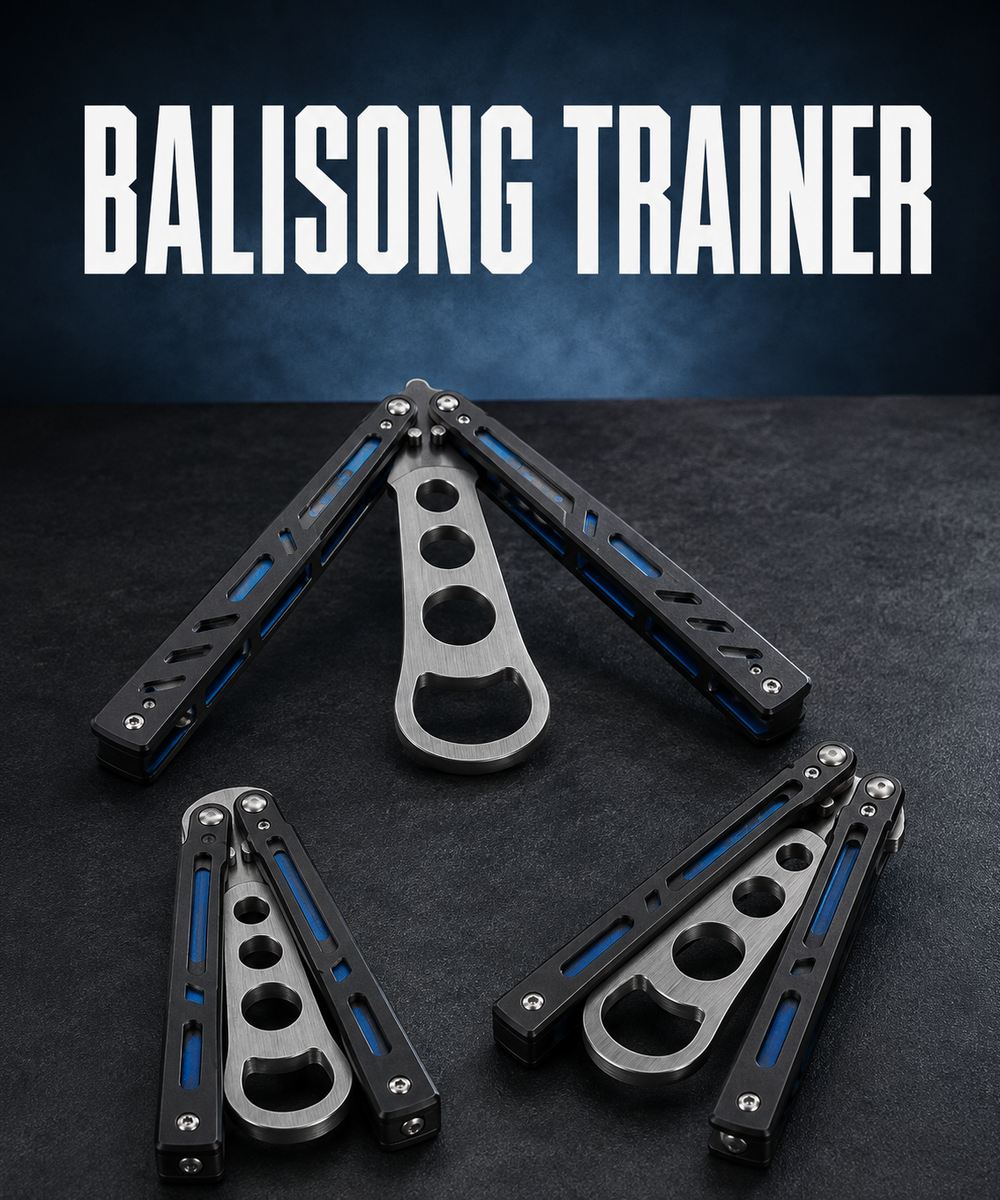
A balisong trainer is a folding practice tool modeled on the traditional Batangas knife from Batangas, Philippines, with two rotating handles and a blunt center blade. The handles swing around the pivots, allowing the user to practice openings, closings, rollovers, aerials, and other flipping techniques.
Filipino smiths have crafted balisongs for generations, and the design also has ties to Filipino martial arts because it can be deployed quickly.
Unlike a live-blade butterfly knife, the trainer blade should have:
- A completely dull edge
- A rounded or squared-off tip
- Cutouts that distinguish it from a functional blade
- Smooth edges without sharp burrs
- Enough weight to simulate the movement of a regular balisong
Live-blade balisongs are also used for everyday cutting tasks and light utility purposes.
Some models replace the traditional blade shape with a bottle opener, comb, wrench, or decorative training insert. These designs can make it even more obvious that the product is intended for practice rather than cutting.
Why Start With a Balisong Trainer Instead of Live Blades?
Flipping a butterfly knife requires the user to control the safe handle and the bite handle while keeping track of the blade’s position. The safe handle meets the spine, while the bite handle closes over the sharp edge. That combination creates a steep learning curve, especially when practicing with a sharpened knife.
A trainer reduces the risk of serious cuts while you learn the basic movements. Although a metal trainer can still pinch fingers, strike knuckles, or cause bruising, the dull blade makes beginner mistakes considerably less dangerous.
A training knife is especially useful for:
- Learning basic opening and closing techniques
- Developing hand-eye coordination
- Practicing with both hands
- Improving finger dexterity
- Building consistent muscle memory
- Learning more advanced tricks gradually
- Flipping casually as a fidget activity
A trainer is not completely harmless, but it is the most sensible place to begin.
What to Look for in a Butterfly Knife Trainer
Dull Blade and Rounded Tip
Safety should be the first consideration. The trainer should have a thick, unsharpened edge and a tip that cannot easily puncture skin.
Run your fingers carefully along the sides before your first practice session. Inexpensive stamped-steel trainers sometimes arrive with rough machining marks or small burrs. If any area feels unexpectedly sharp, stop using the trainer until the defect has been corrected.
A blade with several cutouts is often a good choice because it is easy to distinguish visually from a live blade.
Balanced Weight
A well-balanced balisong trainer feels controlled as the handles rotate. Ideally, its center of gravity should allow smooth movement without making the handles feel excessively heavy or the blade feel disconnected.
Handle-biased trainers can build momentum easily, which some beginners enjoy. Neutral balance usually feels more predictable and versatile across a wider range of tricks.
Extremely light trainers are comfortable but may not carry enough momentum through rollovers. Very heavy models can tire your fingers and make mistakes more painful.
Smooth Pivot System
The pivots determine how easily the handles rotate. Entry-level trainers commonly use washers, while more advanced designs may use bearings or bushings.
- Washers: Simple and affordable, but they may require more frequent adjustment.
- Bearings: Produce fast, smooth handle movement with very little resistance.
- Bushings: Provide smooth action while allowing the pivot screws to remain properly tightened.
- Pinned pivots: Usually inexpensive, but they offer little or no user adjustment.
For casual beginners, washers or bearings can work well. A quality bushing system is worth considering if you expect to practice regularly and want tighter tolerances.
Durable Stainless Steel Handle Materials
Stainless steel handles are strong and inexpensive, but they can be heavy and slippery. Aluminum handles are lighter, easier to control, and available in many colors. Some budget trainers use ABS plastic or reinforced polymer to reduce weight and soften the impact of failed tricks.
Common handle materials include:
- Stainless steel
- Aluminum
- Titanium
- G10
- Reinforced plastic or polymer
Traditional balisong butterfly knife handles were often made from kamagong ebony and carabao horn.
Textured handles provide better traction than highly polished steel. Jimping, grooves, machined patterns, or G10 scales can help keep the trainer under control when your hands become warm. A modern example is the Necron™, which uses latchless G10 handles paired with an S30V blade.
Adjustable Hardware
Screw-together construction allows you to adjust the pivots, replace worn parts, and perform basic maintenance. Look for a trainer that uses standard Torx screws and preferably includes spare hardware or an adjustment tool.
Pivot screws can gradually loosen during repeated flipping. Removable threadlocker may help keep properly adjusted screws in position, but it should be used sparingly. Permanent threadlocker can make future disassembly extremely difficult.
Handle Play and Blade Rub
Handle play refers to side-to-side movement in the handles. A small amount is common on inexpensive trainers, but excessive movement makes the tool feel loose and unpredictable.
Blade rub occurs when the center blade contacts the inside of a handle. Minor contact may not prevent the trainer from working, but severe rubbing can scratch the finish and interfere with smooth flipping.
A better trainer will maintain free-moving handles without excessive play.
Latch or Latchless Design
A latch keeps the trainer closed when it is being stored. Spring latches are convenient because they move away from the handles when released.
Many dedicated flippers prefer a latchless trainer because there is nothing swinging from the bottom of one handle. Removing the latch may improve balance, reduce noise, and prevent the latch from interfering with tricks.
Beginners who plan to carry or store the trainer may appreciate having a latch. Those primarily interested in flipping may prefer a latchless design.
Channel Versus Sandwich Construction
Balisong trainers generally use either channel or sandwich handle construction.
A channel handle is formed from a solid piece of material with a groove for the blade. This construction normally feels solid and has fewer parts to loosen.
Sandwich construction uses separate handle layers held together with screws or spacers. This design is easier to disassemble, customize, and repair. It can also provide additional adjustment options.
Neither construction is automatically better. A well-made sandwich trainer can outperform a poorly manufactured channel model. Overall tolerances, pivot quality, balance, and hardware are more important than the handle style alone.
Best Butterfly Knife Trainer for Beginners: Squid Industries and More
A good beginner trainer should be affordable, durable, and easy to maintain. When shopping, you’ll also see balisong knives sold as live blades or trainers, and beginners should stick with trainers. It does not need expensive titanium handles or competition-level tolerances.
Look for a model with:
- A clearly blunt practice blade
- Rounded edges and tip
- Comfortable handle texture
- Adjustable pivot screws
- Replaceable hardware
- Moderate overall weight
- Smooth but controllable handle movement
- Positive customer feedback regarding durability
On better models, common blade steels include 440C stainless steel because it is rust-resistant and easy to maintain.
The VORNNEX practice butterfly knife trainer is a popular budget-style option featuring stainless-steel construction and a dull practice blade.
The Little World butterfly knife trainer is another inexpensive choice intended for learning basic flipping movements.
Flippers wanting a more refined training tool can explore Nabalis balisong trainers, including lightweight and metal models designed specifically for repeated flipping practice. D2 tool steel is often chosen for edge retention, VG10 is a fine-grained Japanese stainless steel, and S30V is used on some high-performance blades from Benchmade.
Product availability, specifications, and pricing can change, so compare the current listing carefully before ordering.
How to Practice With a Balisong Trainer Safely
Begin in an open area away from people, pets, televisions, windows, and breakable objects. Practice over a bed, couch, carpet, or folded towel so repeated drops do not damage the trainer or the floor.
Start with slow movements. Speed should come naturally after you understand the path of each handle.
A sensible learning order is:
- Basic opening and closing
- Wrist pass
- Basic vertical opening
- Double rollout
- Basic twirl
- Thumb rollover
- Finger rollovers
- Simple combinations
Keep your fingers relaxed and avoid squeezing the handles too tightly. A rigid grip makes the movements less fluid and can cause the trainer to rebound unpredictably.
Even with a dull blade, avoid practicing close to your face. Metal handles can cause injuries when an aerial trick is missed.
Maintaining a Balisong Training Knife
Regular maintenance helps a trainer remain smooth over time, and smoother long-term performance depends on regular maintenance and precision in pivot adjustment rather than simply tightening hardware.
Inspect the pivot screws before each extended practice session. If the handles begin feeling unusually loose, stop and check the hardware.
Basic maintenance includes:
- Wiping away dirt and moisture
- Checking the pivot and body screws
- Applying a small amount of appropriate pivot lubricant
- Cleaning around washers, bearings, or bushings
- Replacing damaged screws
- Inspecting the blade for burrs
- Avoiding excessive pivot tightening
A pivot that is too loose creates handle play. A pivot that is too tight can cause the handle to bind. Adjust the screws gradually until the handles move freely without unnecessary side-to-side movement.
Legal Status of Butterfly Knife Trainers
Laws concerning butterfly knives and objects that resemble them vary by state, city, country, school, workplace, and venue. A blunt trainer may be treated differently from a sharpened balisong, but its appearance can still create legal or security problems.
Do not assume that a dull blade automatically makes a trainer legal to carry everywhere. Review your current local laws and the rules for any property you plan to visit. Avoid carrying one into schools, government buildings, airports, sporting events, or other controlled locations.
It is also sensible to transport the trainer inside a case or bag instead of visibly flipping it in public. Even a legal trainer can easily be mistaken for a real knife.
Butterfly Knife Balisong Training Knife FAQs
Is a butterfly knife trainer actually sharp?
A proper trainer should not have a sharpened cutting edge. It should have a thick, dull edge and a rounded tip. Always inspect a new trainer for machining burrs or unexpectedly sharp corners before using it.
Can a balisong trainer still hurt you?
Yes. The dull blade reduces the danger of cuts, but the handles can pinch fingers, strike knuckles, and cause bruises. A falling metal trainer can also damage feet, furniture, or flooring.
Is a metal or plastic trainer better?
Metal trainers usually provide more realistic weight and momentum. Plastic trainers are lighter, quieter, and less painful when mistakes happen. Plastic can be excellent for younger or completely inexperienced users, while metal often provides a more authentic flipping experience.
How much should a beginner spend?
An inexpensive trainer can be enough for learning basic openings and rollovers. Spending more generally provides smoother pivots, better balance, replaceable hardware, tighter tolerances, and improved durability. Beginners should prioritize safe construction and dependable hardware over decorative finishes.
Should a beginner choose bearings or bushings?
Bearings provide fast, smooth action and can feel impressive immediately. Bushings offer controlled movement and are popular among serious flippers, but their performance depends on precise manufacturing. Either system can work for a beginner when it is properly assembled.
Why does my butterfly knife trainer keep loosening?
Repeated handle movement can gradually back out the pivot screws. Check that the screws are properly adjusted and consider using a tiny amount of removable threadlocker. Do not use permanent adhesive, and avoid overtightening the pivots.
Can I sharpen a balisong trainer?
No. A dedicated trainer is not designed to become a functional knife. Its blade shape, steel, holes, edge thickness, and tip geometry are normally intended strictly for practice. Modifying it could create an unsafe and unpredictable tool.
Is a balisong trainer a good fidget toy?
It can be, provided it is used in a safe and appropriate location. Repetitive openings and simple rollovers can be satisfying, but the size and knife-like appearance make it unsuitable for many public settings.
What is the difference between a butterfly knife and a balisong?
The terms are commonly used interchangeably. The name also reflects the bali song brand Benchmade established in 1979 in California. Modern Benchmade balisongs are hand-assembled in Oregon City. “Balisong” is the traditional name associated with the Philippines, while “butterfly knife” describes the recognizable two-handle folding design. A balisong trainer uses the same general mechanism with a blunt practice blade.
Final Thoughts on Butterfly Knife Balisong Training Knives
A butterfly knife balisong training knife is the right starting point for anyone interested in learning flipping techniques with balisongs or a traditional balisong butterfly design. It allows you to build coordination, confidence, and muscle memory without introducing the cutting edge found on a functional butterfly knife.
The best trainer is not necessarily the most expensive model. Beginners need a properly rounded blade, dependable pivots, secure hardware, comfortable handles, and balanced movement. An affordable stainless-steel trainer may be enough for basic practice, while an aluminum trainer with bearings or bushings can provide a smoother experience for long-term use and fit into a broader collection later on.
Practice slowly, check the hardware regularly, and use the trainer only in a safe environment. Most importantly, confirm your local rules before buying, carrying, or using any balisong-style product. These products are for sale in the linked shop, and product listings explain how orders ship; most orders ship according to the seller’s current policies, so check each listing before you buy. Order today!