
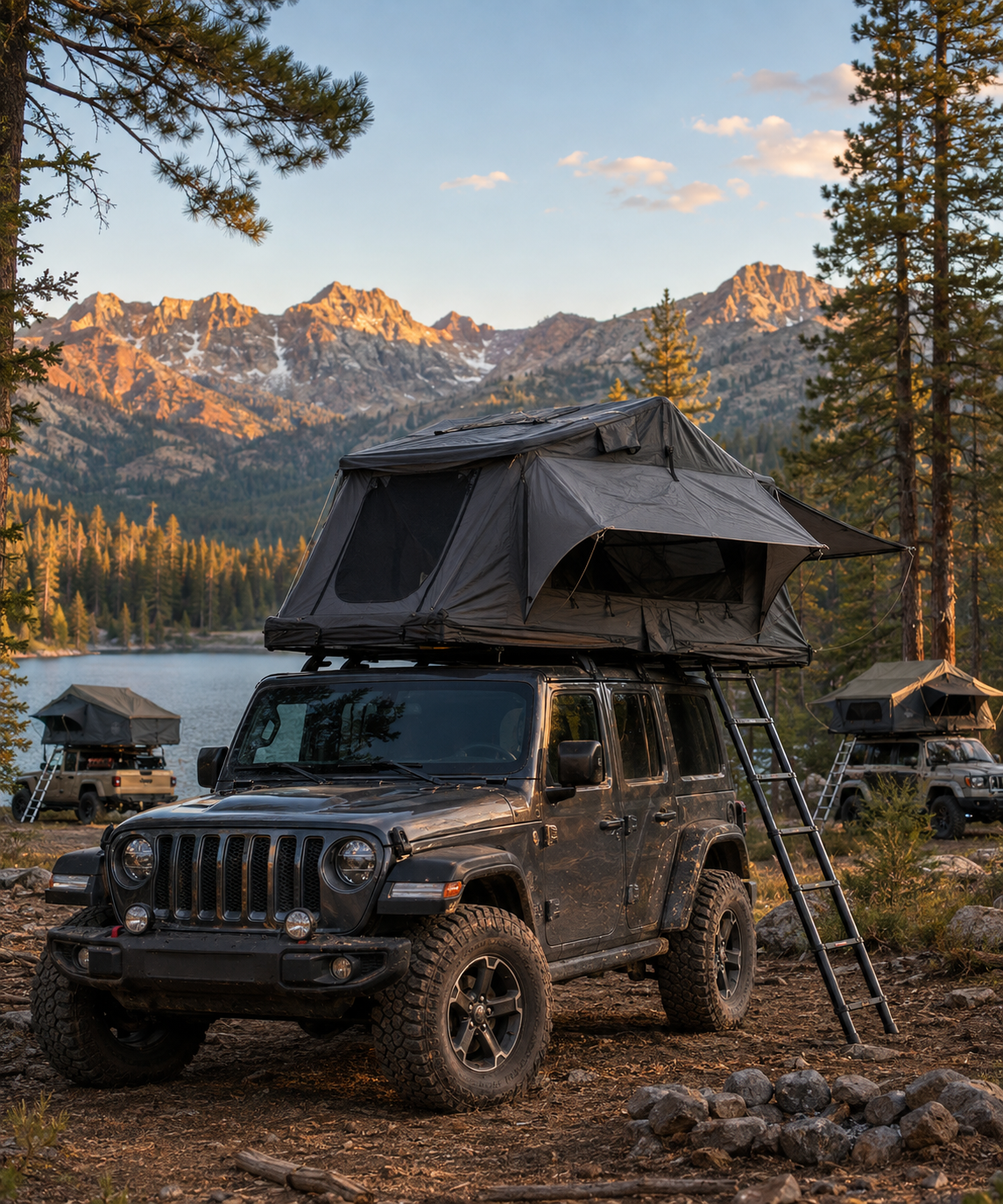
A rooftop tent can turn an SUV, Jeep, crossover, van, or pickup truck into a comfortable mobile campsite. Instead of searching for level ground, clearing rocks, and assembling tent poles, you can park, open the tent, extend the ladder, and have your sleeping area ready within minutes.
The best rooftop tents provide a comfortable mattress, reliable weather protection, robust mounting hardware, and sufficient ventilation to keep the interior from becoming hot or damp. However, rooftop tents vary considerably in weight, size, sleeping capacity, construction, and setup time.
Some campers prefer an aerodynamic hardshell rooftop tent that opens in seconds. Others need the extra sleeping space and lower price of a fold-out softshell design. Your vehicle’s roof capacity, roof rack, number of campers, and camping style should ultimately determine which model is right for you.
This guide covers the best rooftop tents for different vehicles, budgets, and camping situations.
Best Rooftop Tents at a Glance
Rooftop tent | Best for | Capacity | Tent weight | Construction |
|---|---|---|---|---|
Thule Approach M | Best overall | 2–3 people | 128 pounds | Softshell |
Naturnest Sirius 2 | Best hardshell value | 2–3 people | Varies by configuration | Hardshell |
OVS Nomadic 3 Extended | Best for overlanding | 3 people | About 156–165 pounds | Softshell |
Smittybilt Overlander Gen2 | Best for Jeeps and trucks | 2–3 people | About 154 pounds | Softshell |
Thule Foothill | Best compact design | 2 people | 122 pounds | Softshell |
OVS Nomadic 4 Extended | Best for families | 4 people | About 180 pounds | Softshell |
Always confirm specifications with the manufacturer before ordering. Rooftop-tent weight and dimensions can vary by model year, color, size, and included accessories.
Best Rooftop Tent Overall
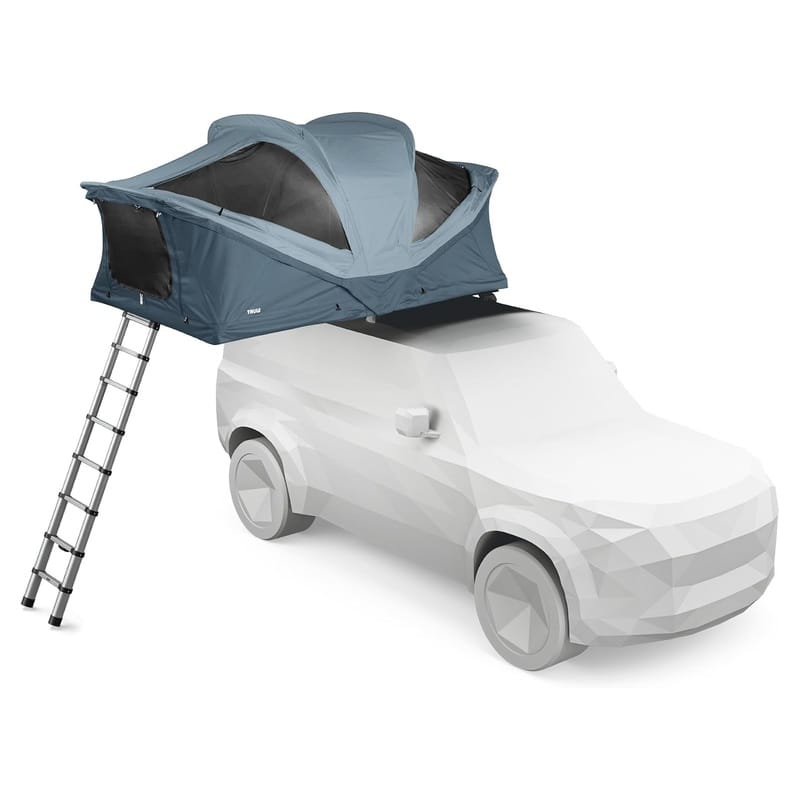
The Thule Approach M rooftop tent offers an excellent combination of interior space, dependable construction, ventilation, and manageable weight.
Its sleeping footprint measures approximately 95 by 51 inches, providing enough room for two adults to sleep comfortably or two adults and a child. The tent has a 40-inch peak interior height, so occupants have room to sit up, change clothes, and organize their equipment.
Large windows and skylights make the interior feel more open while providing ventilation during warm weather. Mesh screens help keep mosquitoes and other insects outside without blocking airflow. The wide entrance also makes climbing into the tent easier.
Thule uses a welded aluminum-tube base with insulation and an aluminum cap sheet. The canopy and rainfly are made from durable, water-resistant ripstop polyester. At approximately 128 pounds, it is lighter than many large hardshell tents while still providing a 660-pound static weight capacity.
The Approach M is not as quick to deploy as a pop-up hardshell tent, but its fold-out platform provides substantially more sleeping room than its closed-roof footprint would suggest.
Key specifications
- Sleeping capacity: Three people
- Sleeping footprint: Approximately 95 by 51 inches
- Peak interior height: Approximately 40 inches
- Tent weight: Approximately 128 pounds
- Static weight capacity: 660 pounds
- Minimum crossbar spread: 31 inches
- Mattress included: Yes
Pros
- Spacious sleeping platform
- Large windows and skylights
- Durable aluminum base
- Comfortable integrated mattress
- Relatively manageable weight
- Excellent balance of quality and space
Cons
- More setup work than a hardshell tent
- Premium price
- Requires a compatible load-bearing roof rack
Best Hardshell Rooftop Tent for the Money
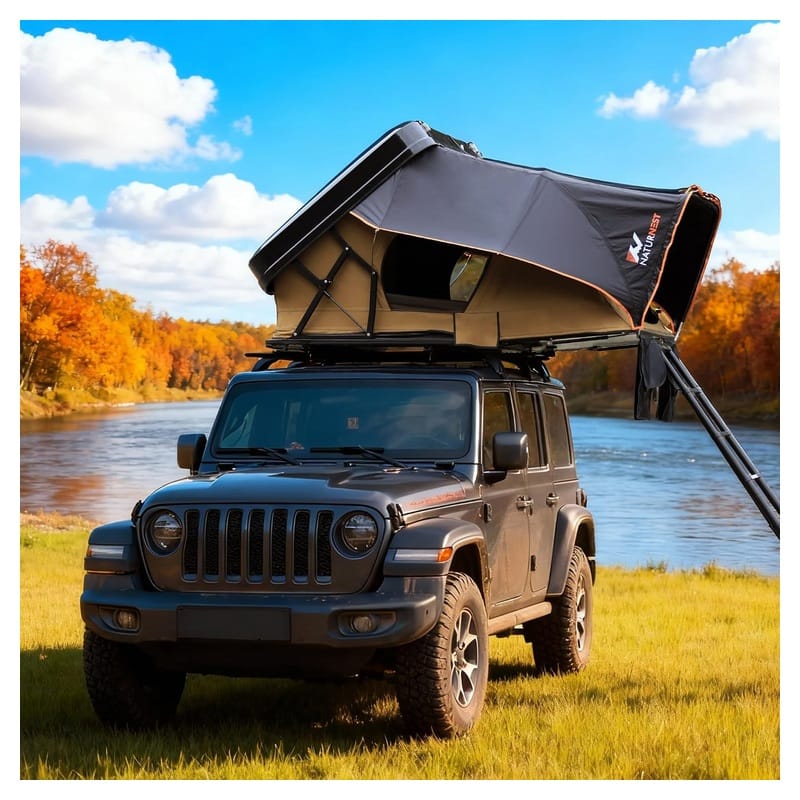
The Naturnest Sirius 2 hardshell rooftop tent is a strong choice for campers who want fast setup without moving into the highest rooftop-tent price category, and its hard shell design gives it a quick setup advantage: setup speed varies, but hardshell tents can deploy in under a minute, making them significantly faster than most softshell options.
Its pop-up design eliminates much of the unfolding, pole installation, and travel-cover work associated with traditional softshell tents. That added convenience is a big reason hardshell models appeal to frequent campers. Once the vehicle is parked, the shell can be released and raised to create an enclosed sleeping area.
The exterior shell helps protect the folded tent from rain, tree limbs, road debris, and ultraviolet exposure. Its streamlined shape can also produce less wind noise and drag than a bulky soft travel cover, although any rooftop tent will affect vehicle aerodynamics and fuel economy.
The Sirius 2 is marketed for two to three campers and includes a mattress, telescoping ladder, blackout-style fabric, windows, insect screens, and interior lighting. Its combination of quick deployment and all-season construction makes it appealing for frequent road trips and weekend overlanding.
As with many value-priced rooftop tents, owners should inspect the mounting hardware, sealant, hinges, fabric, and fasteners before the first trip. It is also important to verify the exact packaged weight because Naturnest offers several similar configurations.
Best features
- Quick pop-up setup
- Protective hardshell exterior
- Mattress and ladder included
- Blackout-style interior
- Multiple windows for airflow
- Suitable for trucks, SUVs, Jeeps, vans, and trailers with compatible racks
Pros
- Faster setup than most softshell tents
- Competitive price for a hardshell model
- Good protection while traveling
- Comfortable interior for two adults
- Four-season marketing and weather-resistant materials
Cons
- Heavier than some compact softshell tents
- Specifications vary between configurations
- Takes up considerable roof space
Best Rooftop Tent for Overlanding
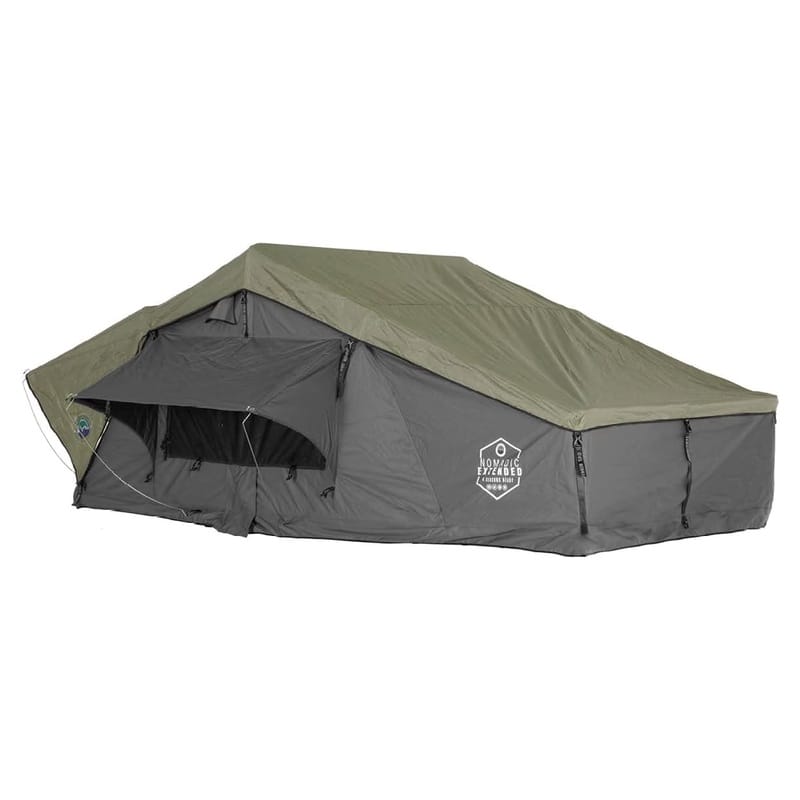
The Overland Vehicle Systems Nomadic 3 Extended is designed for campers who prioritize durability, sleeping space, and included equipment over minimum weight.
Its extended fold-out platform creates a large sleeping area, while the covered entrance provides additional protection when entering or exiting the tent. The tent body uses poly-cotton ripstop material with a waterproof Oxford polyester rainfly. Marine-grade stainless-steel hardware and a heavy travel cover help it withstand frequent travel and repeated campsite setup.
Inside, the Nomadic 3 includes a three-inch high-density foam mattress, storage pockets, a storage loft, a power-bank pouch, and LED lighting. These included features reduce the number of accessories you must purchase separately.
The tent’s size and weight make it better suited to trucks, Jeeps, larger SUVs, trailers, and substantial aftermarket rack systems. It may be too heavy for smaller crossovers or factory crossbars.
An optional annex can provide enclosed space below the sleeping platform for changing clothes, storing equipment, or creating a protected entry area. Available awnings can expand the camping setup further, but they add extra setup time and need secure anchoring in poor weather.
Key features
- Three-person sleeping capacity
- Three-inch foam mattress
- Heavy-duty ripstop tent body
- Waterproof rainfly
- Telescoping aluminum ladder
- Interior storage pockets and loft
- LED light and power-bank pouch
- Optional annex availability
Pros
- Built for demanding overland travel
- Spacious sleeping area
- Thick mattress included
- Plenty of interior storage
- Strong hardware and durable materials
- Covered entrance area
Cons
- Heavy
- Larger packed profile creates more wind resistance
- Annex is generally sold separately
- Installation will require at least two people
Best Rooftop Tent for Jeeps and Trucks
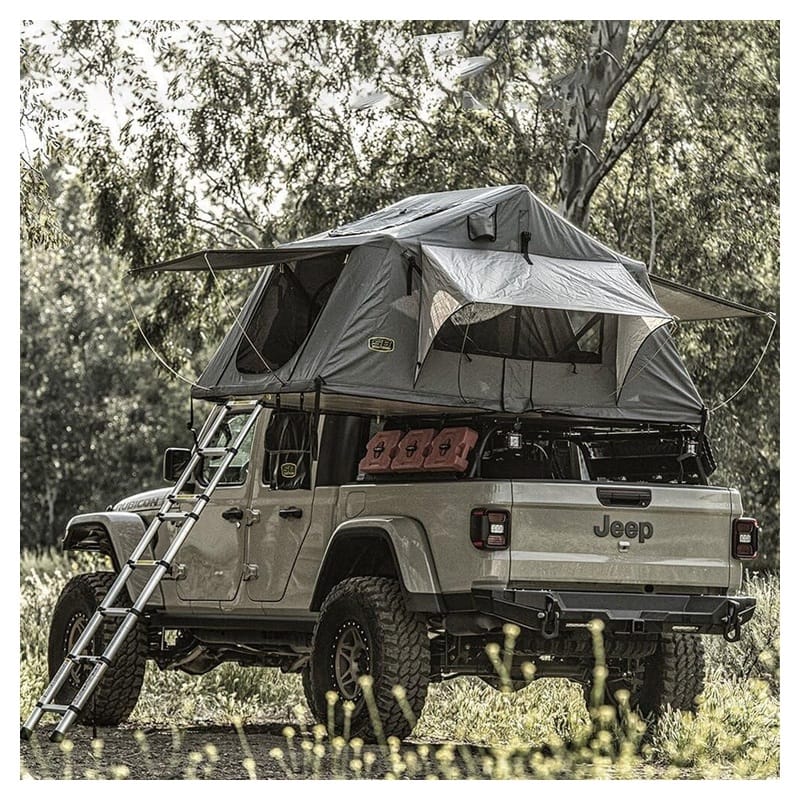
The Smittybilt Overlander Gen2 is a practical match for Jeeps, mid-size trucks, full-size trucks, or larger off-road SUVs equipped with a suitable rack.
This fold-out softshell tent provides a sleeping area measuring approximately 95 by 56 inches. Its 51-inch peak height gives occupants more headroom than many low-profile rooftop tents. The standard model is intended for up to three campers, although two adults will have considerably more room for sleeping bags and gear.
Smittybilt uses heavy-duty fabric, a waterproof rainfly, an aluminum frame, and a telescoping ladder. A mattress is included, so the tent is ready for camping once it has been properly mounted and inspected.
Its universal design works with many aftermarket racks, but “universal” does not mean it fits every factory crossbar. The rack must support the tent’s dynamic weight while driving and the combined static weight of the tent and occupants while parked.
The Gen2’s main advantage is its balance of recognizable off-road construction and reasonable pricing. It is not especially lightweight or aerodynamic, but it provides plenty of sleeping room for camping in a truck or Jeep.
Key specifications
- Capacity: Up to three people
- Open dimensions: Approximately 95 by 56 by 51 inches
- Weight: Approximately 154 pounds
- Style: Fold-out softshell
- Mattress included: Yes
- Ladder included: Yes
Pros
- Spacious interior
- Good headroom
- Designed with off-road vehicles in mind
- Rainfly, ladder, and mattress included
- Annex and awning accessories available
- Better value than many premium alternatives
Cons
- Heavy for a standard-size softshell tent
- Increased wind resistance while driving
- Not ideal for small vehicles
- Requires a substantial rack system
Best Compact Rooftop Tent
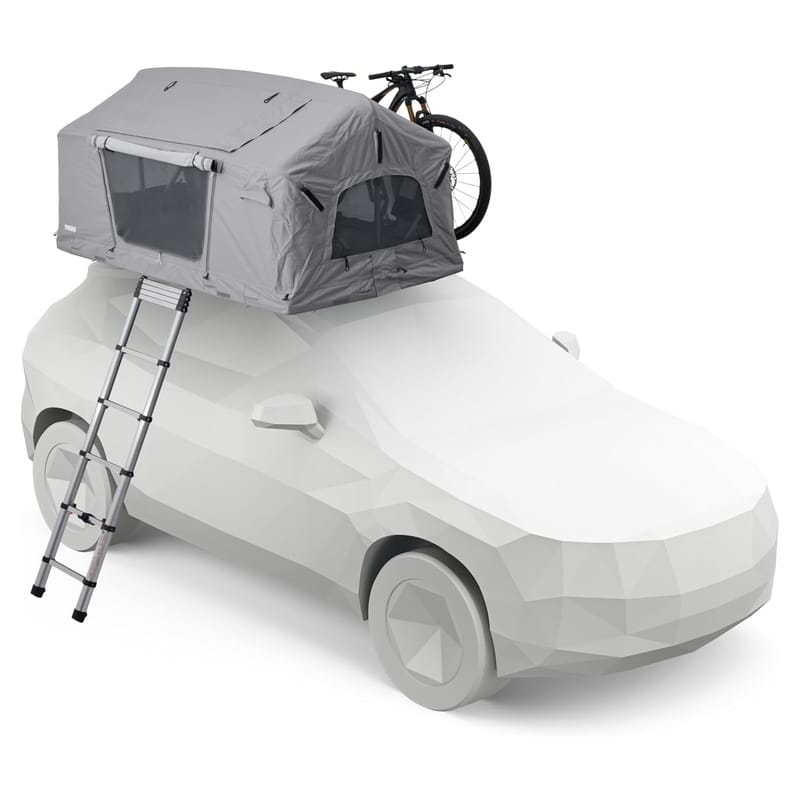
The Thule Foothill rooftop tent is designed for campers who do not want their tent to occupy the entire roof rack.
When folded, the tent is approximately 24-25 inches wide. Its narrow, compact footprint leaves part of the rack available for a bicycle, kayak, cargo box, recovery boards, or other outdoor equipment. This makes it especially useful for active campers who regularly carry multiple types of gear.
Once unfolded, the Foothill provides an 84-by-47-inch sleeping footprint for two people. Panoramic windows, dual skylights, mesh panels, and a wide entrance give the interior an open feel despite its compact, packed dimensions.
The tent weighs approximately 122 pounds and includes a foam mattress with a removable cover. Its long, narrow, closed shape may require different crossbar spacing than a conventional fold-out tent, so measure the rack and roof before purchasing.
Key specifications
- Sleeping capacity: Two people
- Sleeping footprint: Approximately 84 by 47 inches
- Peak interior height: Approximately 37 inches
- Packed width: Approximately 24–25 inches
- Weight: Approximately 122 pounds
- Static capacity: 660 pounds
Pros
- Preserves roof space for additional equipment
- Good ventilation
- Comfortable for two campers
- Durable Thule construction
- Mattress included
- Relatively low packed height
Cons
- Less interior width than larger tents
- Premium price for a two-person model
- A long, closed footprint may not fit every roof
Best Family Rooftop Tent
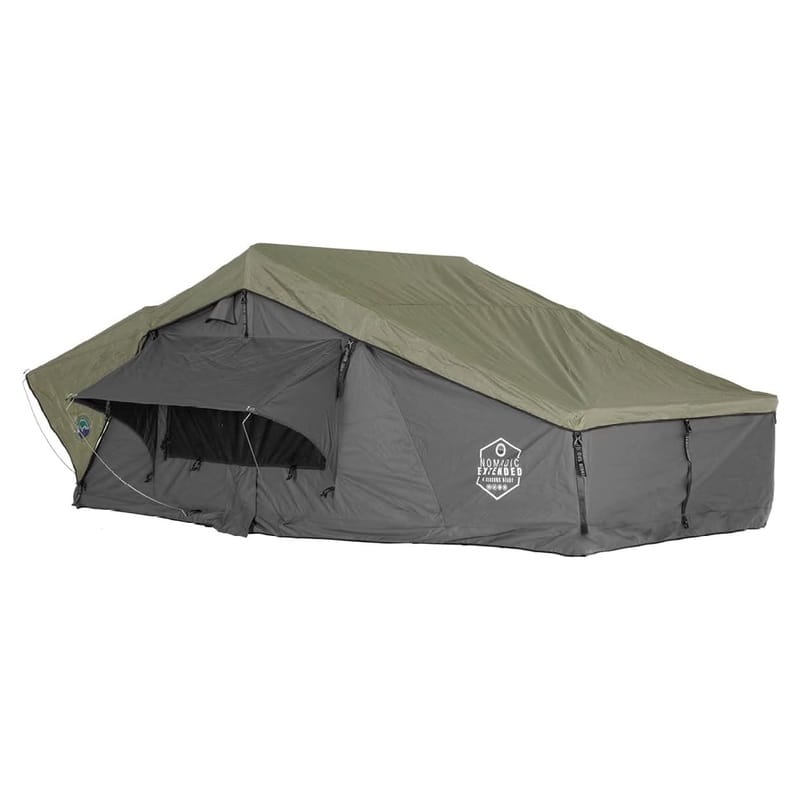
Families and groups need more sleeping width than a standard two-person rooftop tent can provide. The OVS Nomadic 4 Extended features a large sleeping platform that accommodates up to 4 campers.
Its heavy-duty poly-cotton ripstop body, waterproof rainfly, insulated base, stainless-steel hardware, and substantial travel cover are intended for frequent overland use. The included high-density foam mattress covers the sleeping platform, removing the need to inflate and pack a separate camping mattress.
The extended entrance creates additional weather protection around the ladder. An annex can add enclosed ground-level space, which is particularly helpful when camping with children or carrying a large amount of equipment.
The tradeoff is weight. A four-person rooftop tent and its rack can place a considerable load high on the vehicle, affecting acceleration, braking, cornering, crosswind stability, and fuel economy. This tent is most appropriate for a full-size SUV, pickup truck, heavy-duty trailer, or similar heavy-duty setup specifically rated for the load, and it is generally too much tent for smaller SUVs or even a mid-size SUV.
Pros
- Large sleeping platform
- Suitable for families
- Thick mattress included
- Durable all-weather materials
- Strong hardware
- Numerous interior storage features
Cons
- Very heavy
- Requires a large vehicle and heavy-duty rack
- Difficult to install or remove
- Greater effect on handling and fuel economy
How to Choose the Best Rooftop Tent
Check Your Vehicle’s Roof Capacity
Before buying a rooftop tent, find your vehicle’s dynamic and static roof-load ratings.
The dynamic roof-load rating is the weight the roof and rack can safely carry while the vehicle is moving. Include the weight of the tent, rack, mounting rails, and other roof-mounted accessories in this calculation.
The static roof-load rating applies while the vehicle is parked. This figure must support the tent, rack, occupants, bedding, and equipment stored inside.
Never assume that factory crossbars can support a rooftop tent. Many factory racks are intended only for light cargo. Confirm the capacity with the vehicle manufacturer and roof-rack manufacturer. Check the vehicle's specs carefully before choosing a rooftop tent.
Hardshell vs. Softshell Rooftop Tents
A hardshell rooftop tent typically costs more than a softshell option but offers faster setup, better protection during travel, and a lower profile. Budget rooftop tents usually cost around $800 to $1,200, mid-tier options tend to fall between $2,000 and $3,000, and premium rooftop tents generally start at $3,000 and can exceed $5,000. Hard shell tents are ideal for frequent travelers who change campsites often, and a premium hardshell is usually aimed at buyers who prioritize build quality and weather protection.
Softshell tents generally provide more sleeping room for the price. Many soft shell models are a more affordable way to get extra space, and the category often uses high-quality materials to balance comfort and durability. Their folding platforms can extend beyond the vehicle’s roof, creating a larger bed without requiring an equally large closed footprint. However, setup takes longer, and the fabric travel cover can produce more wind resistance.
Consider the Tent’s Weight
Lighter rooftop tents are easier to install, remove, and use on smaller vehicles. A tent weighing 90 to 120 pounds may be manageable with several people, while a 160- to 200-pound tent may require a garage hoist or mechanical lifting system.
Tent weight also changes the vehicle’s center of gravity. Drivers should reduce speed during sharp turns, strong crosswinds, and off-road travel.
Measure the Sleeping Area
Manufacturer capacity ratings can be optimistic. A tent listed for three people may be comfortable for two adults but tight for three full-size adults.
Compare the sleeping footprint to a standard mattress:
- Twin mattress: approximately 38 by 75 inches
- Full mattress: approximately 54 by 75 inches
- Queen mattress: approximately 60 by 80 inches
- King mattress: approximately 76 by 80 inches
Also check the peak interior height if you want enough room to sit upright or change clothes.
Look at Mattress Thickness
Most rooftop tents include a foam mattress between two and three inches thick. Firm foam can be supportive, but some campers add a thin self-inflating pad or anti-condensation mat for additional comfort.
Before adding bedding, make sure the tent can still close without placing excessive pressure on the shell, hinges, or straps. Some hardshell designs also make it easier to store bedding inside than many softshell options.
Check Weather Protection and Ventilation
Look for durable ripstop fabric, sturdy tent fabric construction, sealed seams, a waterproof rainfly, covered entrances, mesh windows, and adjustable vents. Some brands, such as Roofnest, use double-stitched, P-coated nylon for waterproofing, which can make setting up weather protection feel more like a breeze and improve the overall camping experience.
Ventilation is particularly important because condensation can collect beneath the mattress and on the tent walls. An anti-condensation mat and partially open vents can help moisture escape.
Consider Setup and Removal
A rooftop tent may open in less than a minute but still be difficult to mount or remove from the vehicle. If you only camp a few times per year, consider a quick-release mounting system or a ceiling hoist.
Remember that your vehicle generally cannot be driven away once the tent is open. Every time you leave the campsite, you will need to close and secure it.
Rooftop Tent vs. Ground Tent
A rooftop tent keeps the sleeping platform above mud, rocks, surface water, and many crawling insects. The integrated mattress also makes it more comfortable than a basic ground tent.
However, rooftop tents are substantially more expensive and much heavier. They limit you to parking only in designated areas and require you to climb a ladder each time you enter or leave.
A ground tent may be better for backpacking, older campers, people with knee or mobility limitations, and anyone who wants to leave camp assembled while using the vehicle.
Frequently Asked Questions
Are rooftop tents safe?
A rooftop tent is generally safe when mounted to a properly rated vehicle and rack with the correct hardware. The tent should be inspected before every trip, and all mounting fasteners should be tightened according to the manufacturer’s instructions.
Can any vehicle support a rooftop tent?
No. Vehicle compatibility depends on the roof design, dynamic and static roof ratings, crossbar strength, bar spacing, and tent dimensions, so fit can vary across smaller SUVs, mid-size SUVs, and trucks. Vehicles with panoramic glass roofs may have additional restrictions.
Can factory roof racks support rooftop tents?
Some can, but many cannot. Factory crossbars frequently have lower weight ratings than heavy-duty aftermarket systems. Check both the vehicle and rack manuals before installation.
Do rooftop tents reduce gas mileage?
Yes. A rooftop tent adds weight and increases aerodynamic drag. Hardshell and low-profile models generally create less drag than tall softshell tents, but fuel economy will still be affected.
Are hardshell rooftop tents better than softshell tents?
Hardshell tents are usually faster to set up, quieter on the road, and better protected during travel. Softshell tents often provide more sleeping room at a lower price. The better option depends on your budget and camping style.
Can you leave bedding inside a rooftop tent?
Some rooftop tents have enough interior space to sleep with sleeping bags and thin pillows inside. Thick bedding may prevent the tent from closing properly. Follow the manufacturer’s recommendations.
Are rooftop tents waterproof?
Quality rooftop tents use water-resistant or waterproof fabrics, rainflies, and sealed seams. However, no fabric shelter should be assumed to be completely waterproof forever. Inspect the seams and reapply an appropriate waterproofing treatment when needed.
Do rooftop tents get cold?
A rooftop tent can become cold because air circulates beneath its floor. The tent floor matters here too, since a more rigid, better-insulated base reduces heat loss to the air moving underneath. An insulated base, a suitable mattress, a cold-weather sleeping bag, and an optional thermal liner can improve warmth.
Can a rooftop tent be used in winter?
Some models are suitable for mild winter camping, especially when equipped with an insulated liner. Heavy snow, ice, and extreme winds can exceed a tent’s design limits. Always follow the manufacturer’s weather recommendations.
How fast can you drive with a rooftop tent?
Follow the tent, rack, and vehicle manufacturers’ limits for highway speeds as well as general speed limits. Drive more slowly in high winds, sharp turns, and off-road conditions because the tent raises the vehicle’s center of gravity.
How long does a rooftop tent last?
A well-maintained rooftop tent can last for many years. Lifespan depends on fabric quality, shell construction, weather exposure, storage conditions, and how frequently the tent is used.
Final Thoughts
The Thule Approach M is the best rooftop tent for most campers because it combines a spacious sleeping platform, manageable weight, excellent ventilation, and dependable construction.
The Naturnest Sirius 2 is a compelling alternative for buyers who want the speed and road protection of a hardshell tent without paying the highest premium-brand prices, and it improves camping convenience for adventurers who value faster deployment.
For more demanding truck, Jeep, and overland use, the OVS Nomadic 3 Extended provides heavy-duty materials, a thick mattress, generous interior storage, and a protected entrance. Families needing maximum sleeping space should consider the larger OVS Nomadic 4 Extended, provided their vehicle and rack are rated for its weight.
Regardless of which model you choose, check the vehicle’s roof-load ratings, rack capacity, crossbar spacing, and mounting requirements before ordering. The best rooftop tent is not simply the largest or most expensive—it is the one that safely fits your vehicle and matches the way you camp, whether that means weekends off grid or something more dependent on vehicle fit, setup preferences, and the kind of camping experience you want. Order tdoay!