
The Dremel 3D Printer Is More Than a Hobby Machine
When most people think of Dremel, they picture rotary tools, sanding accessories, cutting wheels, and garage projects. However, Dremel has quietly built a strong reputation in the world of 3D printing with its DigiLab series of printers and growing lineup of accessories, specialty filaments, and educational manufacturing tools.
The modern Dremel 3D printer lineup focuses on reliability, ease of use, and compatibility for beginners, schools, engineers, hobbyists, and small manufacturing operations. Dremel has positioned its printers as easy-to-operate systems that still provide enough capability for serious prototyping and production work.
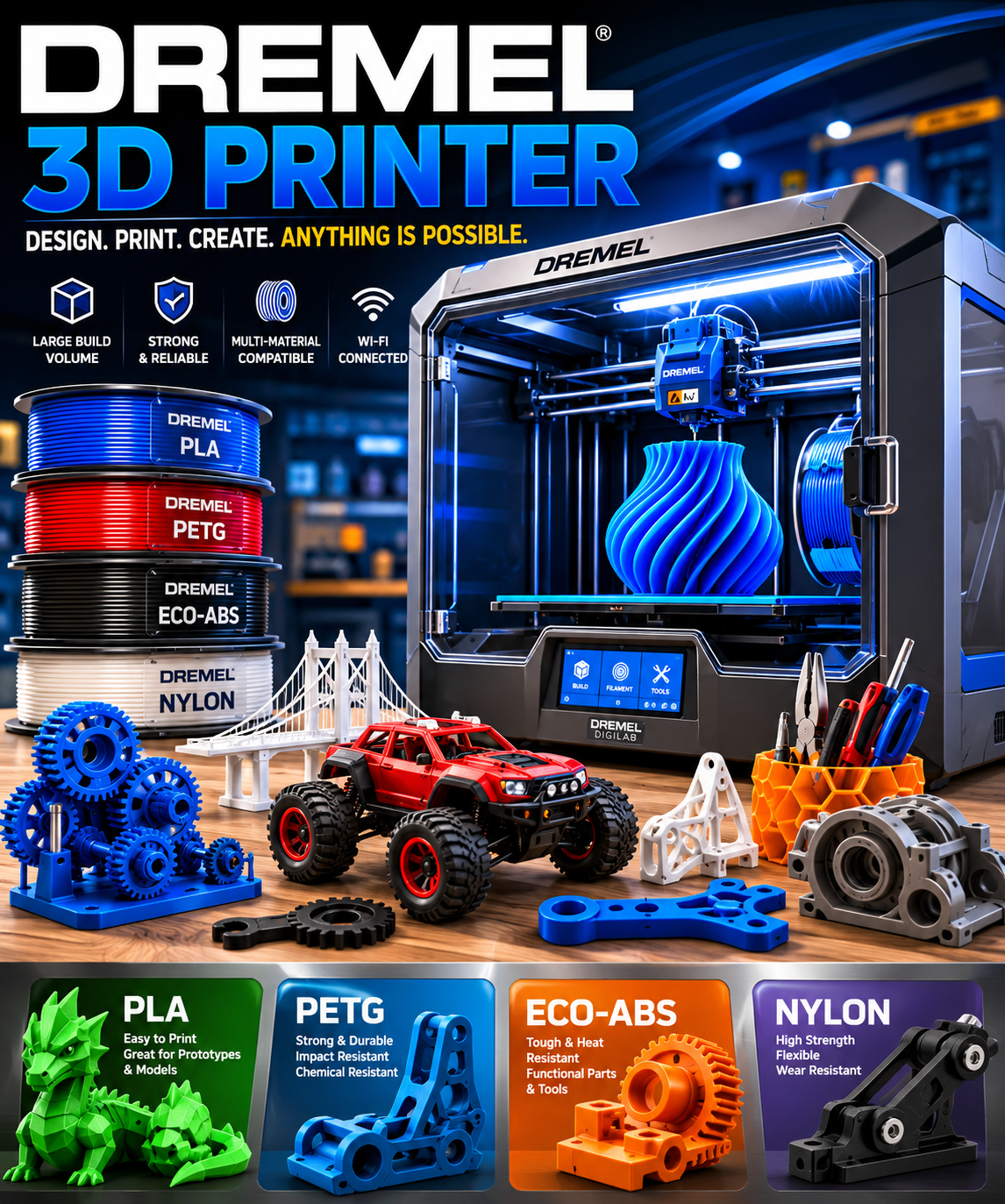
One of the most recognized models is the Dremel Digilab 3D45 Printer, a fully enclosed printer designed for higher print quality, advanced filament support, and stronger finished parts.
Why Dremel Entered the 3D Printing Industry
Dremel already had a strong reputation among makers, DIY enthusiasts, engineers, woodworkers, and fabricators. Moving into 3D printing was a natural extension of its tool ecosystem.
Instead of targeting only advanced users, Dremel focused heavily on:
- Beginner-friendly operation
- Reliable print consistency
- Classroom and STEM integration
- Safe enclosed printing
- Material versatility
- Plug-and-play functionality
The result is a printer platform that appeals to both first-time users and experienced creators who want dependable performance without constant tuning.
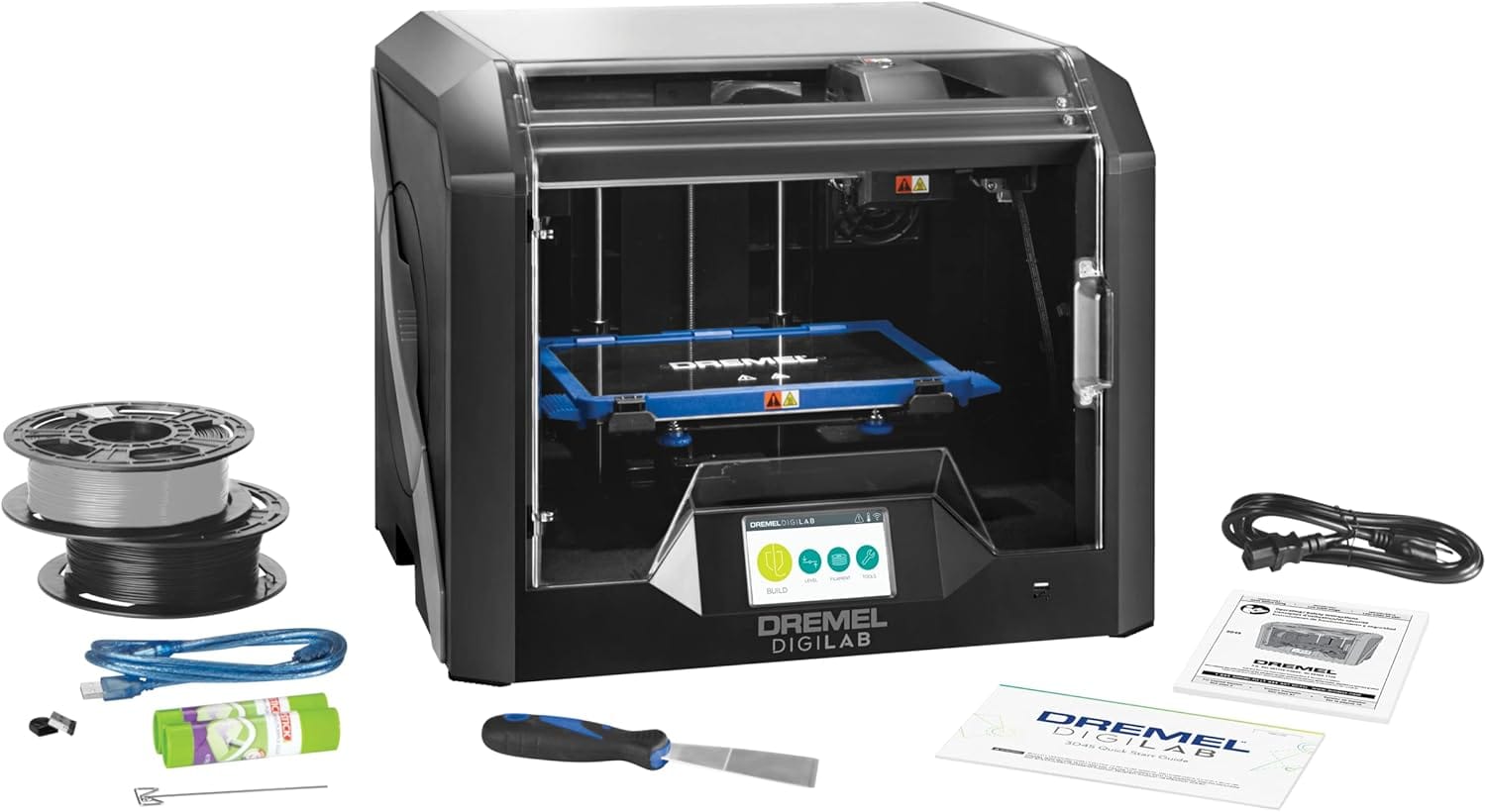
- PCMag 2018 Editors' Choice Award And Google For Education Partner – Dremel 3D45 3D Printer Kit
- Easily Removable Glass Build Plate Heated Up To 100°C, and All Metal 0.4 mm Nozzle Heated Up To 280°C. Windows Requirement-Windows (7,8,8.1,10). Mac Requirement-Mac Os X Version 10.9
- 5-Inch Full Color Touch Screen With Intuitive Icons For Easy Setup And Operation. Go From Unboxing To Your First Print In Less Than 15 Minutes
- Fully Enclosed Sturdy Plastic Design With A 6. 7" X 10" X 6" Build Volume For Better Prints, Better Safety, and Less Chance For Warping. A Carbon Filter And Particulate Filter Are Built-In As Well
Dremel DigiLab 3D45 Features
The Dremel Digilab 3D45 Printer is one of Dremel’s flagship systems and remains popular for educational, prototyping, and workshop environments.
Key Features
Heated Build Plate
The heated bed improves adhesion and reduces warping when printing stronger materials like Nylon, PETG, and ECO-ABS.
Fully Enclosed Design
The enclosed chamber helps maintain stable temperatures while reducing print failures and improving safety.
HD Camera Monitoring
Many Dremel printers include onboard cameras for remote print monitoring.
Automatic Bed Leveling
Self-leveling systems help beginners achieve successful first-layer prints more consistently.
Cloud Printing and WiFi
Users can wirelessly upload designs and manage prints remotely across devices, with cloud connectivity and remote monitoring. Dremel provides two main software options for model preparation: Dremel Print Cloud and Dremel DigiLab 3D Slicer.
Touchscreen Controls
Large touchscreens simplify operation for schools and beginners.
Dremel printers are designed to minimize frustration while still offering advanced manufacturing capabilities.
Dremel 3D Printer Build Area and Design Space
The design area of a 3D printer determines the maximum size of objects you can manufacture.
The Dremel 3D45 offers a build volume large enough for:
- Functional brackets
- RC car components
- Tool organizers
- Mechanical housings
- Prototypes
- Educational engineering models
- Drone parts
- Custom fixtures
This makes Dremel printers useful for both hobby and semi-professional manufacturing work.
The layer-by-layer additive manufacturing process allows users to create highly detailed parts with shapes that are difficult or impossible to machine using traditional methods.
Dremel Filament Types and Their Uses
One of Dremel’s strongest advantages is its expanding lineup of supported filament materials.
The company manufactures its own filament systems and supports many third-party 1.75mm filament brands.
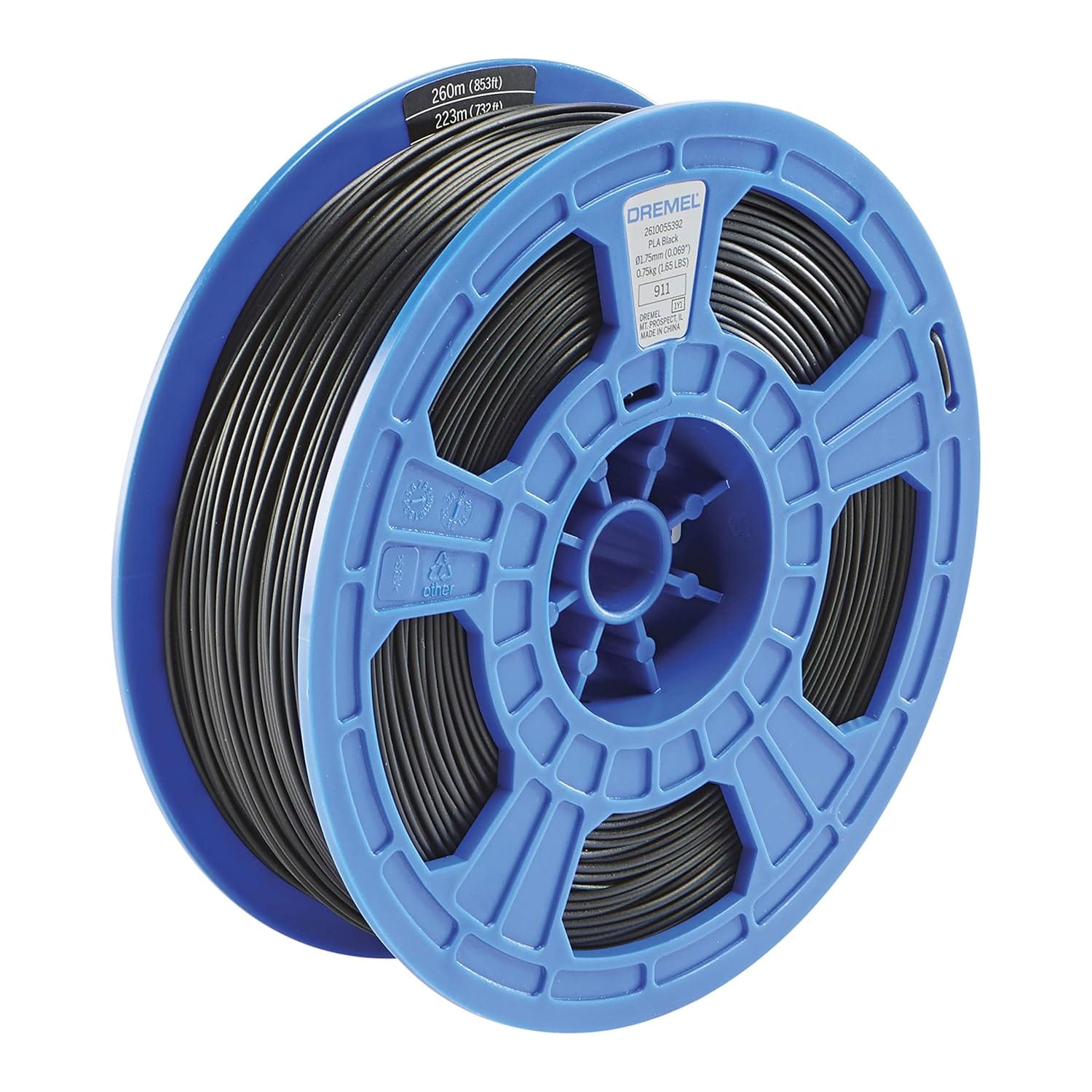
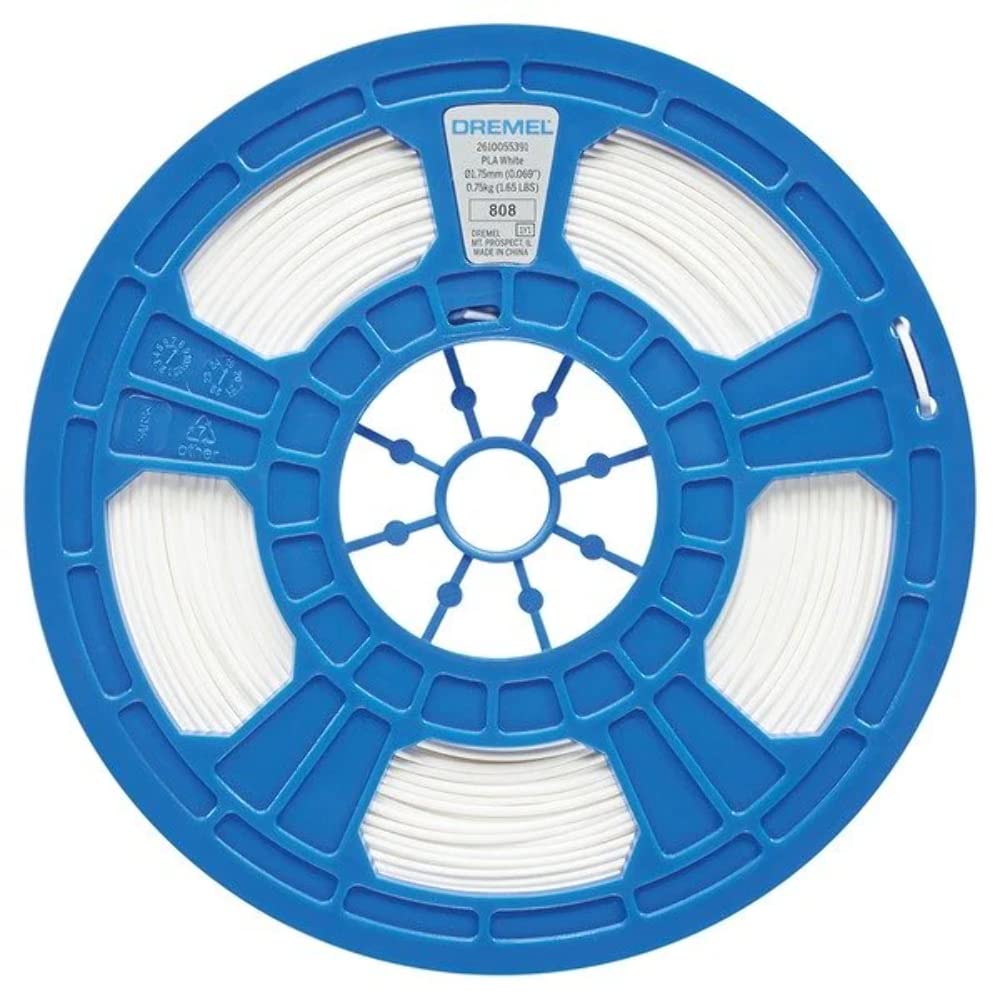
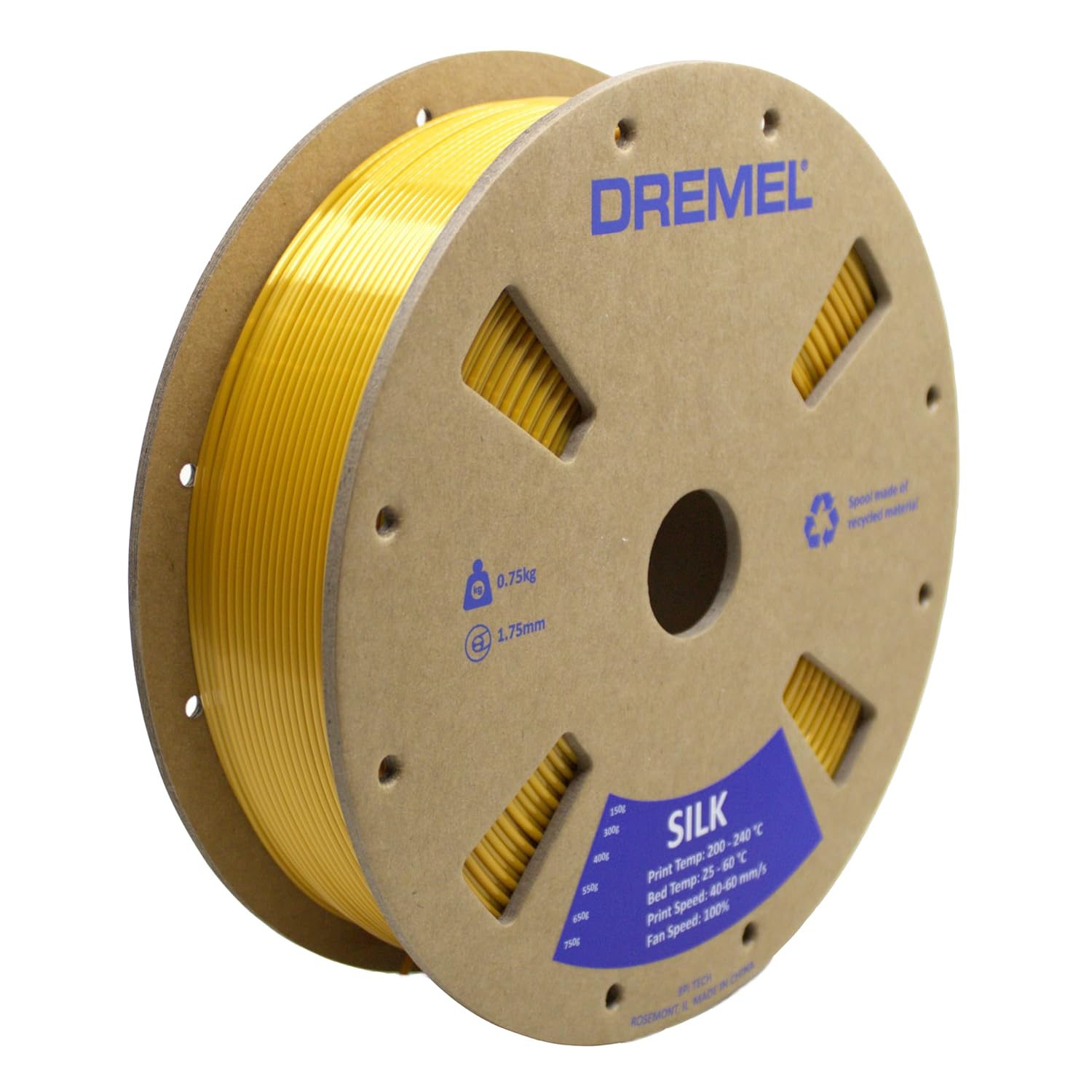
PLA Filament
PLA is the most beginner-friendly material in the Dremel lineup.
Popular options include:
PLA Benefits
- Easy to print
- Minimal warping
- Lightweight
- Excellent detail quality
- Low odor
- Great for decorative parts
Best Uses
PLA works best for:
- Display models
- Toys
- Cosmetic prototypes
- Desk accessories
- RC body details
- Educational projects
Dremel PLA is plant-based and engineered for reliable printing consistency.
ECO-ABS Filament
For users needing stronger parts, Dremel offers ECO-ABS materials such as:
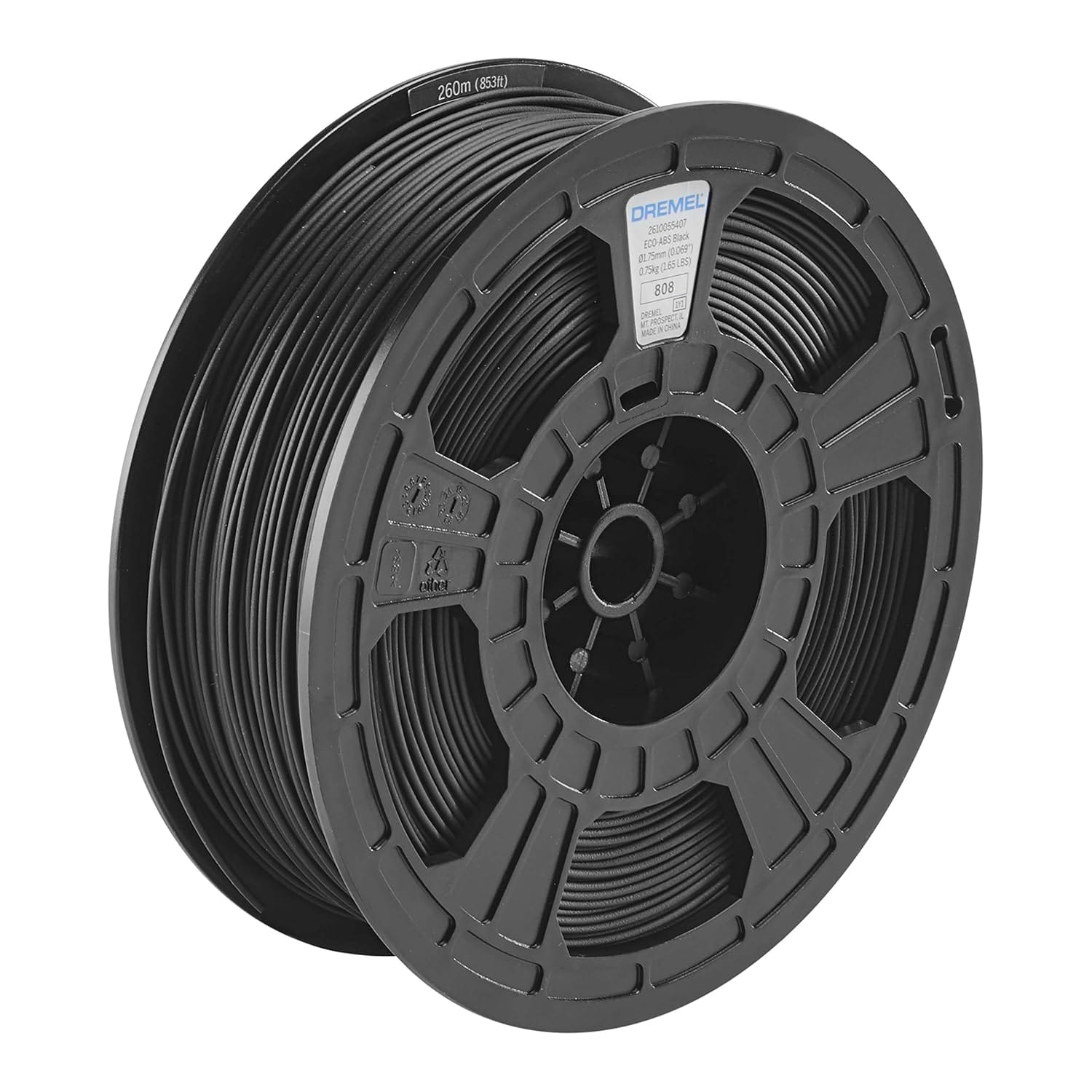
- NEW MATERIAL FORMULATION tested for improved print quality, reliability, and longer filament shelf life
- DREMEL DIGILAB ECO-ABS FILAMENT – a modified PLA – added strength, flexibility, and durability DREMEL DIGILAB ECO-ABS FILAMENT – a modified PLA – added strength, flexibility, and durability
- RFID ENABLED for material detection and quantity tracking with Dremel DigiLab 3D45 3D printer
- BLACK: 1.75mm ECO-ABS Filament
- COMPATIBILITY with all Dremel DigiLab 3D45 3D printers and other manufacturers. Prints at 230 °C nozzle temperature with heated bed up to 60 °C.
- BEST USAGE for 3D prints that need added strength and toughness
ECO-ABS Benefits
- Higher impact resistance
- Better durability
- Greater heat tolerance
- Improved wear resistance
- Stronger mechanical performance
Best Uses
ECO-ABS is ideal for:
- Functional parts
- Brackets
- Gear housings
- Tool mounts
- Automotive accessories
- Workshop applications
Compared with standard PLA, ECO-ABS offers significantly improved toughness for mechanical applications.
Nylon Filament
Nylon is one of the strongest Dremel-supported materials available.
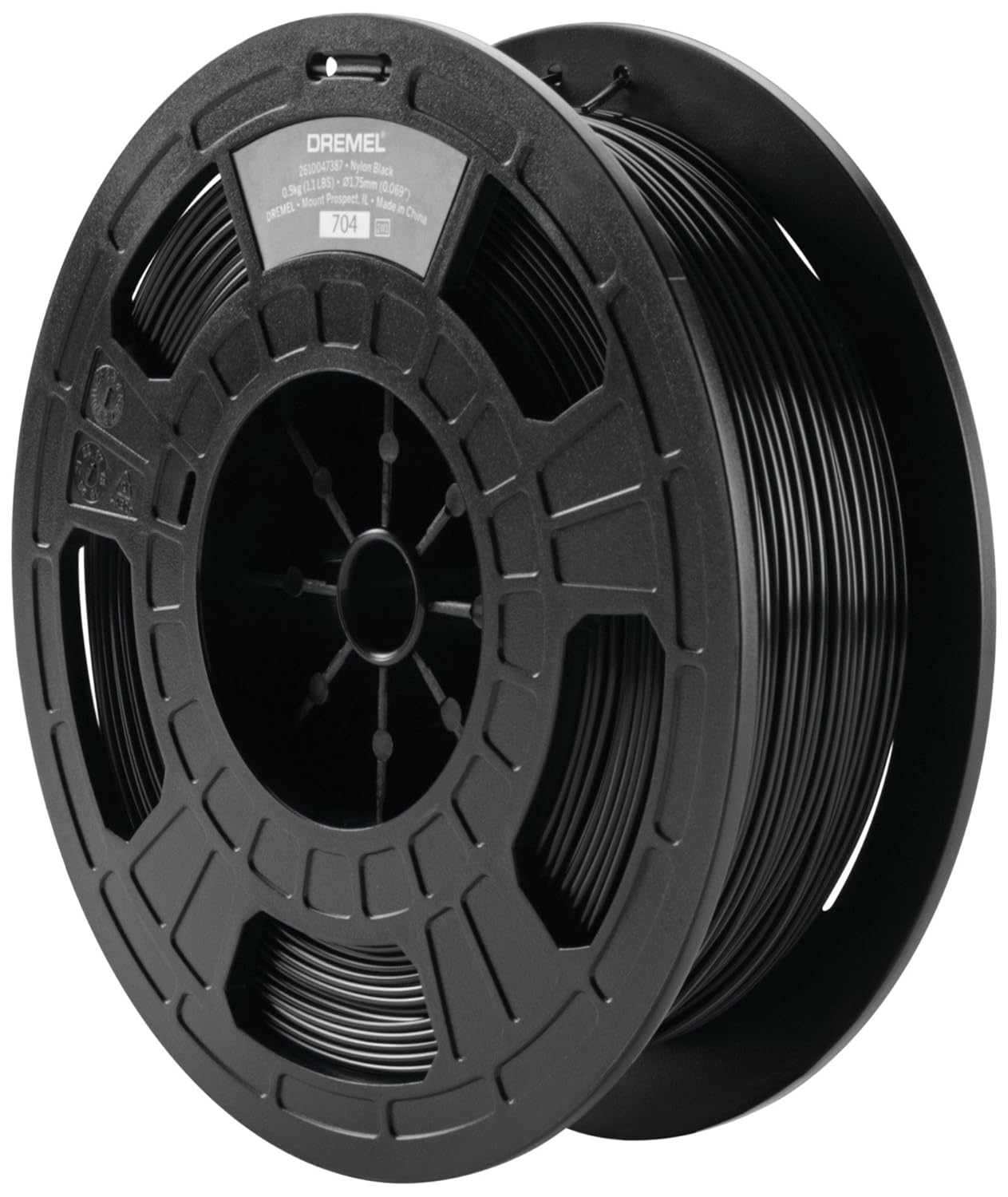
- Dremel nylon filament boasts higher strength, flexibility, and durability than traditional PLA filaments
- Nylon-printed parts have few rough edges and produce smooth end products with little need for post-processing
- Manufactured and tested to provide a smooth and consistent building
- Dremel Nylon filament is engineered to produce a stable, strong object with a high-quality finish
- Compatible with 3D45 only, not compatible with 3D20 or 3D40-FLEX
Nylon Advantages
- High flexibility
- Excellent strength-to-weight ratio
- Superior durability
- Resistance to cracking
- Better impact resistance
Best Uses
Nylon works extremely well for:
- Hinges
- Functional mechanical components
- Wear-resistant parts
- RC components
- Drone mounts
- Manufacturing fixtures
Nylon combines lightweight construction with impressive strength, making it one of the best materials for functional manufacturing.
PETG Filament
PETG bridges the gap between PLA and ABS materials.
Popular options include:
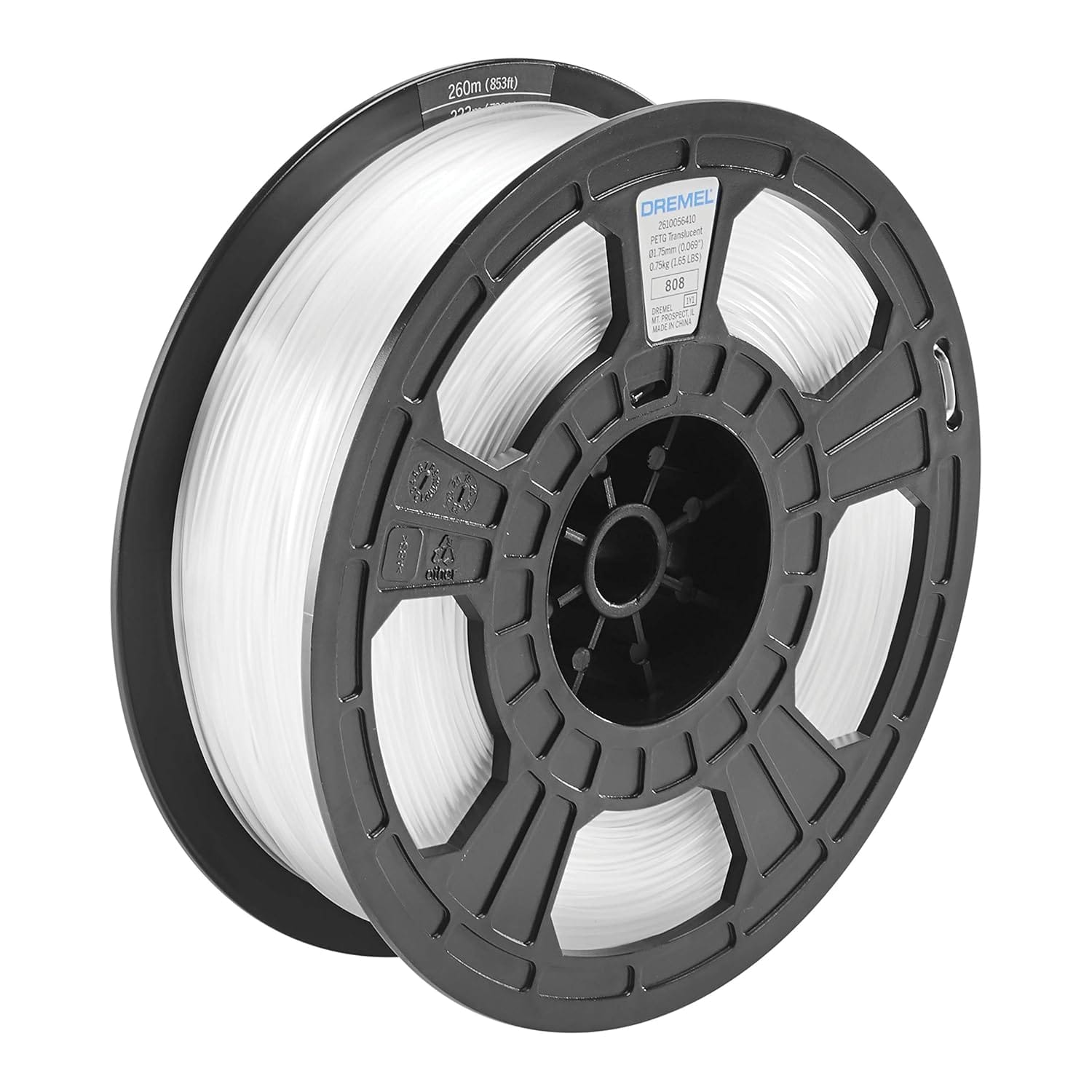
- NEW MATERIAL FORMULATION tested for improved print quality, reliability, and longer filament shelf life
- DREMEL DIGILAB PETG FILAMENT provides higher strength and flexibility than traditional PLA
- RFID ENABLED for material detection and quantity tracking with Dremel DigiLab 3D45 3D printer
- TRANSLUSCENT COLOR: 1.75mm ECO-ABS Filament
- COMPATIBILITY with all Dremel DigiLab 3D45 3D printers and other manufacturers. Prints at 250 °C nozzle temperature with heated bed up to 80 °C.
- BEST USAGE for 3D prints that need durability, temperature resistance, and reliable layer adhesion
PETG Benefits
- Stronger than PLA
- More flexible than ABS
- Excellent layer adhesion
- Better chemical resistance
- Good heat resistance
Best Uses
PETG is excellent for:
- Protective components
- Mechanical assemblies
- Outdoor applications
- Functional prototypes
- Durable household parts
Many users consider PETG one of the best all-around materials for everyday manufacturing work.
Can Dremel Printers Use Other Filament Brands?
Yes. Most Dremel 3D printers can use third-party 1.75mm filament brands.
This is important because it gives users access to:
- Carbon fiber blends
- Specialty flexible materials
- Glow-in-the-dark filament
- Wood-infused filament
- Silk PLA
- Budget-friendly alternatives
For example, users often run alternative 1.75mm filaments like:
- Inland PLA+ Filament
- Flashforge Rapid PLA Filament
However, users should verify temperature compatibility and print profiles before using non-Dremel materials.
Dremel’s RFID-enabled smart filament system helps automatically detect official materials, but advanced users frequently experiment with third-party options for specialized projects.
Dremel 3D Printer Manufacturing Capabilities
Dremel printers are capable of much more than simple hobby projects. In STEM education, students use Dremel’s 3D printers to turn CAD models into physical projects.
Functional Manufacturing
Users regularly manufacture:
- Prototype products
- Mechanical housings
- RC upgrades
- Drone accessories
- Tool storage systems
- Workshop jigs
- Engineering models
- Replacement parts
Educational Engineering
Dremel printers are heavily used in:
- STEM classrooms
- Robotics programs
- CAD training
- Engineering labs
The 3D45 includes 30 standards-aligned lesson plans for grades 3–12 built around a design challenge.
Students gain experience across the full workflow: design, print, test, and redesign.
Small Batch Production
Some small businesses use Dremel systems for:
- Product prototyping
- Custom fabrication
- Low-volume manufacturing
- Personalized products
The combination of precision, material strength, and user-friendly operation makes Dremel a strong choice for smaller manufacturing operations.
Dremel 3D Printer Accessories
Dremel also supports its printer ecosystem with numerous accessories and replacement components.
Common Accessories
Extra Filament Spools
Available in multiple colors and material types.
Replacement Nozzles
Maintain print precision and reliability.
Build Plates
Replacement beds improve print adhesion and longevity. On the 3D40 FLEX, the flexible build plate makes part removal easier, and no tools are required. It also offers print resolution up to 50 microns for intricate printed parts. Reliability features like a clog-resistant extruder and active filament monitoring help keep prints running smoothly.
Adhesion Sheets
Help reduce print failures.
Cleaning Tools
Used for nozzle maintenance and printer upkeep.
Filament Storage
Important for moisture-sensitive materials like Nylon.
Strength vs Weight in 3D Printing Materials
Different materials offer different balances between strength and weight.
Material | Weight | Strength | Flexibility | Best Purpose |
|---|---|---|---|---|
PLA | Lightweight | Moderate | Low | Cosmetic prints |
ECO-ABS | Moderate | High | Moderate | Durable parts |
Nylon | Lightweight | Very High | High | Mechanical parts |
PETG | Moderate | High | Moderate | General manufacturing |
Nylon typically offers one of the best strength-to-weight ratios in the Dremel ecosystem.
PETG offers a balanced middle ground for users needing durability without the complexity of Nylon.
Why Dremel 3D Printers Stand Out
Dremel printers set themselves apart from many competitors by focusing heavily on reliability and simplicity.
Key strengths include:
- Beginner-friendly setup
- Strong print consistency
- Enclosed printing environment
- Smart filament integration
- Educational support
- Multi-material compatibility
Instead of overwhelming users with advanced modifications, Dremel emphasizes dependable performance and usability.
FAQs
Are Dremel 3D printers good for beginners?
Yes. Many users choose a Dremel printer as a first printer because the setup is often plug-and-play, with a fast unboxing-to-printing process that helps minimize failed prints. Dremel printers are considered among the easiest 3D printers for beginners due to automatic leveling, enclosed designs, and touchscreen controls.
Can Dremel printers use generic filament?
Most Dremel printers support third-party 1.75mm filament brands, although official Dremel materials offer automatic detection features.
What is the strongest Dremel filament?
Nylon is generally considered one of the strongest Dremel-supported materials.
Is PLA stronger than ABS?
No. ECO-ABS offers better durability, impact resistance, and heat tolerance than PLA.
Can Dremel printers make functional parts?
Yes. Dremel printers can produce mechanical components, brackets, fixtures, and engineering prototypes.
Is PETG better than PLA?
PETG is stronger and more temperature-resistant than PLA, making it better for functional applications.
Final Thoughts
Dremel has successfully transformed from a traditional tool company into a respected player in the 3D printing industry. The company’s printers combine ease of use with surprisingly capable manufacturing performance.
Whether you are building RC upgrades, workshop organizers, educational engineering models, or functional prototypes, the Dremel ecosystem provides a solid platform for additive manufacturing.
The availability of multiple filament types — including PLA, ECO-ABS, Nylon, and PETG — gives users the flexibility to balance weight, strength, flexibility, and durability for different applications.
With compatibility with many third-party 1.75mm filaments and growing accessory support, Dremel printers remain an attractive option for beginners, makers, educators, and small manufacturing operations alike. Order today!