

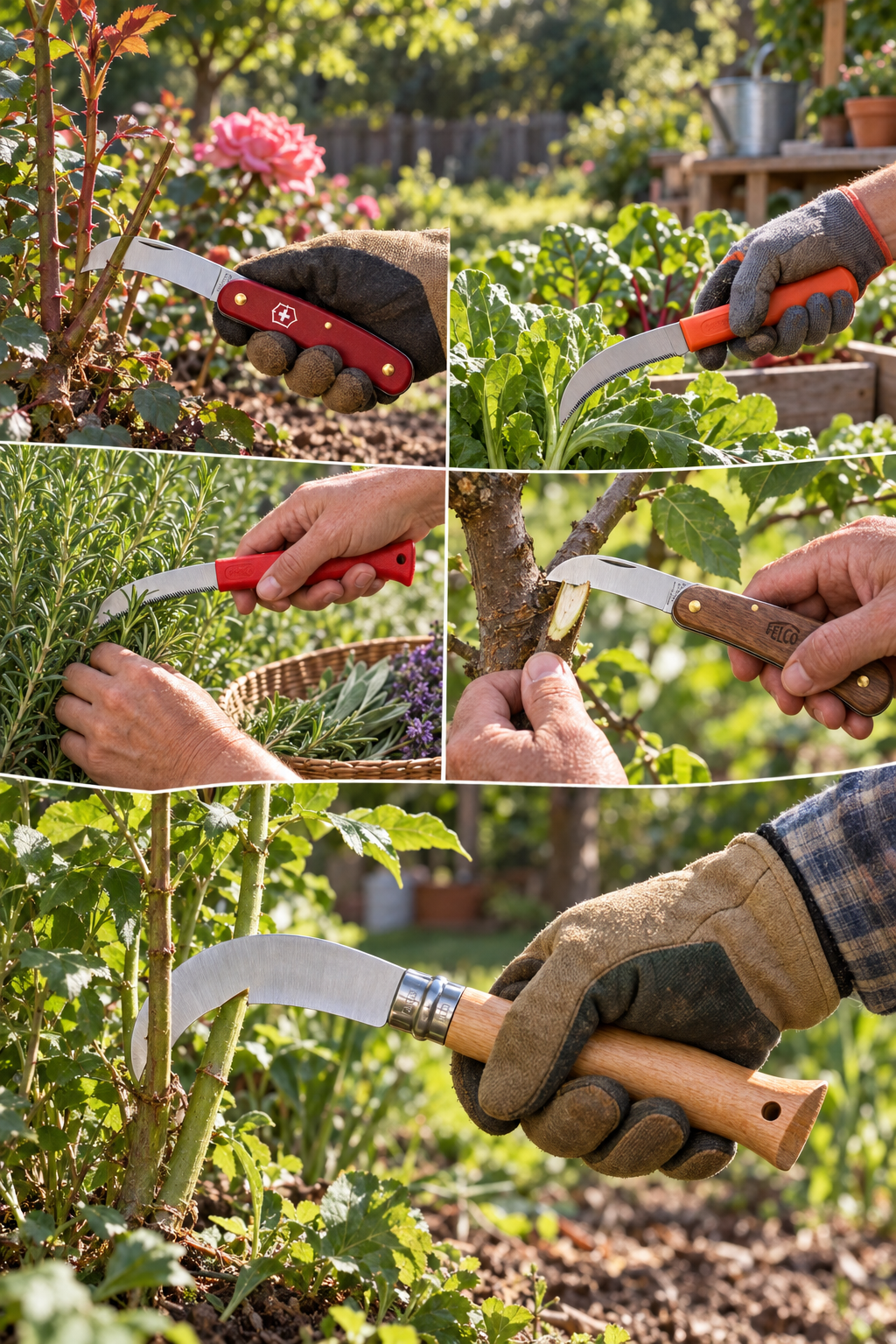
A good pruning knife is one of the simplest tools you can carry into the garden, orchard, or vineyard. It can make clean cuts in tight places where pruning shears feel bulky, trim soft shoots, remove small side branches, clean damaged bark, and prepare plants for grafting.
The tool may look straightforward, but technique matters. A pruning knife has a short, extremely sharp blade—often curved—and it is normally pulled toward the user. When it is handled correctly, that shape gives you excellent control. When it is handled carelessly, it can bring the edge directly toward your fingers or body.
This guide explains how to use pruning knives safely, what jobs they handle well, and how to keep the blade sharp and ready for the next season.
What Is a Pruning Knife?
A pruning knife is a compact garden knife designed to make controlled cuts in plant material. Traditional models have a curved blade that resembles a small hawk bill. The curve helps the edge bite into a stem and keeps the material from sliding away as you cut.
Many pruning knives use a folding blade, making them easy to carry in a pocket or tool pouch. Fixed-blade versions are also available and can be a good choice when you want a more rigid tool. Specialized budding and grafting knives may have straighter blades for making precise, flat cuts.
Pruning knives work best on:
- Flowers, herbs, and soft green shoots
- Suckers and small side growth
- Thin stems and flexible twigs
- Fruit and vegetable harvesting
- Damaged or ragged bark
- Budding and grafting work
- Garden twine, plant ties, and light nursery tasks
They are not a replacement for bypass pruners, loppers, or a pruning saw. If a branch is too thick to cut smoothly with one controlled motion, switch to a larger tool.
Choose the Right Pruning Knife
Start by choosing the right pruning knife for the specific job. A curved general-purpose pruning blade is useful for trimming shoots, harvesting produce, and cleaning up plants. A budding knife is made for lifting bark and inserting a bud. A grafting knife usually has a straighter, single-bevel edge that helps create a flat mating surface.
Look for a handle that fills your hand without forcing you to squeeze. An ergonomic grip helps it stay secure when wet or dirty and can reduce hand fatigue during extended use. If you choose a folding knife, make sure the blade locks firmly in the open position. Test the lock before every use, and never use a folding model if the blade or pivot feels loose. High-carbon stainless steel is a good choice for sharpness and rust resistance.
The edge should be sharp enough to cut cleanly without excessive force. A dull pruning knife is not safer. It is more likely to slip because you have to pull harder.
How to Hold a Pruning Knife
Use your dominant hand to hold the knife with a firm but relaxed grip. Keep your index finger behind the edge and never wrap a finger around the blade. Your wrist should stay fairly straight so the larger muscles in your hand and forearm control the cut.
Use your free hand to steady the stem, but keep it behind the blade and outside the cutting path. Imagine the path the knife will follow if it slips or passes completely through the stem. No finger, leg, or other part of your body should be in that line.
Because many traditional pruning cuts involve pulling the blade toward the thumb, beginners should practice on soft scrap stems first. Keep the stroke short, controlled, and well away from the thumb. Do not make a long pulling motion toward your palm.
Whenever the position feels awkward, stop and reposition the branch, your hands, or your body. Never twist your wrist or reach across yourself just to finish a cut.
How to Make a Clean Pruning Cut
Follow these steps for small stems and shoots:
- Inspect the stem. Confirm that it is small enough for the knife and check what is behind it.
- Choose the cut location. When shortening a living stem, cut just above a healthy outward-facing bud. Avoid leaving a long stub, but do not cut into the bud.
- Steady the plant. Hold the stem on the safe side of the cut with your fingers away from the blade path.
- Set the blade against the stem. Let the curved portion of the edge catch the plant material.
- Make one controlled slicing cut. Draw the blade through the stem instead of chopping or sawing back and forth.
- Inspect the result. A proper cut should look smooth and show accurate cuts, not crushed, split, or ragged.
For many pruning jobs, a slightly angled cut helps water run away from the bud. The cut should still be close enough to heal properly without damaging the bud itself. A sharp blade helps ensure clean cuts by preventing torn plant tissue and reducing the spread of disease.
If the knife stalls or the stem bends instead of cutting, do not add more force. Use bypass pruning shears for a cleaner and safer cut.
Removing Suckers and Small Shoots
Pruning knives are especially useful for removing young suckers from fruit trees, roses, shrubs, and vines. Catch them while the growth is still soft.
Place the blade close to the point where the sucker joins the plant and slice it off cleanly without gouging the trunk or main branch. Do not leave a large stub. On delicate bark, take your time so the cut does not peel a strip below the attachment point.
For clusters of very soft shoots, you can work steadily around the plant, closing or sheathing the knife whenever you change position.
Cleaning Damaged Bark
A sharp pruning knife can trim loose, torn bark after storm damage, animal damage, or a poorly made pruning cut. Remove only bark that is already detached or badly ragged. Shape the damaged edge into a smooth outline without cutting deeply into healthy wood.
Do not carve a large oval around a wound or remove sound bark in an attempt to make the area look neat. The goal is limited cleanup, not enlarging the injury. Major trunk wounds, split limbs, or disease symptoms may require advice from a certified arborist.
Using a Pruning Knife for Grafting or Budding
Grafting and budding require an exceptionally sharp, clean blade. Use a knife intended for the technique; for grafting or budding work, a straight blade or a pointed tip is often preferred, and practice on spare shoots before working on valuable plants.
For grafting, the cut surfaces must be smooth and flat so the cambium layers of the scion and rootstock can make good contact. Blade control matters because precise cuts help those surfaces match cleanly. Make the cut in one deliberate slicing motion when possible. Repeated whittling creates uneven surfaces and reduces the chance of a successful union.
For budding, the knife is used to make a precise cut in the bark and, depending on the knife, gently lift the bark for bud insertion. Sanitize the blade between plants—especially when disease may be present—and avoid touching the freshly cut surfaces.
Pruning-Knife Safety Rules
The most important rule is simple: keep every body part out of the blade's path. A small blade can cause a deep cut before you have time to react.
- Wear close-fitting work gloves that provide grip and some cut resistance.
- Wear eye protection when working among springy branches.
- Cut with controlled pressure; never jerk the blade.
- Do not cut toward your thigh, torso, or supporting hand.
- Never catch a falling knife.
- Close a folding blade or return a fixed blade to its sheath before walking.
- Do not carry an open knife in a pocket.
- Keep the tool out of reach of children and store it securely.
- Stop working if the handle, lock, pivot, or blade is damaged.
Gloves can reduce the risk of minor injuries, but they do not make unsafe cutting positions acceptable. Blade control and hand placement remain your primary protection.
Clean the Blade Between Plants
Plant sap and debris can interfere with cutting, hold moisture against the steel, and potentially move pathogens from one plant to another. Wipe the blade regularly while you work.
When moving between plants—particularly after cutting diseased material—clean and disinfect the blade with a product suitable for garden tools. Follow the disinfectant label, allow the required contact time, and dry the knife afterward. Some disinfectants can corrode metal if left on the blade.
At the end of the job, remove sap with warm soapy water or an appropriate blade cleaner, dry the knife completely, and apply a very light coat of tool oil to carbon-steel blades and moving joints.
How to Sharpen a Pruning Knife
A pruning knife should slice rather than crush. Touch up the edge before it becomes seriously dull.
First, determine whether the blade has a single bevel or a bevel on both sides. Many grafting and budding knives use a single-bevel edge, and sharpening the flat side, as with a conventional pocket knife, can change how the blade cuts.
Use a fine sharpening stone or small diamond sharpener. Match the existing bevel angle and move the sharpener along the entire edge with light, even strokes. Curved blades require a narrow sharpener that can follow the inside curve. Remove the burr gently from the opposite side without creating a second heavy bevel.
After sharpening, wipe the blade clean and test it on a spare green stem—not on your finger or thumbnail. If you are unsure of the blade geometry, follow the manufacturer's sharpening directions.
When to Use Garden Knives or Another Tool
Reach for bypass pruning shears when a stem is woody, thick, or requires more force than a short knife stroke. Use loppers for larger branches and a pruning saw for limbs that are too large for loppers.
Also choose another tool when:
- The cut is above shoulder height
- You cannot clearly see the blade path
- The branch is under tension and may spring back
- Your supporting hand must sit in front of the edge
- The stem moves or bends under the blade
- You need to saw repeatedly to get through it
A pruning knife earns its place by making small, exact cuts. Asking it to handle oversized branches defeats its biggest advantages: precision and control.
Top 5 Pruning Knives
The best pruning knife depends on whether you are trimming shoots, harvesting produce, cleaning bark, or making careful grafting cuts. These five options cover the most common jobs without filling the list with nearly identical knives.
1. Opinel No. 10 Billhook Knife — Best Overall
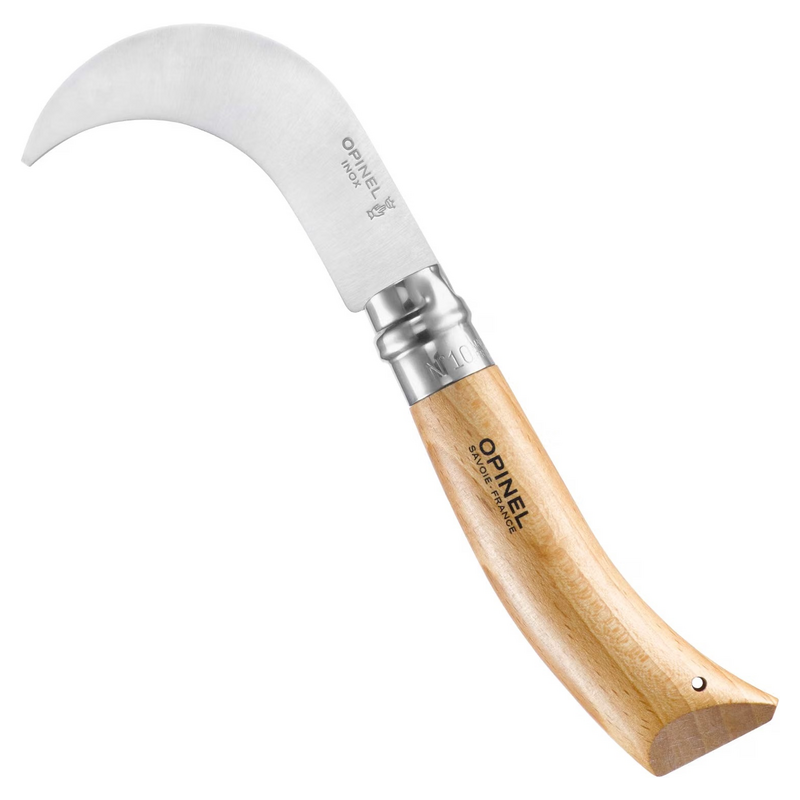
Best for: General pruning, vines, small shoots, harvesting, and garden cleanup. Check the Opinel No. 10 Billhook Knife on Amazon
The Opinel No. 10 Billhook is the most versatile choice on this list. Its strongly curved, hooked blade catches on vines, small shoots, plant ties, and soft stems instead of sliding off them. The folding design also makes it easier to carry than a full-size fixed-blade garden knife.
This is the model I would choose for general orchard, vineyard, and garden cleanup. The hooked tip requires respect, but it suits a gardener who wants control for repeated pruning and cleanup work, keeping the cut short and the free hand safely behind the blade.
2. Victorinox Pruning Knife — Best Compact Folding Knife
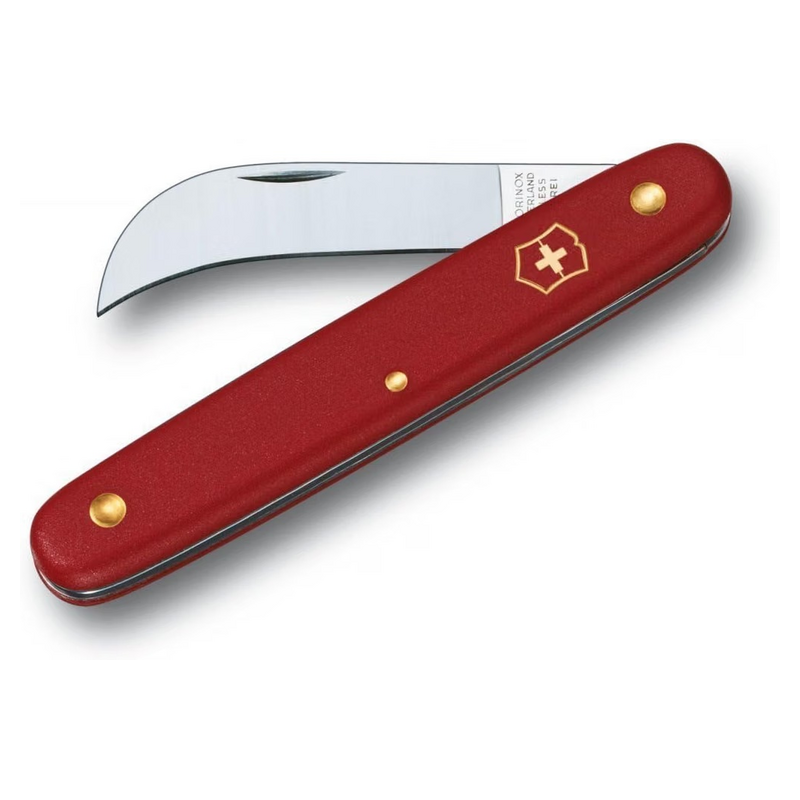
The Victorinox Pruning Knife is a practical choice for gardeners who want a simple tool that carries easily in a pocket or belt pouch. Its curved pruning blade is well-suited for controlled pull cuts on flowers, young shoots, and small green stems.
The compact size makes it especially useful when working around closely spaced branches where full-size pruning shears feel awkward. For light garden work, it offers a similar in-hand feel to larger pruning knives, but is easier to carry. Depending on the exact model shown in the listing, the blade style and handle color may vary, so check the product details before ordering.
Best for: Light pruning, flowers, young growth, and everyday garden carry
Amazon link: Check Victorinox Pruning Knives on Amazon
3. FELCO 3.90 50 Grafting and Pruning Knife — Best for Grafting
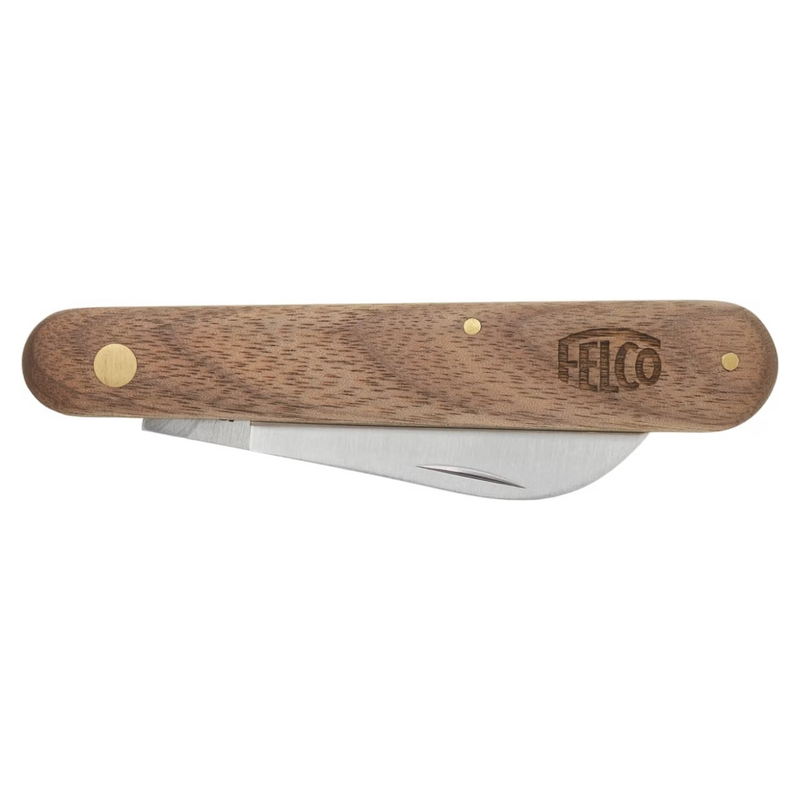
The FELCO 3.90 50 is the specialist in this group. It is a more professional choice for precise nursery, budding, and grafting work than for hacking through thick or hard branches. Its blade is designed to create the smooth, controlled surfaces needed when joining a scion to rootstock.
Choose this knife if grafting accuracy is more important than having a heavy-duty general-purpose blade. It is also the kind of knife that many users can keep in service for years with proper maintenance. As with any grafting knife, keep the edge exceptionally sharp and confirm the bevel before sharpening it.
Best for: Grafting, budding, nursery work, and detailed cuts
Amazon link: Check the FELCO 3.90 50 on Amazon
4. Zenport K101 Folding Pruning Knife — Best Budget Choice
The Zenport K101 is a straightforward folding pruning knife for occasional garden and orchard work. Its curved blade can handle small stems and shoots for harvesting tasks while remaining compact enough to fit in a tool pouch.
This is a sensible choice for someone learning how to use a pruning knife or for keeping a spare in a garden kit. It does not need luxury materials to be useful, but the blade should still be inspected, cleaned, and sharpened regularly.
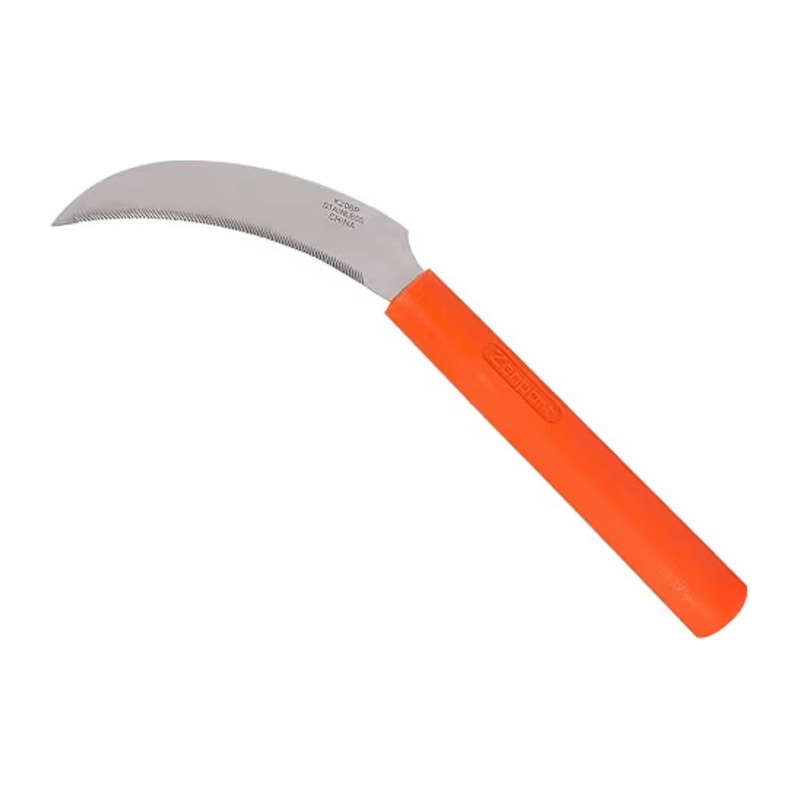
Best for: Beginners, occasional pruning, harvesting, and backup use
Amazon link: Check the Zenport K101 on Amazon
5. Barnel BLK725P Landscape and Harvest Knife — Best Fixed-Blade Option
The Barnel BLK725P differs from the traditional folding knives above. It uses a fixed, curved, serrated blade intended for landscape and harvesting work. The design is useful for bunches of herbs, flowers, vegetables, sod, and fibrous plant material that can be frustrating to cut with a short plain edge.
This is not the knife to choose for precision grafting. It is the better choice when you want a lightweight fixed blade for repeated harvesting and general landscape work. Because the serrations are aggressive, keep your supporting hand well clear and store the knife in a suitable sheath or protected location.
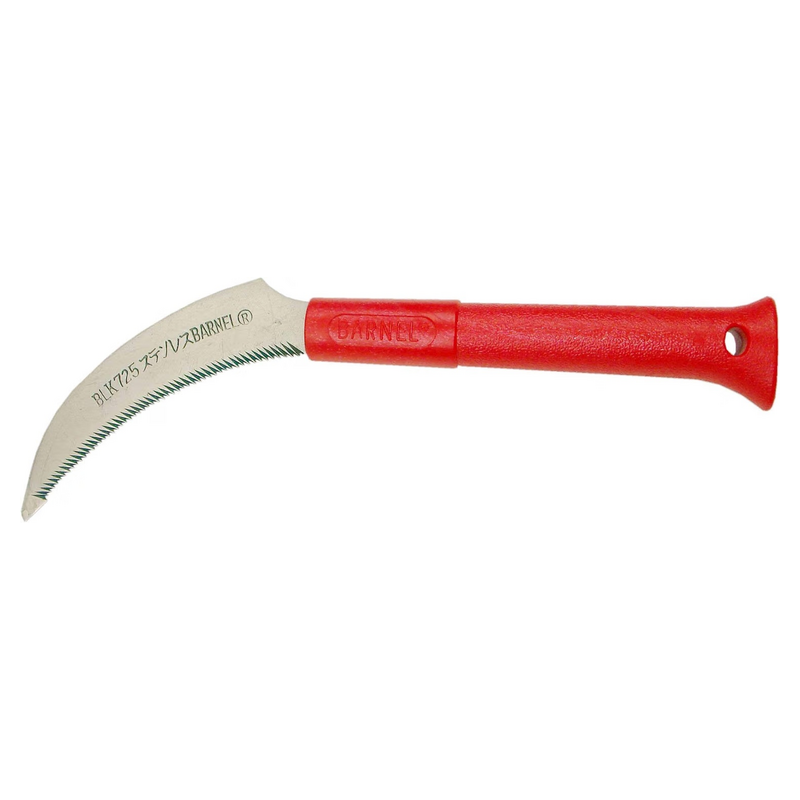
Best for: Harvesting, herbs, vegetables, flowers, sod, and fibrous stems
Amazon link: Check the Barnel BLK725P on Amazon
Which Pruning Knife Should You Buy?
For one knife that can handle a wide range of garden jobs, these five products put the main trade-offs in focus, and the Opinel No. 10 Billhook is the best overall choice. The Victorinox is easier to carry for light work, while the FELCO 3.90 50 is the better option for serious grafting and budding. Choose the Zenport K101 when price and simplicity matter most. The Barnel BLK725P is better suited to repetitive harvesting and fibrous material than to delicate pruning.
Amazon prices, sellers, and availability can change. Check the blade style, dimensions, and locking or sheath arrangement shown on the current product page before ordering.
Final Thoughts
Learning how to use a pruning knife comes down to three things: use it only on suitable plant material, keep the blade sharp, and control the cutting path from start to finish. Make short slicing cuts, keep your free hand behind the edge, and change tools as soon as a branch demands extra force.
With those habits, a pruning knife becomes a useful companion for detailed garden cleanup, harvesting, orchard work, budding, and grafting. If you still have questions, go back to the sections on choosing the right knife, sharpening, and safety before you buy. It is a small tool, but in the right hands, it can make exceptionally clean cuts in places larger pruners cannot reach. Order today!