
Looking for something different than a recurve bow thats easy to shoot and can carry your bow hunting ability? Finding a capable compound bow without spending premium-brand money can be difficult, especially for newer archers who still need to determine their ideal draw length and draw weight. That is where the SAS Compound Bow lineup from Southland Archery Supply gets interesting.
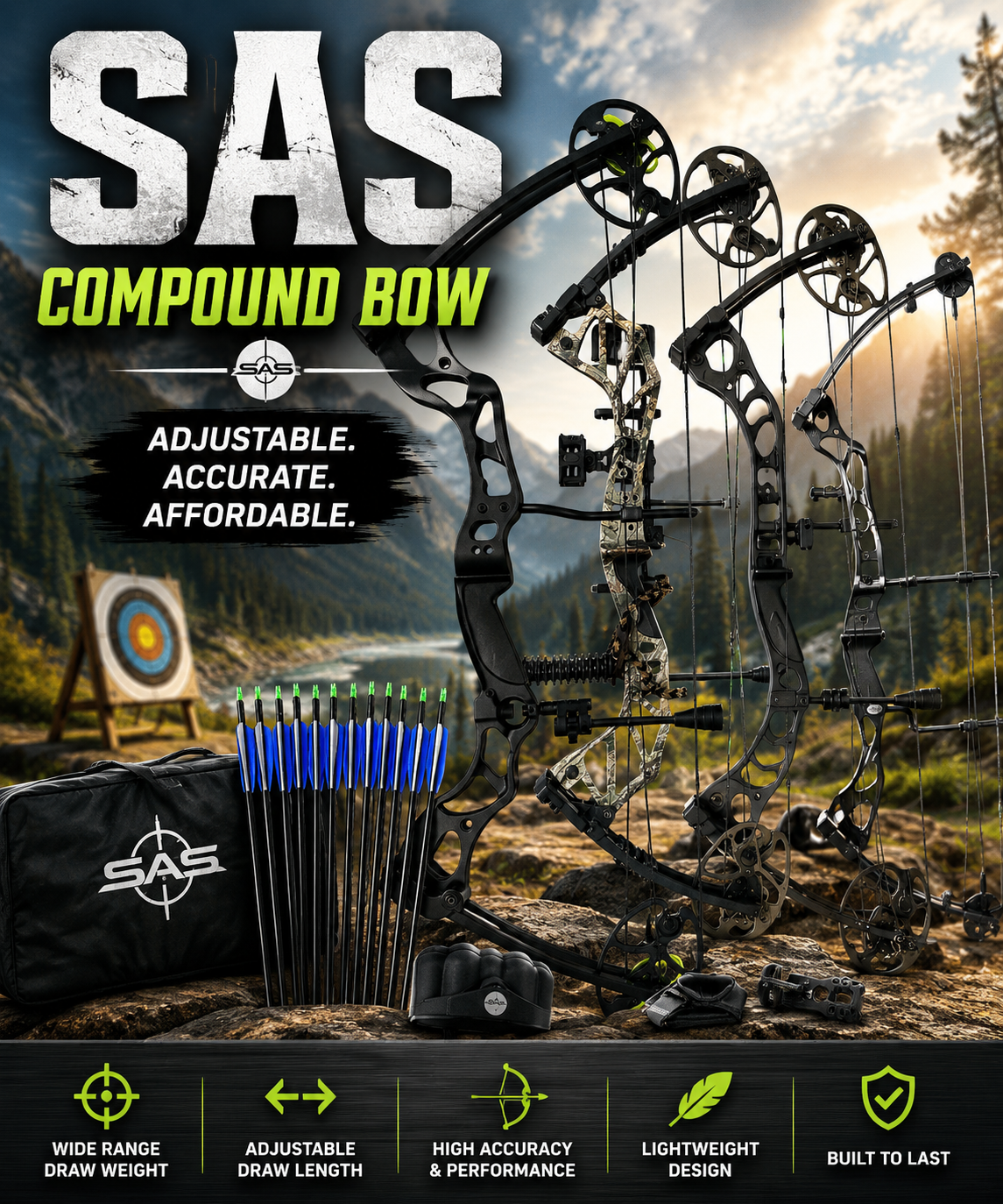
SAS offers several affordable good quality compound bows designed for target shooting, recreational archery, and hunting. Models such as the SAS Outrage, SAS Scorpii, SAS Siege, SAS Feud, and SAS Destroyer cover everything from relatively light target setups to adjustable 70-pound compound bows.
The biggest attraction is adjustability. Instead of buying a bow that only works within a narrow setup range, several SAS compound bows provide enough draw-weight and draw-length adjustment to accommodate developing archers.
But specifications aren't everything. A good compound bow needs to fit the shooter, hold steadily at full draw, launch properly matched arrows consistently, and provide enough adjustment to achieve good arrow flight.
In this SAS Compound Bow guide, we'll look at the major models, features, draw length, draw weight, bow weight, speed, and accuracy to help determine which SAS bow makes the most sense.
Southland Archery Supply (SAS) Compound Bow Models at a Glance
SAS Compound Bow | Best For | Max Draw Weight | Key Advantage |
|---|---|---|---|
SAS Outrage | Hunting/All-Around | 70 lbs | Wide adjustment range |
SAS Scorpii | Beginners/Intermediate | 55 lbs | Manageable draw weight |
SAS Siege | Target/Recreational | 55 lbs | Longer, stable platform |
SAS Feud | Hunting/Recreational | 70 lbs | Affordable 70-lb option |
SAS Destroyer | Target/Hunting | Up to 70 lbs | Compact, modern configuration |
SAS's current compound-bow collection includes these models along with youth packages and different accessory configurations.
Best Overall
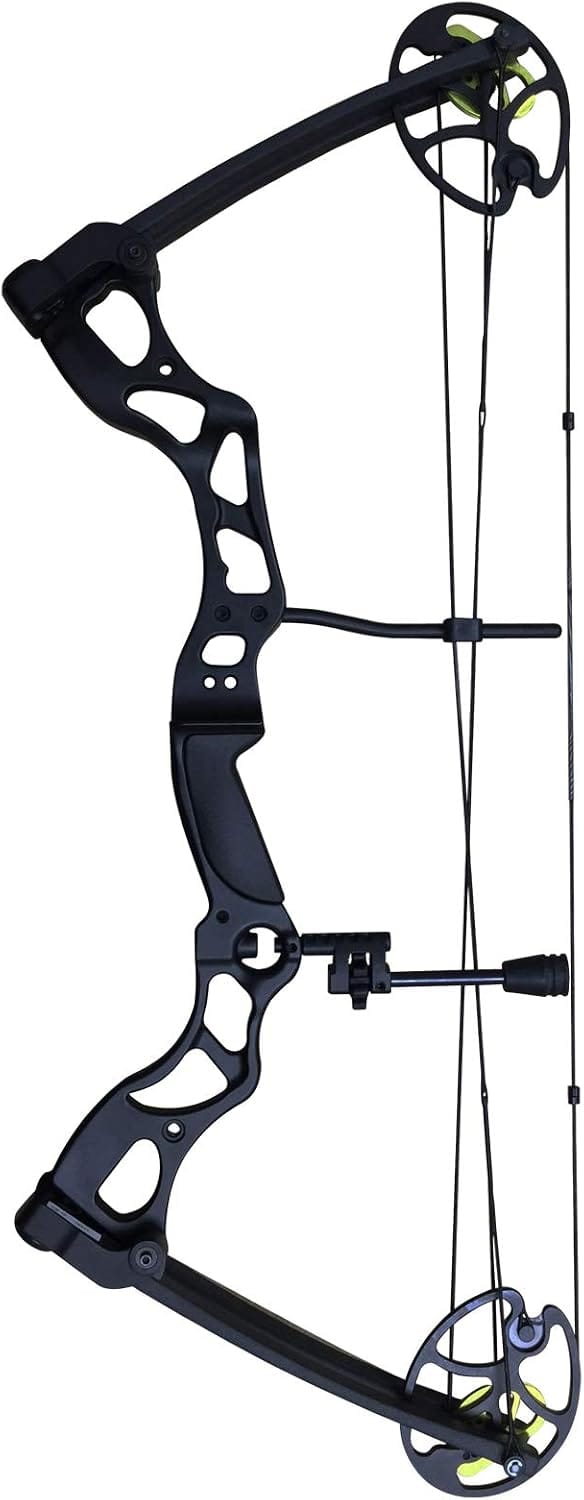
The SAS Outrage Compound Bow is one of the most interesting models in the company's lineup because it combines a relatively compact hunting-bow design with an unusually broad adjustment range.
It has a 31-inch axle-to-axle length, making it compact enough for hunting while retaining enough length to provide a reasonably stable shooting platform.
- Do you want to give your shooters the best chance to develop their talents in archery? Then choose SAS Outrage Compound Bow and give shooters the right gear of high quality and durability.
- SPECIFICS: Speed: IBO 275fps; Axle-to-Axle: 31"; Draw length: 25" -31" (adjustable without bow press); Brace height: 7.5" ; Let-off: 75-80%;Draw Weight: 30 - 70 lbs
- MATERIAL: Aluminum Riser; CNC Machined Cams; Fiberglass Limb
- SATISFACTION GUARANTEED: Best US Based Warranty in the Industry. We offer 3-Year Warranty vs 1-Year Average or no warranty from Oversea sellers (restrictions apply)
SAS Outrage Specifications
- Draw Length: 25–31 inches
- Draw Weight: 30–70 lbs
- Axle-to-Axle: 31 inches
- Brace Height: 7.5 inches
- Let-Off: 75–80%
- Maximum Speed: 275 FPS
- Bow Weight: approximately 4.24 lbs
- Recommended Arrow: 30-inch carbon or aluminum
- Riser: Aluminum
- Cams: CNC-machined
- Limbs: Fiberglass
The combination of a 30–70-pound draw-weight range and 25–31-inch draw length makes the Outrage adaptable to a large range of adult shooters.
The bow's draw length can also be adjusted without requiring a bow press, which is particularly useful for someone buying a compound bow online.
Outrage Accuracy
Accuracy ultimately depends heavily on the shooter, arrow setup, tuning, release, sight and shooting form. However, the Outrage has several characteristics that provide a solid foundation for accurate shooting.
Its 7.5-inch brace height is relatively forgiving, while the 31-inch axle-to-axle configuration provides a reasonable compromise between maneuverability and stability.
The manufacturer also uses back-pivoting limb pockets intended to create a rigid limb-to-riser connection.
For hunting and recreational shooting, the Outrage is probably the best all-around SAS compound bow for most adults.
Best For: Bowhunting, backyard shooting, target practice and intermediate archers.
Amazon:
Search Amazon for SAS Outrage 70 lb Compound Bow.
Best for Beginners
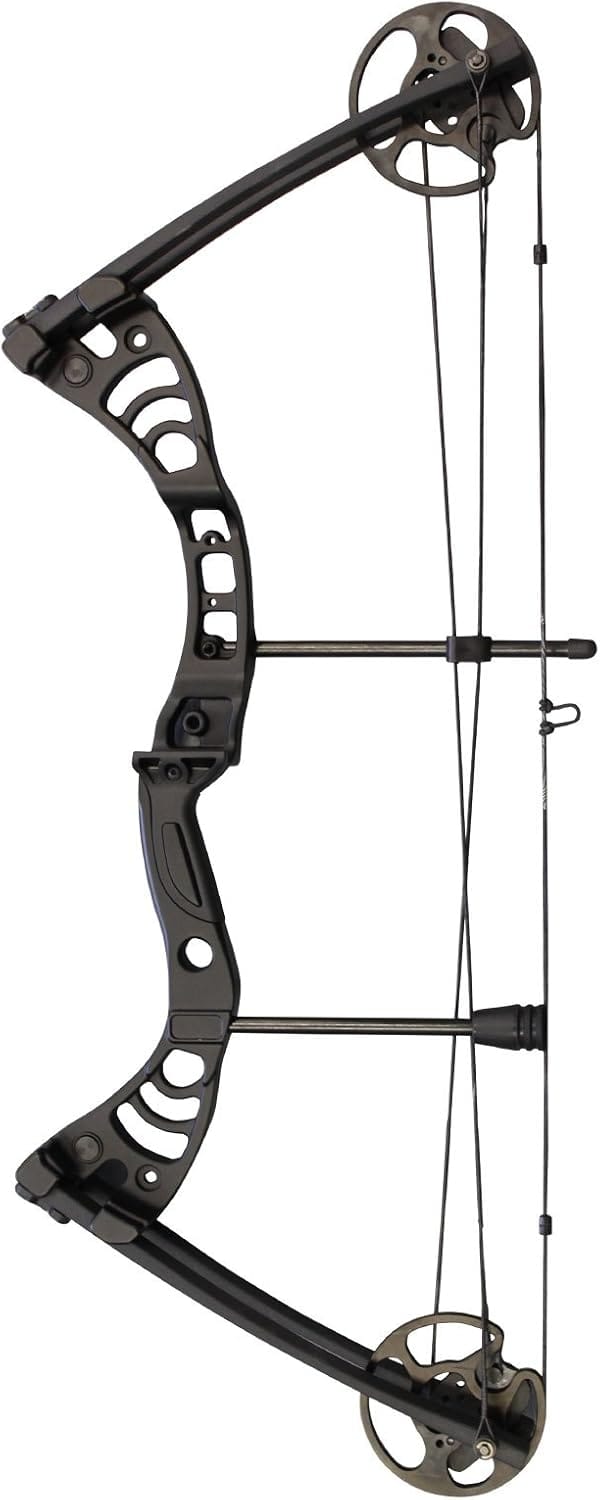
- Draw Length: adjustable from 19" - 29”
- Draw Weight: 11-55 lbs.
- Axle to Axle: 28"
- Speed: 296+FPS; this bow can handle of your hunting needs.
- Options: Black, GC Camo, Black Accessories Kit, GC Camo Accessories Kit
Not every archer needs a 70-pound bow.
In fact, beginning with excessive draw weight can make learning proper shooting form considerably harder. The SAS Scorpii 55 lb Compound Bow offers a more manageable alternative.
Its lower maximum draw weight makes it particularly attractive for recreational shooting, target practice and archers making the transition from traditional bows into compound archery.
The Scorpii is also available from SAS in packages containing accessories such as a sight, arrow rest, release and arrows.
Why Choose the Scorpii?
The Scorpii's biggest advantage is accessibility.
Rather than chasing maximum arrow velocity, SAS designed this model around a manageable platform capable of introducing shooters to the mechanics of compound archery.
That makes it a strong choice for:
- New compound-bow shooters
- Recreational archers
- Target shooters
- Smaller-framed adults
- Shooters who don't need a 70-pound draw
A lighter draw weight can also help new shooters concentrate on anchor position, grip, release and follow-through instead of struggling against the bow.
Best For: Beginners and recreational target shooting.
Best for Target Shooting
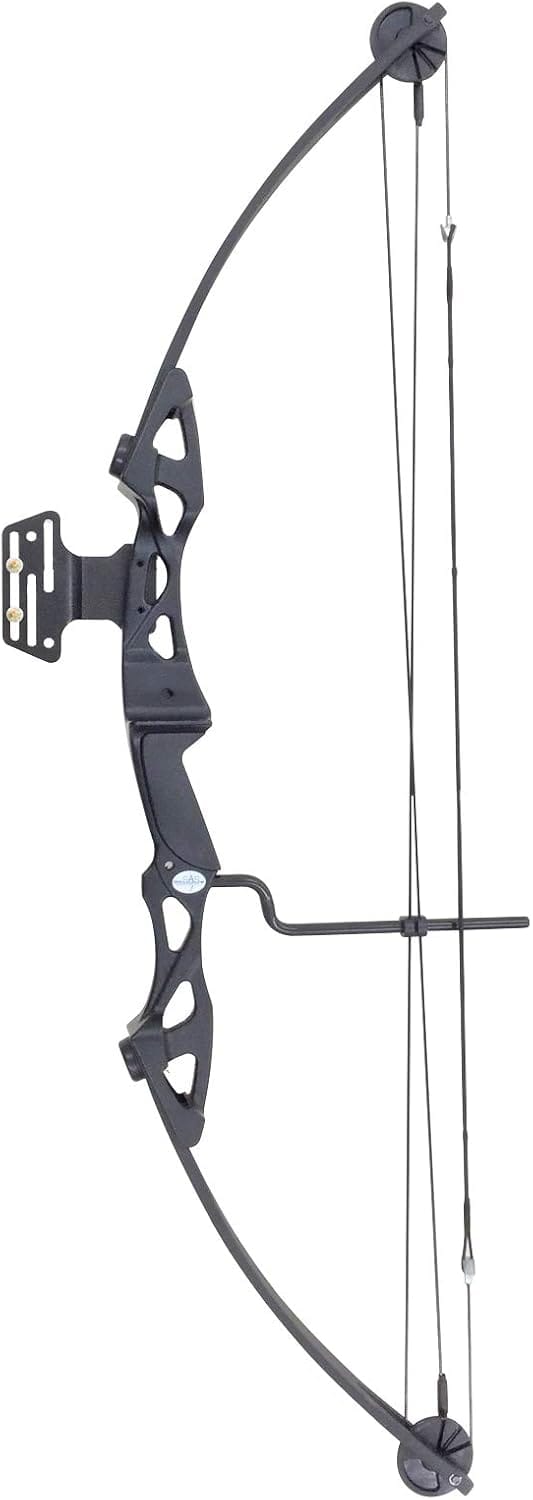
- Draw Length: 29"; Axle to Axle: 41. 5''
- Draw Weight: 40-55 lbs. For Adult only.
- Let Off: 70%; Max Speed: 206 FPS
- Recommended Arrow: 30" Carbon and Aluminum arrow recommended
- Comes with Paper Target.
The SAS Siege 55 lb Compound Bow takes a somewhat different approach.
While short axle-to-axle bows dominate the hunting market, a longer bow can provide an exceptionally comfortable platform for recreational and target shooting.
The Siege has historically been offered with a roughly 40-inch axle-to-axle configuration and maximum draw weight around 55 pounds.
That longer platform can help the bow feel stable when aiming.
SAS Siege Performance
The Siege isn't designed around extreme arrow speed.
Instead, it makes more sense for someone who wants an inexpensive compound bow for:
- Backyard targets
- Archery ranges
- Learning proper shooting technique
- Recreational archery
- Casual 3D shooting
A longer axle-to-axle measurement also creates a different string angle at full draw than extremely compact hunting bows, something some target shooters may find more comfortable.
Best For: Target shooting and recreational archery.
Amazon:
Search Amazon for SAS Siege 55 lb Compound Bow.
Affordable Hunting Option
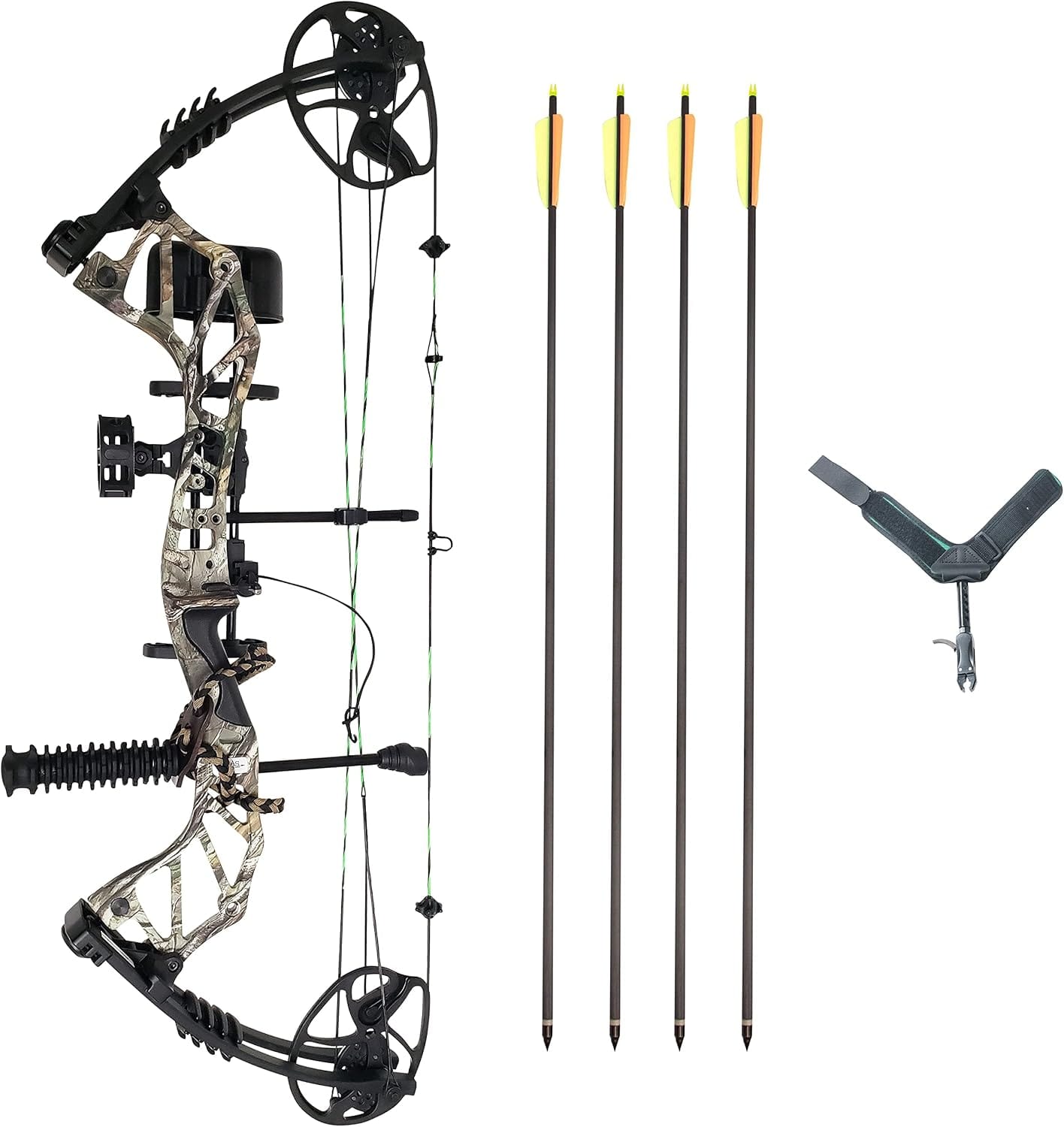
- Upgraded from our SAS Top Rated Feud bow, the all new designed aluminum riser makes it lighter and faster.
- IBO Speed: 300 FPS+
- Draw Weight: 30-70 lbs
- Let Off: 70 - 75%
- Axle to Axle: 30"
- Net Weight: 3.85 lbs
- Package Comes with: 1 x Feud X Bow, 1 x 3-Pin Sight, 1 x Dropaway Arrow Rest, 1 x Release Aid, 1 x Stabilizer, 1 x Sling, 1 x Quiver, 4 x 30" Carbon Arrows, and Pre-installed 1 x D String Loop, 2 x String Silencer, 2 x Limb Dampener, 1 x Peep Sight, and 1 x String Stopper
The SAS Feud 70 lb Compound Bow is another higher-poundage option in the current SAS compound-bow lineup.
It is worth considering for shooters who want an adjustable compound capable of reaching a 70-pound maximum draw weight without moving into the much more expensive premium-bow category.
For hunting applications, don't automatically assume that maximum draw weight is best.
A properly fitted bow at 55 or 60 pounds that you can draw smoothly and shoot accurately is generally preferable to struggling with a 70-pound setting.
Best For: Budget-conscious hunters and recreational shooters.
Best Compact Survival Bow Option
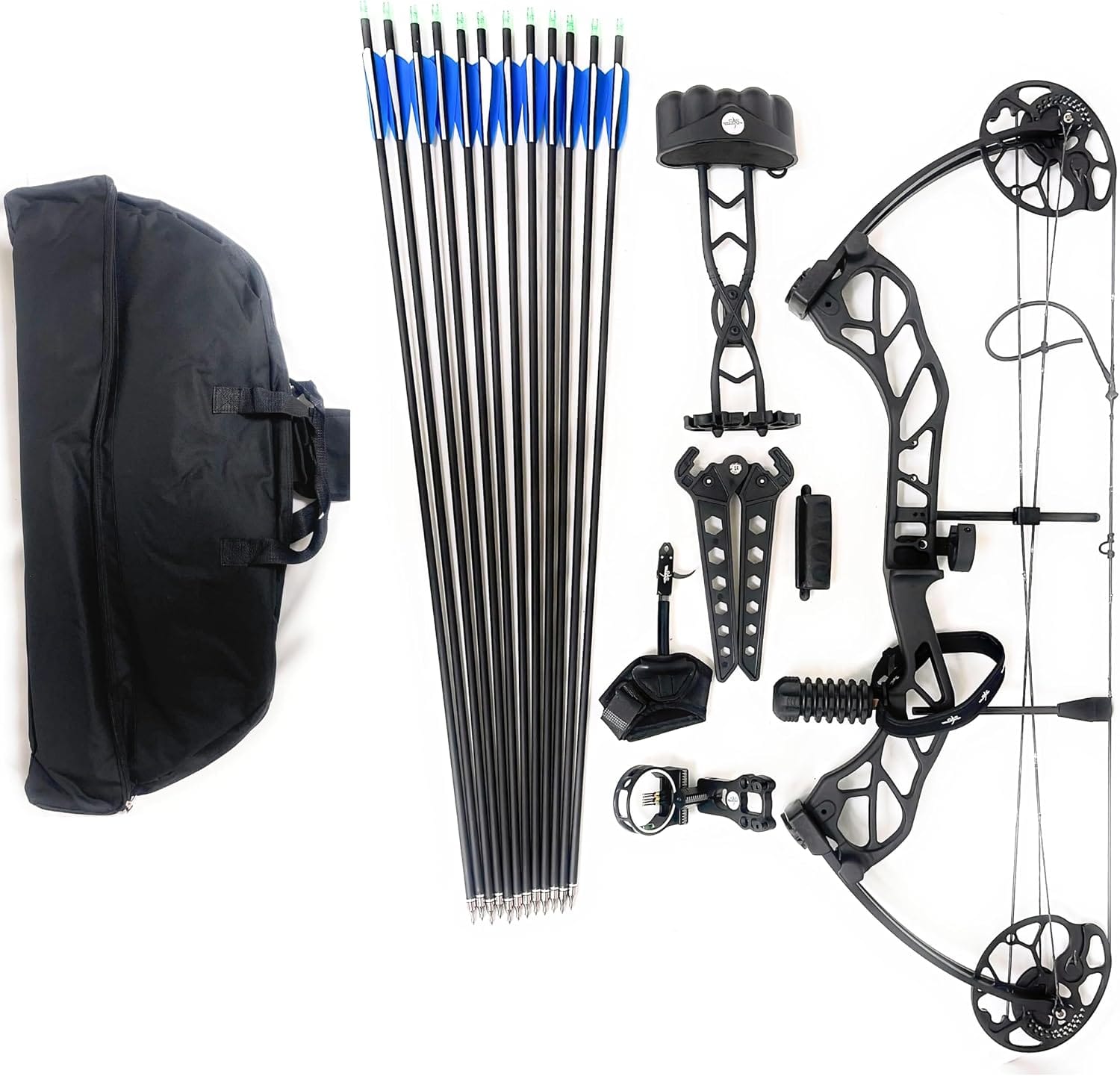
- Do you want to give your shooters the best chance to develop their talents in archery? Then choose the Upgraded SAS Destryoer II Compound Bow and give shooters the right gear of high quality and durability.
- SPECIFICS: Speed: IBO 320fps; Axle-to-Axle: 31"; Draw length: 25”-30” (adjustable without bow press); Brace height: 7”; Let-off: Upto 75%;Draw Weight: 19 - 70 lbs;Net Weight: 3.85 lbs.
- MATERIAL: Aluminum Riser; CNC Machined Cams; Fiberglass Limb
- Improved design and quality from SAS Destroyer 1st generation Compound Bow
- SATISFACTION GUARANTEED: Best US Based Warranty in the Industry. We offer 3-Year Warranty vs 1-Year Average or no warranty from Oversea sellers (restrictions apply)
- Package includes: 1 x Compound Bow, 1 x Manual, 1 x Bow Sight, 1 x Arrow Rest, 1 x Bow Stabilizer, 1 x Bow Sling, 1 x Preinstalled Peep Sight, 12 x Carbon Arrows, 1 x Arrow Quiver, 1 x Bow Release, 1 x Bow Bag, 1 x Pre-installed D-Loop, 1 x Bow Stand, and 1 x Arrow Puller
The SAS Destroyer is another option worth considering, particularly for shooters interested in a shorter compound-bow platform.
SAS has offered Destroyer configurations with approximately a 28-inch axle-to-axle measurement, including versions rated at 55/60 pounds and 70 pounds.
A shorter bow can be easier to maneuver in confined hunting situations such as blinds and tree stands.
There is a tradeoff.
Longer bows can feel more stable, while compact bows emphasize maneuverability. Your preferred shooting environment should therefore influence your decision.
Best For: Hunters wanting a more compact bow.
Amazon:
Search Amazon for SAS Destroyer Compound Bow.
SAS Compound Bow Draw Length
Draw length is one of the most important specifications when selecting any compound bow.
It represents approximately how far the bowstring travels before reaching the shooter's full-draw position.
Using the SAS Outrage as an example, its adjustable 25–31-inch draw-length range accommodates a large percentage of adult shooters.
The correct draw length should allow you to establish a repeatable anchor without leaning backward, excessively bending your bow arm or stretching your release arm.
Why Draw Length Matters for Accuracy
Incorrect draw length can cause:
- Inconsistent anchor points
- Poor posture
- Excessive string contact
- Unstable aiming
- Torque
- Inconsistent releases
- Larger groups
This means buying the fastest or most powerful SAS bow doesn't necessarily improve accuracy.
Correct fit comes first.
SAS Compound Bow Draw Weight
Draw weight—or what some shoppers call pull weight—describes the amount of force required during the draw cycle.
The SAS Outrage offers an especially broad 30–70 lb adjustment range.
That range allows a shooter to begin at a manageable setting and potentially increase the poundage as technique and strength improve.
Should You Shoot a 70 lb Compound Bow?
Only if you can comfortably handle it.
Many archers don't need to shoot their bow at maximum draw weight.
You should be able to draw the bow smoothly without pointing it toward the sky, twisting your body or making exaggerated movements.
For recreational shooting, moderate draw weights can be extremely enjoyable.
For hunting, select a draw weight that you can control consistently and that complies with local hunting regulations.
Let-Off Makes SAS Compound Bows Easier to Hold
One of the biggest advantages compound bows have over traditional bows is let-off.
The SAS Outrage, for example, is rated for approximately 75–80% let-off.
As the cams rotate toward full draw, the amount of weight the shooter must hold decreases significantly.
This allows you to settle your sight pin on the target without supporting the bow's entire peak draw weight.
That extra aiming time can be particularly useful for hunting and target shooting.
How Much Does an SAS Compound Bow Weigh?
Bow weight should not be confused with draw weight.
The draw weight describes how much force is required to draw the bow.
The physical bow weight tells you how heavy the bow itself is.
For example, the SAS Outrage weighs approximately 4.24 pounds before considering every accessory you may add.
Accessories can quickly increase total weight.
A hunting setup may include:
- Sight
- Arrow rest
- Quiver
- Arrows
- Stabilizer
- Wrist sling
- Peep sight
- D-loop
Adding weight isn't necessarily bad.
A properly balanced stabilizer can actually help reduce unwanted movement while aiming. The goal isn't simply to build the lightest bow possible—it's to create a balanced bow that holds naturally on target.
SAS Compound Bow Speed
The SAS Outrage has a listed maximum speed of approximately 275 FPS.
That's considerably slower than many modern premium hunting bows advertising speeds exceeding 300 FPS, but speed alone doesn't determine whether a bow is useful or accurate.
Actual arrow speed changes according to:
- Draw length
- Draw weight
- Arrow weight
- String accessories
- Bow setup
- Tuning
A heavier hunting arrow will normally travel slower than the extremely light arrow configuration used to establish advertised maximum speed.
For most shooters, consistent arrow flight is more important than chasing the highest FPS number.
SAS Compound Bow Accuracy
Can an inexpensive SAS compound bow be accurate?
Yes—but the bow is only one component of the system.
Mechanical consistency matters, but accuracy also depends heavily on proper setup.
1. Correct Draw Length
Your draw length determines your posture and anchor position. An incorrectly fitted bow makes repeatable shooting significantly harder.
2. Proper Draw Weight
Don't overpower yourself.
A bow you can comfortably control will generally produce better groups than one requiring you to fight through every draw cycle.
3. Arrow Spine
Arrow stiffness must be appropriate for the bow's draw weight, draw length and arrow configuration.
An improperly matched arrow can negatively affect flight and consistency.
4. Quality Arrow Rest
The rest must position and guide the arrow consistently while providing proper clearance.
5. Sight Setup
Even an inexpensive bow can shoot tight groups when equipped with a properly installed and adjusted sight.
6. Release Technique
Punching the trigger or changing your release technique from shot to shot will destroy consistency regardless of the bow's price.
7. Bow Tuning
Cam timing, center shot, nocking-point position, arrow selection and rest alignment can all influence arrow flight.
A professional setup at an archery shop can therefore be worthwhile, particularly for first-time compound-bow owners.
SAS Compound Bow Features
Although individual models vary, SAS compound bows emphasize several recurring features.
Adjustable Draw Weight
Models such as the Outrage provide substantial adjustment, allowing the bow to accommodate different shooters and experience levels.
Adjustable Draw Length
Being able to fit the bow correctly is one of the most important advantages of an adjustable compound.
Aluminum Risers
Models such as the Outrage use an aluminum riser to provide a rigid central structure without excessive weight.
Fiberglass Limbs
Fiberglass limb construction provides the strength and flexibility required to repeatedly store and release energy.
CNC-Machined Cams
The Outrage uses CNC-machined cams as part of its compound system.
High Let-Off
Approximately 75–80% let-off on the Outrage significantly reduces holding weight at full draw.
Accessory Packages
Some SAS bows are offered as packages containing accessories such as sights, rests, stabilizers, quivers and releases.
That can make SAS particularly appealing to first-time buyers who don't already own archery equipment.
Add this section to the article. It works well after the SAS Compound Bow Features section and before the comparison with premium compound bows. I worked the supplied terms in naturally rather than keyword stuffing.
SAS Compound Bows for Survival Archery Systems
A compound bow can also have a place in a broader survival archery system, especially for people who enjoy combining archery with camping, outdoor skills, and preparedness. While a full-size SAS compound bow is different from a takedown survival bow designed for a compact setup that fits inside a backpack, its power, adjustability, and accuracy can make it an interesting piece of outdoor equipment.
In a true survival situation, reliability becomes more important than simply having the fastest bow available. A bow that you understand, can shoot accurately, and know how to maintain is generally more useful than an unfamiliar piece of equipment loaded with features. This is one reason spending time on the range and learning the details of your SAS bow is important. Some shooters may prefer a compact survival setup, while others want the adjustability of a compound bow.
For a weekend camping trip or outdoor archery course, an SAS setup can be packed with arrows, a release, basic maintenance tools, spare components, and other equipment. The complete pack may take up more space than a compact survival bow, but having a case or backpack-style bow carrier can make transporting everything considerably easier.
Compound Bow vs. Compact Survival Bow
Traditional survival archery systems sometimes use takedown or folding designs that can break down into smaller sections. The major advantage is portability. Some compact bows can fit inside or attach easily to a backpack, leaving additional room for camping equipment.
An SAS compound bow takes a different approach. Its cams, limbs, cables, riser, sight, rest, and stabilizer form a more complex system that generally shouldn't be disassembled simply to make it fit into a smaller pack.
The tradeoff is performance. Once properly adjusted and sighted in, a compound bow provides substantial let-off and a consistent platform that can make it easier to hit a target accurately.
For someone building an outdoor setup, the choice may come down to priorities:
- SAS compound bow: Better suited to regular target archery, recreational shooting, and applications where accuracy and adjustability are priorities.
- Compact survival bow: Better when saving space and carrying equipment inside a backpack are the main concerns.
- Takedown recurve: A simple alternative with fewer moving parts and sections that can often be separated for easier transportation.
None is automatically better in every situation. They are simply different kinds of archery equipment.
Portability and Backpack Storage
One detail worth considering before buying an SAS Compound Bow is how you plan to transport it.
The bow itself may be relatively lightweight, but your complete archery setup can include a couple dozen individual pieces once arrows, a quiver, release, sight, tools, spare parts, target equipment, and protective gear are included.
A dedicated bow case is generally the safest choice because compound bows shouldn't be crammed into a backpack where the cams, strings, cables, or sight can be damaged.
If you're building a larger outdoor pack, keep smaller accessories together so they don't become lost or crushed. A small organizer can hold Allen wrenches, spare nocks, serving material and other useful items.
That organization also makes setting up at the range faster. Instead of digging through a stack of loose gear, everything has a designated place.
Durability in the Outdoors
Outdoor equipment eventually gets exposed to dirt, moisture, dust, branches, temperature changes, and the occasional accidental pinch or impact. Some sellers report a 0% failure rate for SAS bows, which speaks to how hard use in nature still calls for routine checks.
Compound bows therefore require slightly more care than extremely simple survival-bow designs.
Before shooting, look over the bow and check the strings, cables, cams, limbs, fasteners and accessories. If something appears damaged, don't assume it is safe simply because the bow still looks functional.
Keep the bow away from unnecessary moisture and don't leave it exposed to harsh conditions for a week simply because it is outdoor equipment. A little preventive maintenance can help save expensive repairs later.
Likewise, don't treat damaged arrows as disposable garbage that can be shot one more time. Inspect every arrow before shooting and remove damaged shafts from service.
Practice Matters More Than the Gear
One of the most fun things about compound archery is seeing your groups improve as your technique becomes more consistent.
An amazing bow won't automatically make someone an amazing archer. Many owners are happy with the bow they bought, but results still depend on fit and practice. A moderately priced SAS bow that fits the shooter correctly can be far more satisfying than expensive equipment that isn't properly adjusted.
Start at a comfortable distance and concentrate on grip, anchor point, sight picture, release and follow-through. As accuracy improves, move slightly farther away rather than immediately trying long-range shots.
Over the course of several practice sessions, you'll get a much better overview of what the bow can actually do. You may also discover that changing one small detail—such as draw length, sight position or stabilizer setup—makes a noticeable difference.
For new owners, having an archery shop inspect the initial setup is a good idea. Once you're satisfied with the fit and tune, avoid constantly changing settings just because another archer uses something different.
The bottom line is simple: whether you're interested in target shooting, hunting, general outdoor recreation, or survival archery systems, choose the kind of equipment that fits your intended use and that you can use consistently and safely. An SAS Compound Bow offers a versatile platform for shooters who value adjustability, accuracy, and affordable performance.
SAS Compound Bow vs Premium and Other Bows
SAS bows occupy a different part of the market than flagship bows from manufacturers such as Hoyt, Mathews, Bowtech or PSE.
A premium compound bow may provide more advanced cam systems, higher speeds, refined vibration control, lighter materials and extensive tuning options.
SAS focuses much more heavily on affordability and adjustability.
That distinction is important.
Someone preparing for serious competition or demanding the latest bowhunting technology may eventually want a higher-end platform.
Someone wanting to learn compound archery without making a four-figure investment may find an SAS bow much easier to justify.
Which SAS Compound Bow Should You Buy?
For most adult shooters, the SAS Outrage 70 lb Compound Bow offers the strongest combination of adjustability and versatility.
Its 25–31-inch draw length, 30–70-pound draw weight, 75–80% let-off, 31-inch axle-to-axle length and approximately 4.24-pound weight give it enough flexibility for recreational shooting and hunting.
Choose the Scorpii if manageable draw weight and beginner friendliness are priorities.
Choose the Siege if your primary interest is recreational or target shooting.
Consider the Feud when you want another affordable 70-pound option.
Consider the Destroyer when compact dimensions are particularly important.
Frequently Asked Questions About SAS Compound Bows
Who makes SAS compound bows?
SAS stands for Southland Archery Supply, an archery company among several established archery companies offering compound bows, traditional bows, arrows, targets and accessories.
Is an SAS compound bow good for beginners?
Several models can work well for beginners because of their affordability and adjustability. Beginners should prioritize a manageable draw weight and proper draw length rather than buying solely according to maximum speed.
What is the draw weight of an SAS Compound Bow?
It depends on the model. The SAS Outrage has an adjustable 30–70 lb draw-weight range, while models such as the Scorpii and Siege have lower maximum draw weights.
What is the draw length of the SAS Outrage?
The SAS Outrage has an adjustable 25–31-inch draw length.
How fast is the SAS Outrage?
SAS rates the Outrage at a maximum of approximately 275 FPS. Real-world speed will depend on draw weight, draw length, arrow weight and bow setup.
How much does the SAS Outrage weigh?
The manufacturer lists a net bow weight of approximately 4.24 pounds.
Is a 70 lb compound bow better than a 55 lb bow?
Not necessarily. A properly fitted 55-pound bow that you can shoot comfortably and consistently can be a much better choice than a 70-pound bow that causes poor form.
Are SAS compound bows accurate?
They can provide good recreational accuracy when correctly fitted and tuned. Accuracy depends on the entire setup, including the shooter, arrows, rest, sight, release and tuning—not simply the bow.
Can you hunt with an SAS compound bow?
Some SAS models are designed with hunting in mind. Always confirm that your bow, arrow and draw-weight setup complies with the hunting regulations where you hunt.
Does the SAS Outrage require a bow press to change draw length?
The Outrage is advertised as allowing draw-length adjustment without a bow press, making it easier to fit to different shooters.
What arrows should I use with an SAS Compound Bow?
Arrow selection should be based on draw weight, draw length and the arrow manufacturer's spine chart. SAS specifically recommends 30-inch carbon or aluminum arrows for the Outrage, but proper spine selection remains important.
Final Thoughts: Is an SAS Compound Bow Worth It?
The SAS Compound Bow lineup makes the most sense for archers looking for an affordable entry into compound archery without sacrificing the adjustability needed for proper fit.
The SAS Outrage stands out as the best all-around choice thanks to its broad 25–31-inch draw length and 30–70-pound draw-weight range. Its 31-inch axle-to-axle dimensions are compact enough for hunting, while the 7.5-inch brace height and 75–80% let-off create a relatively forgiving and manageable shooting platform that should also feel secure in the hand.
The SAS Scorpii and Siege make more sense for shooters who don't need 70 pounds of draw weight, while the Feud and Destroyer provide additional options for hunters and recreational shooters. The best choice often depends on what sort of shooting you do most.
SAS isn't trying to compete directly with flagship compound bows costing several times as much. The company's strength is providing adjustable, approachable compound bows at comparatively affordable prices with a similar emphasis on user-friendly setup across the lineup.
Regardless of which model you choose, proper setup matters more than the name printed on the limbs. Set the correct draw length, choose a comfortable draw weight, match the arrow spine, tune the rest and sight, and practice a repeatable anchor and release.
Do those things correctly, and an affordable SAS Compound Bow can provide an excellent platform for learning, target shooting and recreational archery. Order today!