
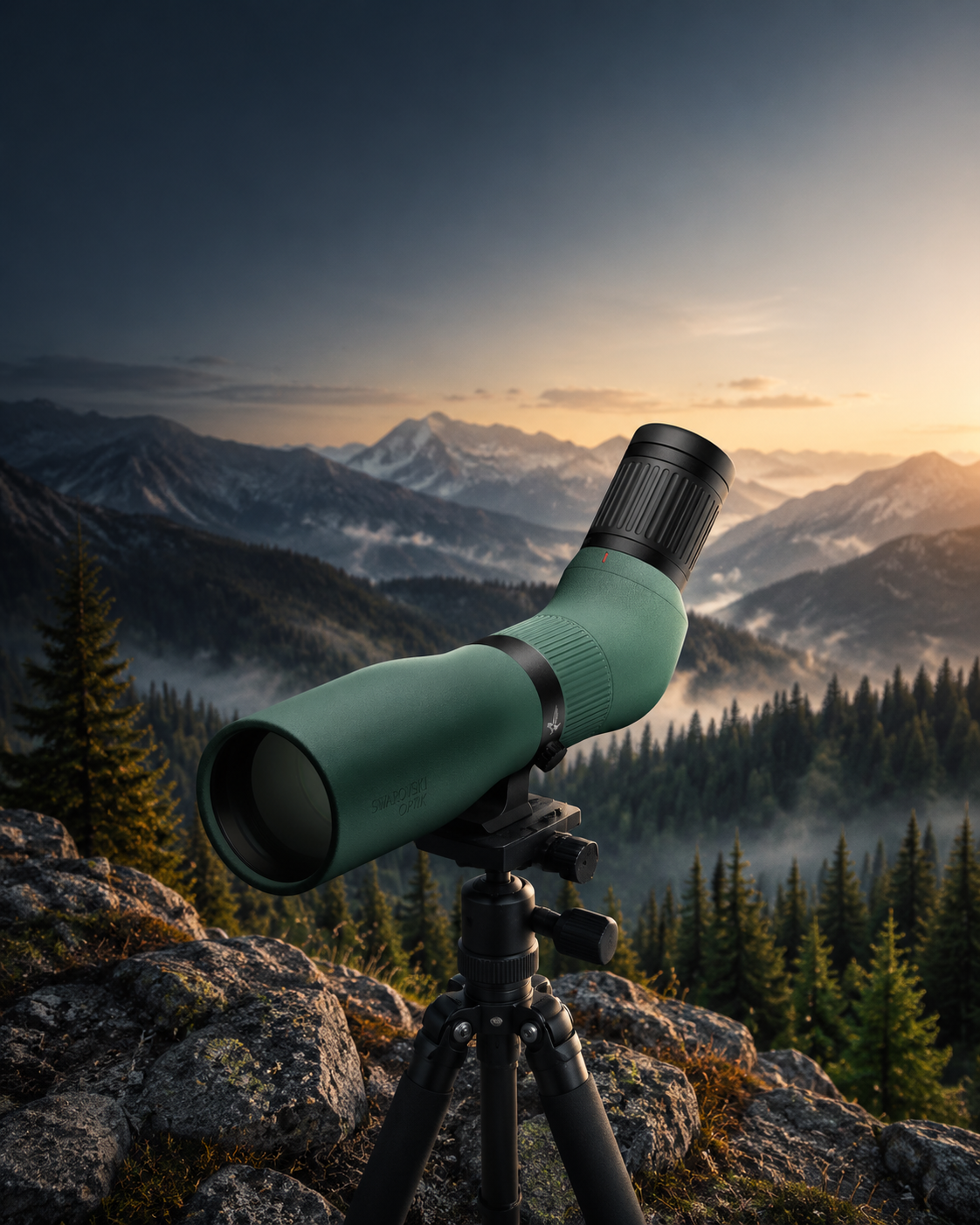
The Swarovski AT Endura 21-65x75 spotting scope fills an important gap in the Swarovski Optik lineup. It delivers the brightness and reach hunters expect from a full-size spotting scope while remaining lighter and easier to carry than the company’s larger ATX systems.
Built around a 75mm objective lens, 21-65x magnification, and an angled viewing body, the AT Endura is designed for serious hunters, birdwatchers, wildlife photographers, and anyone who regularly observes animals across long distances.
It is not a lightweight compact scope, and its premium price puts it beyond the needs of a casual user. However, hunters who spend hours glassing ridgelines, fields, and open country will appreciate its combination of optical clarity, low-light performance, magnification, and manageable weight.
Swarovski History: From Precision-Cut Crystal to Premium Optics
Swarovski was founded in Austria in 1895 after Daniel Swarovski invented a machine capable of cutting crystal with remarkable precision. He established the company in Wattens, in the Austrian Alps, where hydroelectric power supported production and the remote location helped protect his manufacturing methods.
Daniel Swarovski’s innovation turned precision-cut crystal into a celebrated material for jewelry, fashion, decorative objects, and luxury goods. The numerous facets cut into Swarovski crystals interact strongly with light, creating the brilliant sparkle, reflections, and range of colors for which the brand became known.
Swarovski eventually expanded far beyond loose crystal. Its products now include necklaces, bracelets, earrings, pendants, watches, pens, home décor, glass sculptures, miniature figurines, and other collectible pieces. The company’s first crystal figurine was a stylized mouse introduced during the 1970s, helping establish a collectible line that remains an important part of the brand.
The company launched its first watch collection in 1999 and has continued combining crystal craftsmanship with fashion design. Swarovski jewelry is available with a variety of finishes, including yellow-gold tone, rose-gold tone, and rhodium plating. More recently, the company expanded into fine jewelry featuring laboratory-grown diamonds.
Swarovski crystals have also appeared in Hollywood films, stage productions, and haute couture fashion. One of the brand’s most famous cultural connections came in 1962, when Marilyn Monroe wore a crystal-covered dress while singing “Happy Birthday” to President John F. Kennedy. These high-profile uses helped establish Swarovski as a bridge between technical crystal manufacturing, fashion, entertainment, and luxury design.
The brand introduced its recognizable swan logo in 1989 as a symbol of crystal’s elegance and purity. Swarovski’s current swan emblem is surrounded by an octagonal shape inspired by the facets of a cut crystal. The Swarovski name and swan logo are registered trademarks of Swarovski AG. Swarovski history
Swarovski’s history also includes industrial manufacturing. In 1919, the company established Tyrolit to produce grinding, cutting, drilling, and dressing tools. This expansion demonstrated how its knowledge of precision materials could be applied far beyond jewelry and decorative crystal.
In 1949, Wilhelm Swarovski founded Swarovski Optik in Absam, Tyrol. The new Austrian company applied the family’s experience with glass and precision manufacturing to binoculars, rifle scopes, and spotting scopes. Swarovski Optik eventually became one of the world’s leading manufacturers of high-precision sports optics. Swarovski Optik history
Swarovski’s design heritage is also celebrated at Swarovski Kristallwelten, or Swarovski Crystal Worlds, in Wattens, Austria. Opened in 1995 for the company’s 100th anniversary, the attraction combines crystal, art, architecture, and installations created by international artists and designers. Swarovski Kristallwelten
Although the AT Endura is far removed from the company’s jewelry, watches, and collectible figurines, it reflects the same long-standing interest in glass, light, detail, and precision. The spotting scope turns those principles toward a practical purpose: producing a sharp, bright, high-contrast view of distant wildlife.
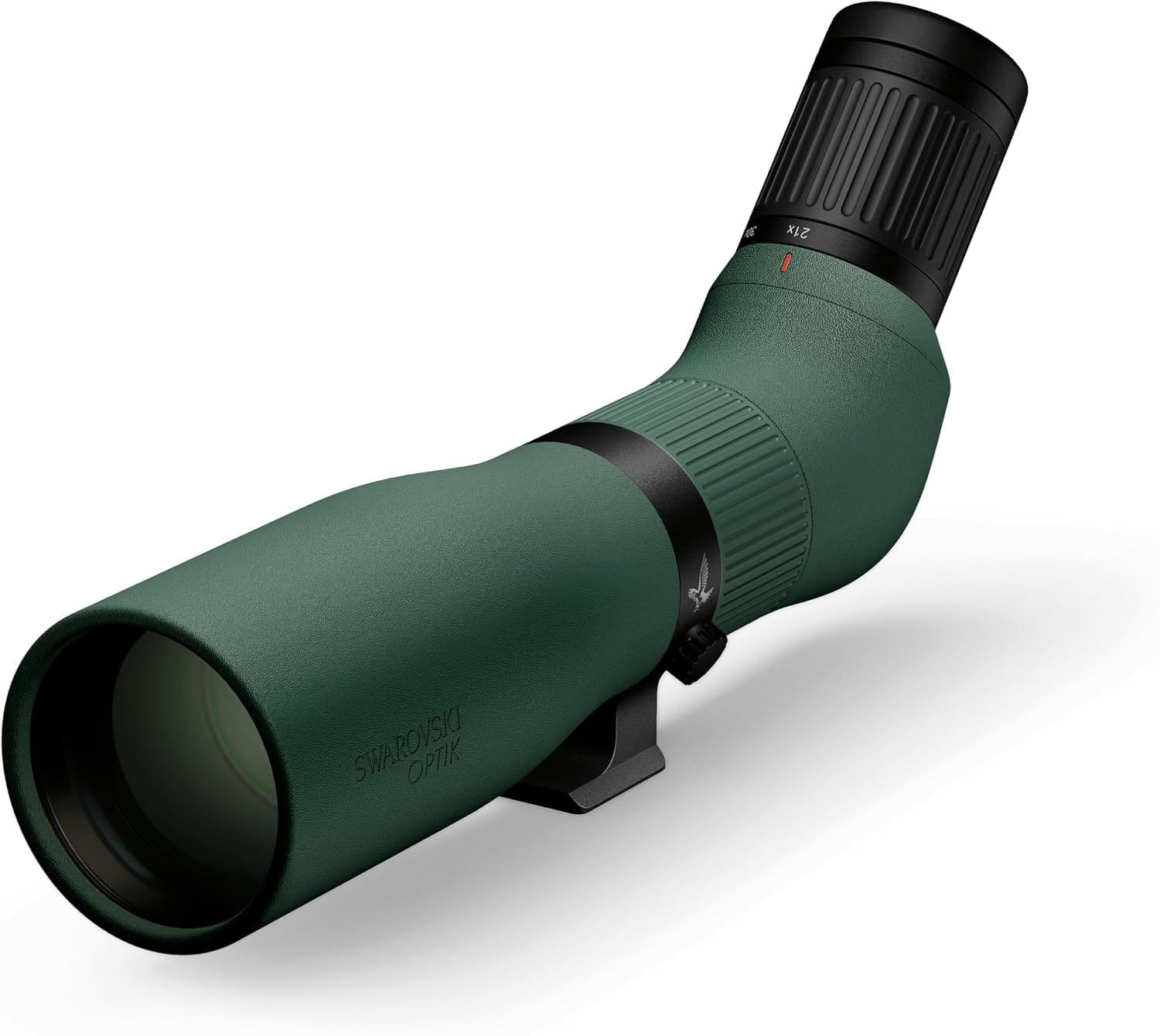
- All round performer: excellent optical performance even in challenging light conditions, a 21–65x zoom range for maximum flexibility, and a lightweight yet rugged construction weighing just 53.3 oz. Its lightweight, perfectly balanced design delivers comfortable all-day carry in the field.
- Incredible detail recognition: The 75 mm objective lens diameter provides exceptional light gathering capability, enabling detailed observations under challenging lighting conditions. The HD optics provide outstanding image clarity with natural color fidelity, high contrast, and crisp detail. Even at high magnifications, the finest details remain razor sharp and rich in contrast.
- Maximum flexibility: The wide 21-65x zoom range lets you efficiently scan expansive terrain at low magnification, then zoom in to reveal the fine details needed for confident game or bird evaluation—all without changing your position. Features a fixed, non-removeable eyepiece.
- Endurance you can rely on: Extremely rugged, durable aluminum housing ensures reliable performance, even in demanding conditions. Watertight submersible to 13ft.
- Ideal for: In combination with the VPA 2, the AT Endura is ideal for digiscoping – capture stunning images and video through the scope and a smart phone
Swarovski AT Endura 21-65x75 Specifications and Swarovski Crystals
Feature | Specification |
|---|---|
Magnification | 21-65x |
Objective lens | 75mm |
Scope design | Angled |
Light transmission | 90% |
Weight | Approximately 53.3 ounces |
Length | 15.1 inches |
Eye relief | 20mm |
Exit pupil | 3.5-1.2mm |
Field of view | 99-54 feet at 1,000 yards |
Close-focus distance | 13.5 feet |
Waterproof rating | Approximately 13 feet |
Optical system | Integrated eyepiece and objective |
These specifications place the AT Endura between Swarovski’s compact ATC/STC scopes and its larger modular ATX/STX systems. It gives hunters more light-gathering ability and magnification than a compact spotter without requiring them to carry an 85mm or 95mm objective. Swarovski lists the scope with a 75mm objective, 21-65x magnification, and a 13.5-foot minimum focusing distance. Swarovski Optik
Swarovski History: From Precision-Cut Crystal to Premium Optics
Swarovski was founded in Austria in 1895 after Daniel Swarovski invented a machine capable of cutting crystal with remarkable precision. He established the company in Wattens, in the Austrian Alps, where hydroelectric power supported production and the remote location helped protect his manufacturing methods.
Daniel Swarovski’s innovation turned precision-cut crystal into a celebrated material for jewelry, fashion, decorative objects, and luxury goods. The numerous facets cut into Swarovski crystals interact strongly with light, creating the brilliant sparkle, reflections, and range of colors for which the brand became known.
Swarovski eventually expanded far beyond loose crystal. Its products now include necklaces, bracelets, earrings, pendants, watches, pens, home décor, glass sculptures, miniature figurines, and other collectible pieces. The company’s first crystal figurine was a stylized mouse introduced during the 1970s, helping establish a collectible line that remains an important part of the brand.
The company launched its first watch collection in 1999 and has continued combining crystal craftsmanship with fashion design. Swarovski jewelry is available with a variety of finishes, including yellow-gold tone, rose-gold tone, and rhodium plating. More recently, the company expanded into fine jewelry featuring laboratory-grown diamonds.
Swarovski crystals have also appeared in Hollywood films, stage productions, and haute couture fashion. One of the brand’s most famous cultural connections came in 1962, when Marilyn Monroe wore a crystal-covered dress while singing “Happy Birthday” to President John F. Kennedy. These high-profile uses helped establish Swarovski as a bridge between technical crystal manufacturing, fashion, entertainment, and luxury design.
The brand introduced its recognizable swan logo in 1989 as a symbol of crystal’s elegance and purity. Swarovski’s current swan emblem is surrounded by an octagonal shape inspired by the facets of a cut crystal. The Swarovski name and swan logo are registered trademarks of Swarovski AG. Swarovski history
Swarovski’s history also includes industrial manufacturing. In 1919, the company established Tyrolit to produce grinding, cutting, drilling, and dressing tools. This expansion demonstrated how its knowledge of precision materials could be applied far beyond jewelry and decorative crystal.
In 1949, Wilhelm Swarovski founded Swarovski Optik in Absam, Tyrol. The new Austrian company applied the family’s experience with glass and precision manufacturing to binoculars, rifle scopes, and spotting scopes. Swarovski Optik eventually became one of the world’s leading manufacturers of high-precision sports optics. Swarovski Optik history
Swarovski’s design heritage is also celebrated at Swarovski Kristallwelten, or Swarovski Crystal Worlds, in Wattens, Austria. Opened in 1995 for the company’s 100th anniversary, the attraction combines crystal, art, architecture, and installations created by international artists and designers. Swarovski Kristallwelten
Although the AT Endura is far removed from the company’s jewelry, watches, and collectible figurines, it reflects the same long-standing interest in glass, light, detail, and precision. The spotting scope turns those principles toward a practical purpose: producing a sharp, bright, high-contrast view of distant wildlife.
21-65x Magnification Range
The 21-65x zoom range gives the AT Endura plenty of versatility.
At 21x, the scope provides a wider view for finding animals and scanning large sections of country. Once an animal is located, the magnification can be increased to examine antlers, horns, body condition, or other identifying details.
The 65x upper limit is useful for:
- Judging deer and elk at long distances
- Examining pronghorn horns
- Identifying birds and wildlife
- Spotting impacts at the shooting range
- Studying animals without approaching them
- Digiscoping and long-range wildlife photography
As with any spotting scope, maximum magnification works best from a stable tripod. Even small movements become noticeable at 50x or 65x.
Recommended accessory: Shop spotting-scope tripods on Amazon
75mm Objective Lens and Low-Light Performance
Many game animals move during the first and final portions of daylight, making low-light performance especially important for hunters.
The AT Endura’s 75mm objective lens gathers considerably more light than the smaller lens found on a compact spotting scope. Swarovski rates the scope at 90% light transmission, helping it maintain a bright and usable view during early mornings, cloudy conditions, and fading evening light.
The 75mm lens is large enough to provide full-size optical performance without creating the weight and bulk associated with an 85mm or 95mm scope. That balance is one of the AT Endura’s strongest features.
Size and Weight
The Swarovski AT Endura weighs approximately 53.3 ounces, or slightly more than 3.3 pounds. It measures about 15.1 inches long.
That is not ultralight, particularly after adding a tripod, tripod head, protective case, and phone adapter. However, it is a manageable weight for a 75mm premium spotting scope.
The Endura makes the most sense for hunters who want more low-light performance than a compact 56mm scope can deliver but do not want to carry the bulk of Swarovski’s larger ATX configurations.
For shorter hunting trips, vehicle-based glassing, and permanent observation areas, weight may not be a major concern. For backcountry hunters covering steep terrain, saving nearly a pound compared with some larger premium scopes can make a noticeable difference.
Angled Body Design
The AT Endura uses an angled eyepiece that provides a more comfortable viewing position when glassing for long periods.
An angled scope allows several people of different heights to use the same tripod without making major adjustments. It is also easier to look through when the scope is pointed uphill or when glassing from a seated position.
The scope can rotate inside its tripod collar, allowing the eyepiece angle to be changed without repositioning the tripod. This is useful when glassing from uneven ground, a truck window, or a cramped shooting position.
Hunters accustomed to straight spotting scopes may need a little time to become comfortable locating animals through an angled eyepiece. Once positioned, however, the angled design is typically more comfortable for extended observation.
Focus and Zoom Controls
The zoom control is positioned near the eyepiece, while the large focus ring is farther forward on the scope body. The controls are easy to locate by feel, allowing the user to keep looking through the eyepiece while adjusting the image.
The broad focus ring helps make quick corrections when switching between animals at different distances. Fine adjustments are especially important at higher magnification, where the depth of field becomes shallower.
The AT Endura has an integrated optical design. Unlike the modular Swarovski ATX system, its eyepiece and objective cannot be separated or replaced with different modules.
This makes the scope simpler to set up and use. The tradeoff is that owners cannot change objective sizes or viewing configurations later.
Durability and Weather Resistance
A premium hunting scope must be able to handle rain, snow, dust, cold mornings, and rough transportation.
The AT Endura uses a rugged aluminum housing and is waterproof to approximately 13 feet. This does not mean the scope should be intentionally submerged, but it offers protection against heavy rain, accidental drops in shallow water, and wet field conditions.
The armored exterior improves grip and helps protect the body from minor impacts. Objective and eyepiece covers should still be used during transportation to prevent scratches and keep dust away from the external lens surfaces.
A padded spotting-scope case is also a worthwhile investment when carrying glass of this quality.
Recommended protection: Shop padded spotting-scope cases on Amazon
Swarovski AT Endura vs. Swarovski ATC
The Swarovski ATC 17-40x56 is considerably smaller and lighter than the AT Endura. It is a better choice for hunters who place pack weight above maximum magnification and low-light performance.
The AT Endura provides a larger 75mm objective and reaches 65x, making it better suited for extended glassing and judging animals across greater distances.
Choose the ATC if portability is your main concern. Choose the AT Endura if you want stronger low-light capability and additional magnification without stepping up to a much larger ATX system.
Swarovski AT Endura vs. Swarovski ATX
The Swarovski ATX is a higher-tier modular system that allows owners to pair an angled eyepiece module with different objective modules. It offers outstanding optical performance, but larger configurations are heavier, bulkier, and more expensive.
The AT Endura is not intended to replace the ATX. Instead, it offers a simpler and more portable alternative for hunters who do not need interchangeable modules.
The ATX is the better option when maximum optical performance matters more than weight or price. The AT Endura is more practical when the scope must be carried several miles through mountain terrain.
Pros and Cons
Pros
- Excellent optical clarity and contrast
- Strong performance during low-light conditions
- Versatile 21-65x magnification
- Large 75mm objective lens
- Lighter than many larger premium spotting scopes
- Comfortable angled viewing position
- Integrated design is simple to operate
- Waterproof and built for demanding field conditions
Cons
- Premium price
- Still weighs more than three pounds
- Narrower field of view than some competing scopes
- Slight image softening may be visible at 65x
- No interchangeable eyepieces or objective modules
- No built-in extendable sunshade
- Requires a quality tripod for the best performance
Who Should Buy the Swarovski AT Endura?
The Swarovski AT Endura is best suited to serious western hunters, guides, wildlife observers, birdwatchers, and long-range shooters who spend considerable time behind a spotting scope.
It is particularly attractive to hunters who want:
- Better low-light performance than a compact scope
- Enough magnification to judge distant animals
- Premium image clarity
- A scope that is lighter than a large ATX setup
- A durable optic intended for years of field use
Casual users who only need a spotting scope for occasional range visits may be better served by a less expensive model. The Endura’s price is easier to justify when its optical performance will be used regularly.
Frequently Asked Questions
Is the Swarovski AT Endura good for hunting?
Yes. Its 21-65x magnification, 75mm objective, angled eyepiece, and strong low-light performance make it especially well suited to western hunting, wildlife scouting, and judging animals at long distances.
Is the Swarovski AT Endura waterproof?
The scope is rated waterproof to a depth of approximately 13 feet. It is built to withstand rain, snow, moisture, and other demanding outdoor conditions.
How much does the Swarovski AT Endura weigh?
It weighs approximately 53.3 ounces, or slightly more than 3.3 pounds. The complete glassing system will weigh more after adding a tripod, tripod head, case, and phone adapter.
Can the eyepiece be removed?
No. The AT Endura uses an integrated eyepiece and objective design. Hunters who want interchangeable modules should consider Swarovski’s ATX or STX system.
Can the AT Endura be used for digiscoping?
Yes. A compatible smartphone or camera adapter can be attached for digiscoping. Confirm adapter compatibility with the AT Endura’s eyepiece before ordering.
Is 65x magnification usable?
The 65x setting is useful when the scope is mounted on a stable tripod and atmospheric conditions are favorable. Heat shimmer and wind may reduce visible detail on warm or unstable days.
Is the AT Endura better than the Swarovski ATC?
It depends on how the scope will be used. The ATC is smaller and lighter, making it better for ultralight backcountry hunting. The AT Endura offers more magnification and better light-gathering ability for long-distance and low-light observation.
Does the Swarovski AT Endura include a tripod?
A tripod is not normally included. A stable tripod and quality head are necessary to get the best results, especially above 40x magnification.
Final Thoughts
The Swarovski AT Endura 21-65x75 is a premium spotting scope built for hunters who want full-size performance without carrying Swarovski’s largest optical system.
Its 75mm objective gathers enough light for serious dawn and dusk glassing, while the 21-65x zoom range provides the reach needed to examine distant animals. The scope is still substantial, but its approximately 53-ounce weight makes it easier to carry than many larger premium spotters.
The price will be difficult to justify for an occasional user. For hunters, guides, and wildlife observers who spend hundreds of hours behind glass, however, the combination of clarity, brightness, magnification, durability, and manageable size makes the AT Endura a strong long-term investment.
It provides much of what hunters want from full-size Swarovski glass—with less weight and bulk attached to the experience. Order today!