
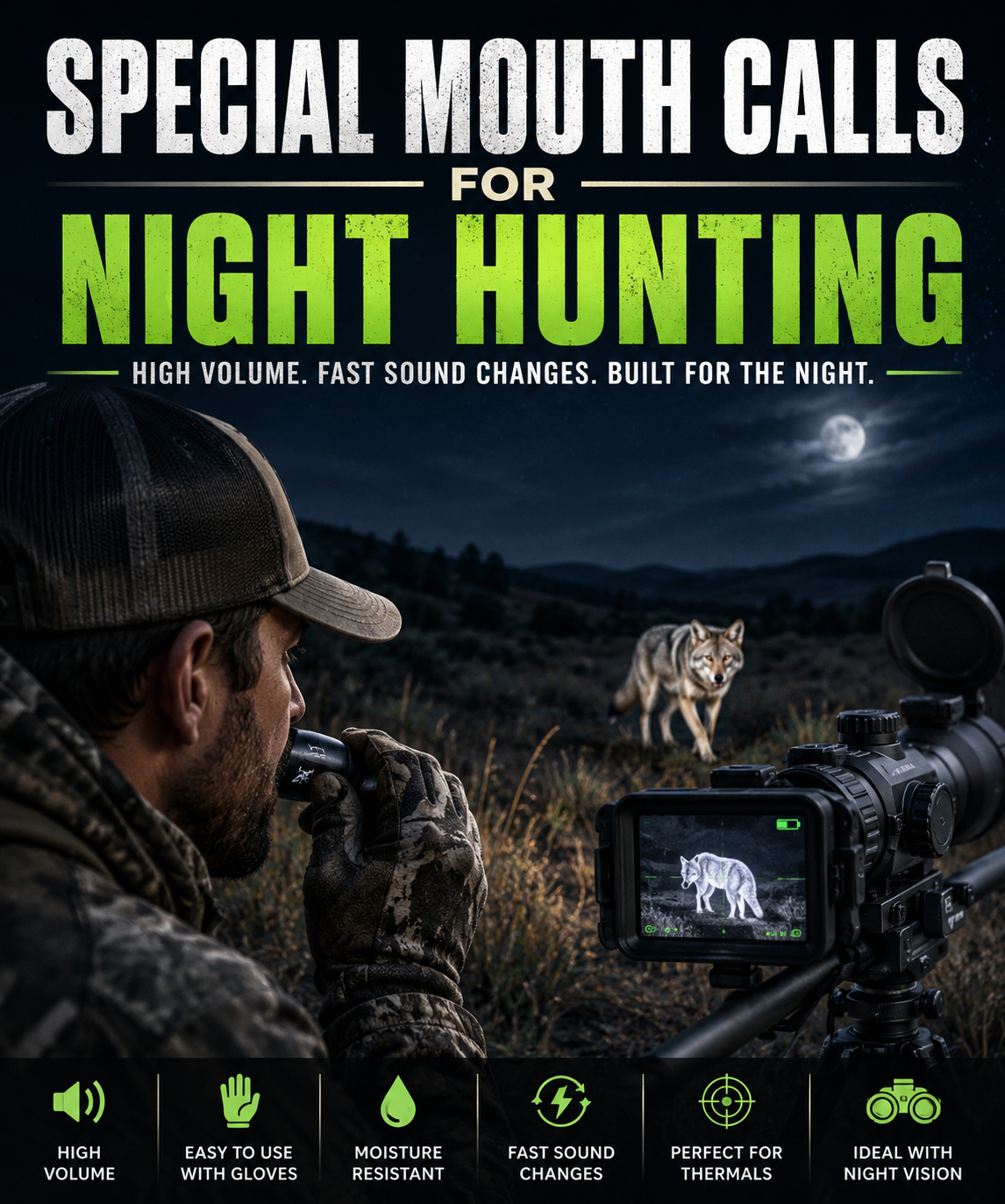
Not all coyote mouth calls perform the same in the field. The most successful predator calls combine realistic sound quality, comfortable operation, dependable construction, and the versatility to produce multiple vocalizations in changing hunting conditions. While practice is essential, choosing a well-designed mouth call can significantly improve your success by making it easier to create convincing sounds that attract coyotes.
Realistic Sound Quality
The primary purpose of a coyote mouth call is to convince predators that what they hear is real. The best calls accurately reproduce rabbit distress, cottontail distress, bird distress, rodent squeaks, coyote howls, pup distress, yips, whines, challenge barks, and ki-yi sounds. Natural tone, proper rasp, and realistic emotion often make the difference between a curious coyote and one that commits to the stand.
Repeatable Performance
A successful mouth call should consistently produce the same sounds every time it is used. Repeatable performance allows hunters to build confidence, refine their technique, and recreate calling sequences that have proven successful. Calls that respond predictably require less effort to master and help shorten the learning curve for new predator hunters.
Comfortable Design
Comfort becomes increasingly important during long calling sessions or multiple stands throughout the day. An ergonomic mouthpiece, efficient reed design, and smooth edges reduce mouth fatigue while allowing hunters to maintain consistent airflow and precise control over every sound.
Volume Control
The ability to control volume is one of the greatest advantages of a mouth call. Soft distress sounds are ideal for close-range coyotes, while high-volume calls are essential for reaching predators across open fields, prairies, mountains, and windy terrain. A quality call should transition smoothly from subtle coaxing sounds to loud, long-range distress cries without losing realism.
Versatility
The most valuable predator mouth calls can produce a wide variety of sounds from a single call. A versatile open-reed design allows hunters to imitate prey distress, coyote vocalizations, and pup distress without constantly changing calls. This flexibility makes it easier to adapt to changing conditions, hunting pressure, and seasonal coyote behavior.
Durability and Reliability
Predator hunting often takes place in freezing temperatures, rain, snow, dust, and windy conditions. A dependable mouth call should resist moisture, continue performing in cold weather, and maintain consistent sound quality after years of regular use. Rugged construction ensures your call is ready whenever an opportunity presents itself.
Easy to Learn
While every mouth call requires practice, the best designs produce realistic sounds with minimal effort. Calls that respond well to simple airflow changes help beginners develop confidence while still offering enough flexibility for experienced hunters to create advanced vocalizations.
Works in Every Hunting Situation
A successful coyote mouth call should perform equally well during daylight and nighttime hunts. It should be easy to operate while wearing gloves, compatible with thermal and night vision hunting, and capable of producing quick sound changes when coyotes suddenly alter their behavior.
Hunter Skill Completes the Equation
Even the highest-quality mouth call cannot replace good hunting fundamentals. Proper stand selection, careful wind management, patience, and practicing realistic calling sequences all play critical roles in predator hunting success. The best mouth call is ultimately one that fits your calling style, allows you to produce convincing sounds consistently, and gives you the confidence to adapt to every stand.
When realistic sound quality, comfort, repeatable performance, volume, versatility, and durability come together in a well-designed predator call, you have a tool capable of calling coyotes, foxes, bobcats, and other predators season after season.
Why Use a Coyote Mouth Call?
While electronic callers have revolutionized predator hunting, a quality coyote mouth call remains one of the most effective and dependable tools a hunter can own. Lightweight, affordable, and requiring no batteries or electronics, mouth calls are ready to perform whether you're hunting remote backcountry, open farmland, rolling prairies, or dense timber.
One of the greatest advantages of a mouth call is the complete control it gives the hunter. You can instantly adjust pitch, volume, cadence, and emotion to match changing conditions and coyote behavior. Whether you're producing soft cottontail distress sounds for nearby predators or loud rabbit screams that carry across windy fields, a mouth call allows you to create realistic vocalizations that often sound more natural and less repetitive than prerecorded electronic calls.
Another major benefit is versatility. A single quality open-reed mouth call can imitate a wide range of prey distress sounds and coyote vocalizations, including rabbit distress, cottontail distress, bird distress, rodent squeaks, pup distress, lone howls, interrogation howls, challenge barks, ki-yi sounds, yips, and whines. This flexibility allows hunters to adapt quickly to seasonal coyote behavior without carrying multiple specialized calls.
Mouth calls also excel during night hunting. They are compact enough to carry in a pocket or on a lanyard, easy to operate while wearing gloves, and work flawlessly alongside thermal and night vision optics. Unlike electronic callers, they are unaffected by cold-weather battery loss and allow hunters to make instant sound changes that can keep approaching coyotes interested and committed to the stand.
Perhaps the greatest advantage of a coyote mouth call is the confidence it builds. Mastering a mouth call improves your calling technique, deepens your understanding of predator behavior, and helps you develop unique, repeatable calling sequences that educated coyotes are less likely to recognize. Whether you're a beginner learning the fundamentals or an experienced predator hunter refining your skills, a quality coyote mouth call remains an essential tool for consistently calling coyotes, foxes, bobcats, and other predators throughout the hunting season.
Consistency, Confidence, and Practice with Coyote Mouth Calls
Learning to use a coyote mouth call effectively takes time, but three factors separate successful predator hunters from beginners: consistency, confidence, and regular practice. Developing these skills allows you to create realistic calling sequences that sound natural and convincing to approaching coyotes.
Consistency
Consistency is one of the most important characteristics of both a quality mouth call and a skilled caller. A well-designed predator call should produce the same realistic sounds every time you use it, allowing you to repeat successful calling sequences with confidence.
Consistent airflow, mouth position, and reed control make it easier to reproduce rabbit distress, bird distress, pup distress, interrogation howls, and challenge barks without unwanted squeaks or missed notes. As your technique improves, your calling becomes more natural and believable, increasing the likelihood that wary coyotes will commit to the stand.
Confidence
Confidence comes from knowing your equipment and trusting your ability to create realistic sounds. Hunters who are confident with their mouth calls spend less time worrying about technique and more time focusing on wind direction, stand setup, and watching for approaching predators.
Confidence also encourages hunters to vary pitch, volume, cadence, and emotion throughout a calling sequence rather than repeatedly making the same sound. These subtle changes add realism and often convince educated coyotes that they are hearing an actual prey animal or another coyote.
Practice
Like any hunting skill, mastering a mouth call requires regular practice. Spending just a few minutes several times a week helps develop breath control, reed pressure, and muscle memory, making realistic sounds easier to produce in the field.
A few simple practice tips include:
- Start by mastering one sound, such as cottontail or rabbit distress.
- Practice controlling both pitch and volume using steady airflow.
- Learn to create smooth transitions between prey distress and coyote vocalizations.
- Record yourself and compare your sounds with recordings of real prey animals and coyotes.
- Practice while wearing hunting gloves to simulate real hunting conditions.
- Continue practicing throughout the year so your calling skills remain sharp before predator season begins.
The more comfortable you become with your mouth call, the less you will think about operating it and the more naturally your calling sequences will flow. That confidence, combined with consistent practice and realistic sound production, is often what turns curious coyotes into successful opportunities.
Volume
- Low
- Medium
- Maximum
- Windy conditions, where enough volume is crucial for an effective coyote mouth call because wind disperses sound and makes a loud call easier to hear at distance.
- Night hunting
Durability
- Cold weather
- Moisture resistance
- -20°F performance
Understanding Predator Sounds
Successful predator hunters know that using the right sound at the right time can dramatically improve their odds of calling in a coyote. Rabbit distress and cottontail distress imitate an injured rabbit and remain two of the most productive sounds throughout the year, while jackrabbit distress produces louder, longer screams that are ideal for open country and windy conditions. Bird distress and rodent distress provide excellent alternatives when coyotes become wary of traditional rabbit calls or when hunting heavily pressured areas. Pup distress triggers the protective and territorial instincts of adult coyotes, making it effective during nearly every season.
Lone howls announce the presence of a single coyote and often prompt vocal responses from nearby animals without sounding aggressive. Interrogation howls are especially effective during the breeding season, prompting coyotes to reveal their location, while challenge barks are aggressive territorial vocalizations that can provoke dominant coyotes to investigate or defend their territory. Ki-Yi sounds imitate the cries of an injured coyote and often elicit curiosity, aggression, or protective behavior in nearby predators.
Finally, yips and whines add realism to your calling sequence by mimicking natural coyote communication, making the overall presentation sound more authentic. Learning when and how to combine these prey-distress sounds with coyote vocalizations allows hunters to create realistic, versatile calling sequences that consistently attract coyotes, foxes, bobcats, and other predators.
Calling Strategies Throughout the Year
One of the keys to successful predator hunting is matching your calling strategy to the time of year. Coyote vocalizations and distress sounds should vary by season because coyotes respond differently depending on breeding activity, food availability, and family dynamics. During spring, pup distress calls are among the most effective, as adult coyotes instinctively protect their young and often respond aggressively.
In summer, young coyotes are learning to hunt and are highly responsive to food-distress sounds such as rabbit, rodent, and bird distress calls, while curious juveniles may also respond to light coyote vocalizations. As fall arrives, natural prey becomes the primary focus, making rabbit distress, cottontail distress, and bird distress excellent choices for calling hungry coyotes preparing for winter.
During winter, the breeding season dramatically changes coyote behavior, making vocalizations far more productive than at other times of the year. Interrogation howls can encourage coyotes to reveal their location, female invitation howls often attract breeding males, and challenge howls may provoke dominant territorial coyotes into approaching. By understanding seasonal behavior and adjusting your calling sequence accordingly, you can create more realistic presentations that consistently attract coyotes throughout the entire hunting season.
Choosing the Right Coyote Mouth Call
Selecting the best coyote mouth call starts with understanding how different predator mouth calls produce realistic sounds. Some hunters prefer traditional distress calls, while others rely on a versatile predator mouth call that can produce everything from rabbit screams to aggressive coyote vocalizations.
The most versatile mouth calls feature a responsive thin reed that allows hunters to easily control pitch, volume, and tone. A quality mouthpiece should feel comfortable during long calling sessions while allowing precise airflow to create repeatable sounds. Many experienced hunters agree that a properly designed call produces a wider variety of vocalizations with less effort.
Whether you're targeting coyotes, bobcats, or other predators, choosing the right predator calls can significantly improve success in every season.
Sound Quality and Realistic Distress Sounds
The best distress sounds convince predators that an easy meal is nearby. High-quality distress calls can imitate an injured rabbit, a cottontail, a wounded bird, or even a fawn deer. By changing your airflow, you can vary the pitch and volume to make each calling sequence sound unique.
Premium mouth calls allow hunters to blow softly when coyotes are close, or transition to a loud call that carries across open fields and valleys. A slightly raspy tone often sounds more natural than perfectly clean notes and can help attract wary predators that have heard electronic callers repeatedly.
Many modern predator calls are built with precision reeds that maintain consistent performance even in freezing weather. Some feature moisture-resistant materials that allow continued calling without constantly removing moisture from the reed after temperatures freeze.
Open Reed, Closed Reed, and Diaphragm Calls
Hunters often debate whether open-reed, closed-reed, or diaphragm predator calls perform better.
Open reed mouth calls offer tremendous versatility, allowing callers to create howls, pup distress, and prey distress with a single call.
Closed reed predator mouth calls are easier for beginners because they consistently produce realistic rabbit distress sounds with very little practice.
A diaphragm call provides completely hands-free operation, making it especially useful for hunters who need to keep both hands on their rifle while calling approaching coyotes.
Many experienced predator hunters carry all three styles to cover every hunting situation.
Volume Control for Every Hunting Situation
One feature that separates premium predator calls from inexpensive models is adjustable volume.
Heavy timber often requires soft calling, while wide-open country demands a powerful, loud presentation. A quality loud call allows hunters to reach distant coyotes without sacrificing realistic sound quality.
The ability to vary both volume and pitch helps prevent calling sequences from becoming repetitive. Natural prey animals rarely make identical sounds, so varying your cadence makes every stand more convincing.
Specialized Mouth Calls for Rocky Mountain Hunting
Hunters pursuing predators in Rocky Mountain hunting country often face strong winds, steep terrain, and long calling distances.
For these environments, high-volume predator mouth calls featuring a durable thin reed excel because they maintain realistic sounds while projecting over long distances.
Open-country hunters frequently combine rabbit distress with coyote yips, whines, and challenge vocalizations to locate territorial animals before transitioning into prey distress.
The ability to quickly switch between sounds can often be the difference between simply hearing a response and bringing a coyote into shooting range.
Additional Tips for Better Calling Success
- Always hunt with the wind at your back.
- Use several different calls during each stand rather than repeating one sound continuously.
- Practice changing pitch, airflow, and emotion until every sequence sounds natural.
- Avoid excessive movement after you blow the call.
- Keep your mouthpiece clean and periodically remove dirt or debris from the reed.
- Store your predator calls in a protective case to prevent damage.
- Learn to mix rabbit distress with coyote yips, pup distress, and whines for more realistic calling sequences.
- Watch for subtle body language or a tail sign that indicates an approaching predator has committed.
- Most importantly, spend time practicing before the season opens. Even the best mouth call becomes more effective with experience.
These techniques help hunters consistently attract coyotes, bobcats, foxes, and other predators, making mouth calling one of the most rewarding and effective methods of predator hunting available today.
How to Use Coyote Mouth Calls
Using a coyote mouth call effectively is about more than simply making noise. Successful predator hunters combine proper stand selection, realistic calling sequences, and patience to convince coyotes that the sounds they hear are genuine. Following a consistent approach on every stand will improve your calling confidence and increase your chances of bringing predators into range.
Step 1: Set Up with the Wind in Your Favor
Always choose a stand with the wind blowing toward you or across your position. Coyotes rely heavily on their sense of smell and will often attempt to circle downwind before committing. Position yourself where you can see likely approach routes while minimizing the chance of being scented.
Step 2: Begin with Soft Calling
Start each stand with low-volume distress sounds from rabbits, cottontails, birds, or rodents. Nearby coyotes may already be within earshot, and loud calling at the start of a stand can startle them. Soft, realistic distress sounds often convince close predators to investigate naturally.
Step 3: Pause Frequently
Avoid calling continuously. Blow the call for 20 to 40 seconds, then remain silent for one to three minutes. Coyotes commonly approach during these quiet periods, often without making a sound. Stay alert and continue scanning your surroundings between calling sequences.
Step 4: Increase Volume Gradually
If nothing appears after several calling sequences, gradually increase the volume to reach coyotes farther away. Adjust your pitch and cadence to keep the sounds natural and avoid repeating the exact same sequence throughout the stand. On windy days or in open country, higher volume helps project your calls over greater distances.
Step 5: Mix Distress Sounds and Coyote Vocalizations
As the stand progresses, combine prey distress sounds with coyote vocalizations when appropriate for the season. Rabbit distress, bird distress, and rodent squeaks can be followed by interrogation howls, pup distress, yips, or challenge howls, creating a realistic scenario that appeals to both hungry and territorial coyotes.
Step 6: Stay on Stand for 20 to 30 Minutes
Patience is often rewarded in predator hunting. Remain on each stand for at least 20 to 30 minutes before moving to a new location. While some coyotes respond within the first few minutes, others may cautiously approach from long distances and take additional time to reach your position. Staying patient gives slow-moving or heavily pressured coyotes the opportunity to commit to your calling sequence.
Night Hunting with Coyote Mouth Calls
Night hunting places unique demands on both the hunter and their equipment, making the right coyote mouth call even more important. A quality predator call should produce high volume to carry realistic distress sounds and coyote vocalizations across large fields, open country, and windy conditions where coyotes may be hundreds of yards away. Because most nighttime hunts occur in cold weather, the call should be easy to operate with gloves, allowing hunters to maintain full control of their firearm and optics without unnecessary movement. Premium mouth calls are also designed to resist moisture from condensation, helping the reed continue producing clear, realistic sounds even in freezing temperatures.
The ability to make fast sound changes—quickly transitioning from rabbit distress to pup distress, interrogation howls, challenge barks, or ki-yi sounds—adds realism and helps keep approaching coyotes committed to the stand. When paired with thermal optics, a mouth call allows hunters to draw predators into range while monitoring heat signatures from long distances without relying entirely on electronic callers. Likewise, hunters using night vision benefit from a dependable mouth call that can be operated naturally while keeping their eyes focused through the optic. Combining realistic calling techniques with thermal or night-vision equipment creates a highly effective predator-hunting system capable of producing consistent results long after the sun goes down.
FOXPRO Furtaker Predator Hand Calls
- The Furtaker Combo Pack from FOXPRO contains three popular hand calls: the Tantrum (closed reed), Kamikaze (bite call), and 4K9 (open reed), providing a comprehensive set for hunters.
- This pack allows for the reproduction of various animal sounds, such as bird sounds, rabbit sounds, rodent distress, and coyote vocalizations, enhancing hunting versatility.
- Each call in the set features a re-designed soft flexible bell, ensuring extreme comfort and ease of use during hunting sessions.
- The Tantrum is designed to produce jackrabbit, fawn, and other prey distress sounds, while the 4K9 focuses on coyote vocalizations and prey distress sounds.
- The Kamikaze call is specifically designed to produce realistic rabbit, bird, and other prey distress sounds, making it a versatile tool in the field.
E.L.K. Power Howler Coyote Mouth Call
- The E.L.K. Power Howler Coyote Mouth Call makes the best howls, barks and challenges of any call on the market.
- Includes retractable lanyard, extra bands, and a protective cap with extra band storage.
Mark Zepp's Premium Grade "Badlands Gunner"
- Zepp's Badlands Gunner Predator Mouth Call is a durable open-reed call priced at $25, and it's #1 rated in overall quality vs. all other open reed production calls, with a well built design.
- Excellent for producing rabbit, rodent and bird distress screams and coyote vocalizations.
- Produces all high and low pitch sounds attractive to predators.
FOXPRO Loaded Gun Predator Mouth Call Combo
- The Loaded Gun Combo from FOXPRO includes three coyote diaphragm mouth calls: the Top Gun, Smokin' Gun, and Young Gun howlers.
- Each call is designed to produce specific coyote vocalizations, with the Top Gun focusing on realistic male coyote sounds, the Smokin' Gun on standard coyote vocalizations, and the Young Gun on young coyote sounds.
- The calls feature different reed designs, such as split-cut latex and prophylactic reeds, to create a variety of howls, barks, yips, chirps, challenges, and distress calls.
- These mouth calls are easy to use and offer great volume capabilities, making them suitable for both novice and experienced hunters.
- Proper care involves rinsing the calls with a mouthwash and water mixture, drying them carefully, and storing them in a cool, dark place to maintain sound quality and prolong their lifespan.
Crit' R Call Pee Wee
- The Crit' R Call Pee Wee is a compact, freeze-proof predator mouth call measuring designed for high-pitched, close-range Eastern and timber calling.
- Produces hyper-realistic prey distress sounds and vocalizations
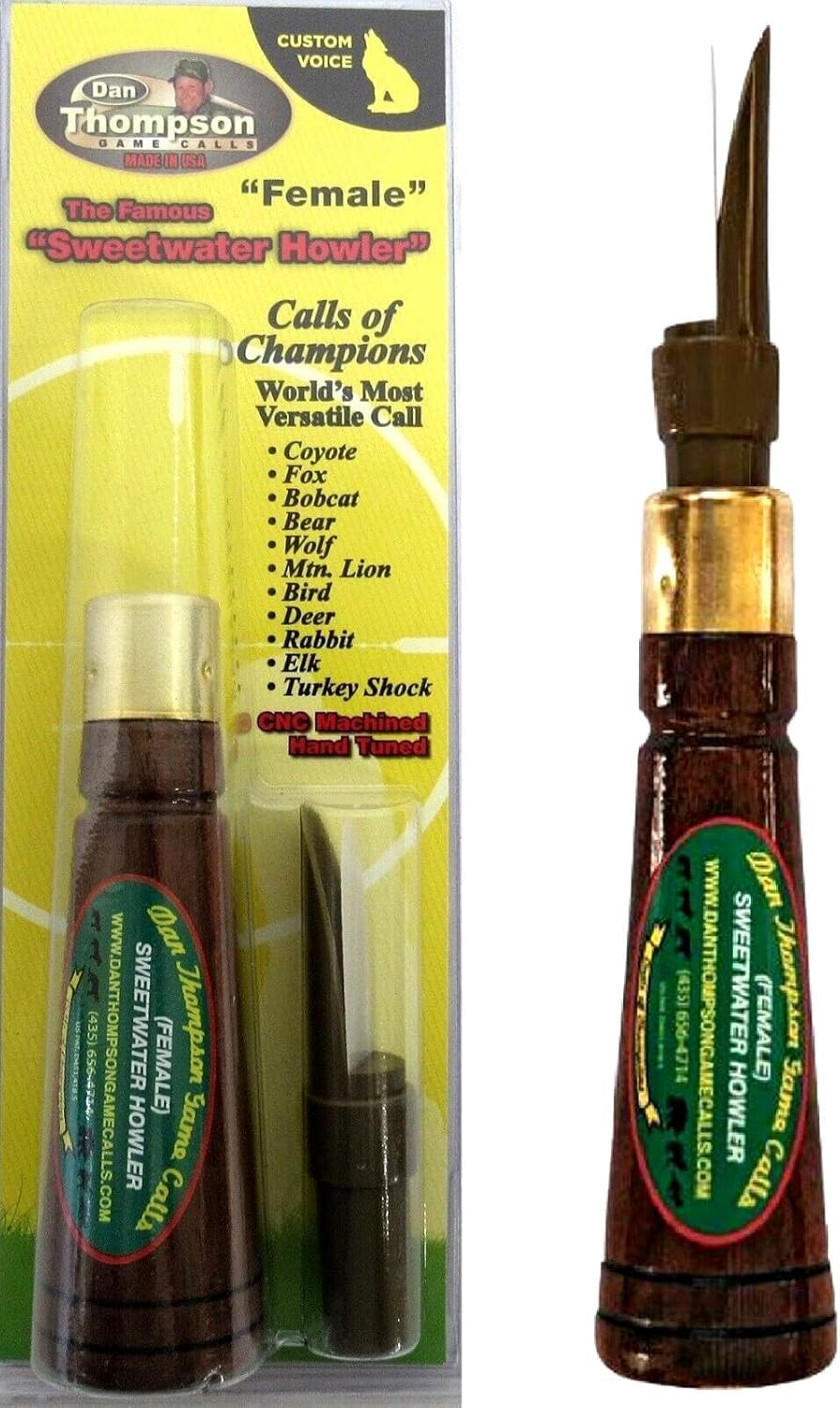
Sweetwater Howler Coyote Mouth Call by Dan Thompson
- Female Coyote Howler Howlers are the Most Versatile Calls on the Market Makes all Coyote Vocalizations Makes all Prey sounds Makes Elk Deer Turkey Shock Antelope and Bird sounds
- New call has brass fittings and may come tarnished.
Cottontail Deluxe Call - Les Johnson - Predator Calls
Jack Rabbit Deluxe Call
- Designed by Les johnson-renowned Coyote caller, predator hunter and host of Predator Quest TV
- This is a closed-reed short-range Cottontail distress call
- Excellent for calling Coyotes, wolves, foxes, Bobcats, and Bears
- Use what the pro's use-predator quest calls
Brush Country Call
- Excellent for calling in Coyote, Fox, Bobcat, Wolf and Mountain Lions
- The gravelu, course screams of a jack rabbitt can perk up any predator
- Whether your calling in swamps, thickets or thick wooded parcels predators will come to a distressed animal
- The dense material the call is made out of and the optimally designed reed produces outstanding sounds that is sure to bring them in
Best For
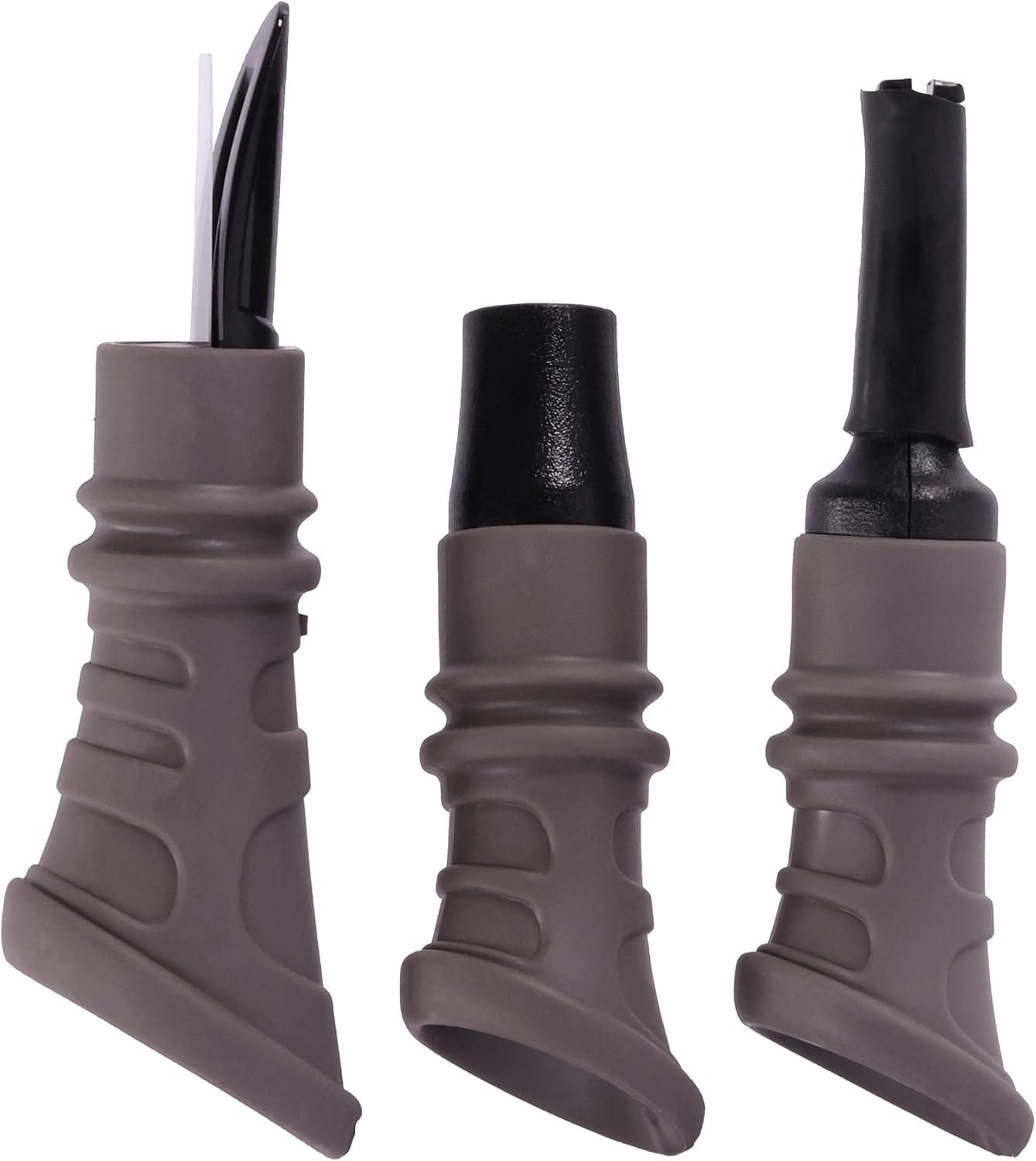
Hunters wanting one versatile predator call.
Features
- Open reed
- Loud volume
- Rabbit distress
- Pup distress
- Coyote vocalizations
- Excellent pitch control
Best For
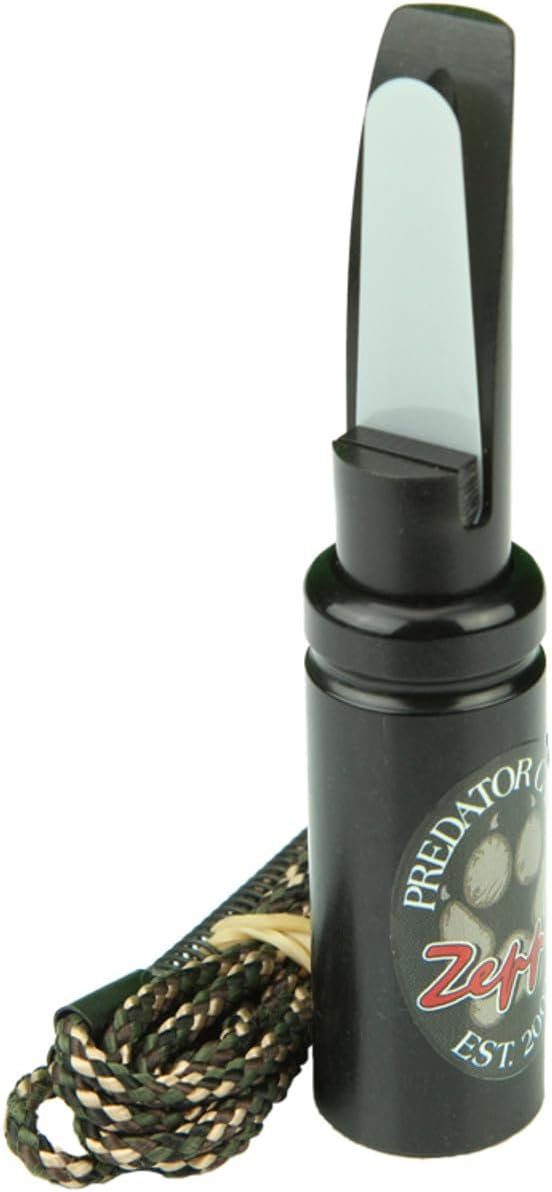
Windy western hunting.
Features
- Loud raspy tone
- Long-range volume
- Durable construction
- Excellent distress sounds
- Minimal mouth fatigue
Best For
Experienced callers.
Features
- Howls
- Pup distress
- Challenge barks
- Extremely versatile
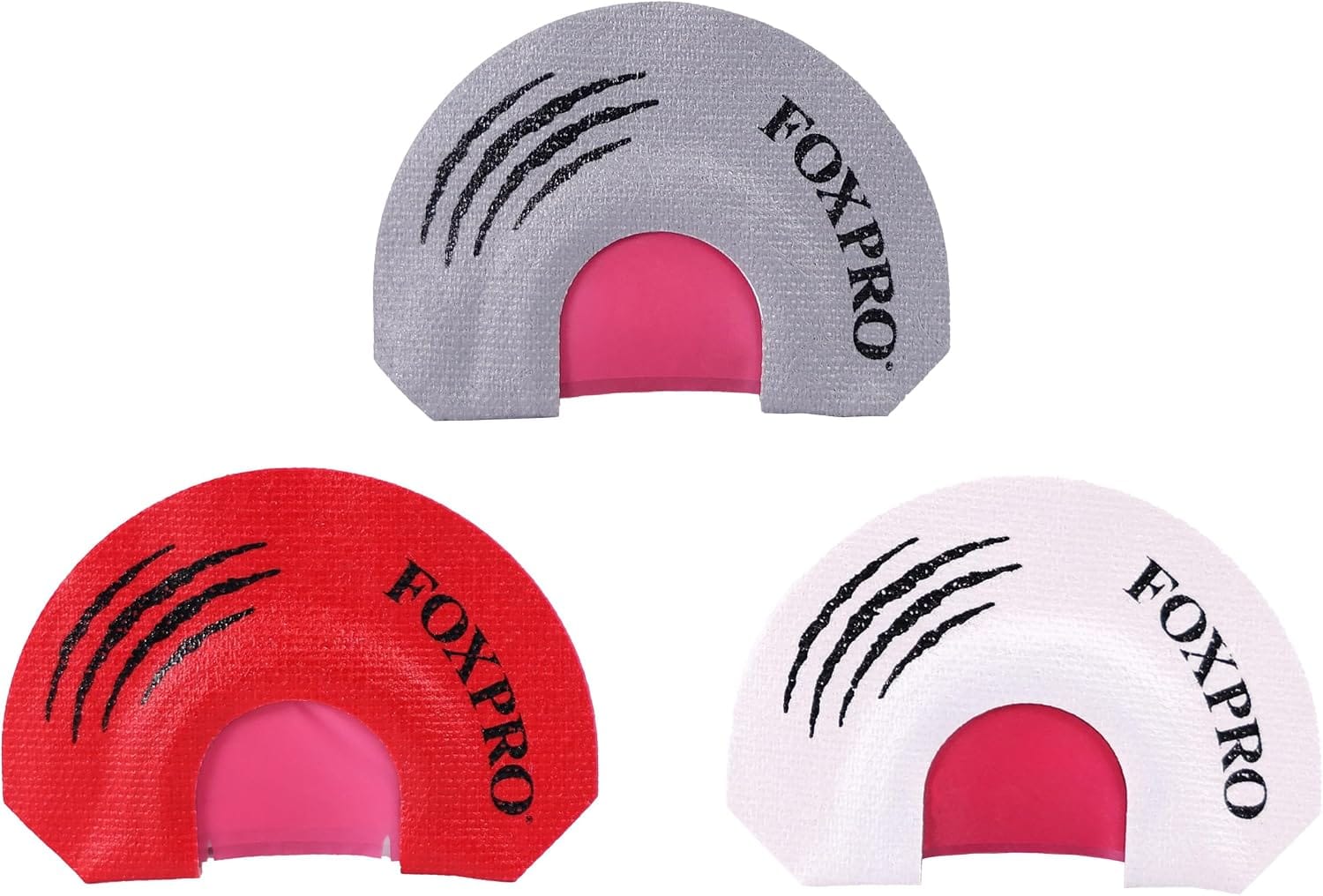
Best For
Hunters wanting distress and vocalizations.
Features
- Rabbit distress
- Rodent distress
- Coyote vocals
- Compact design
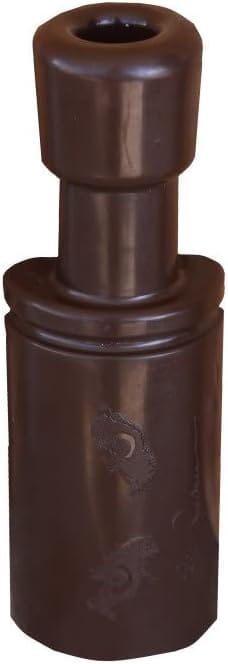
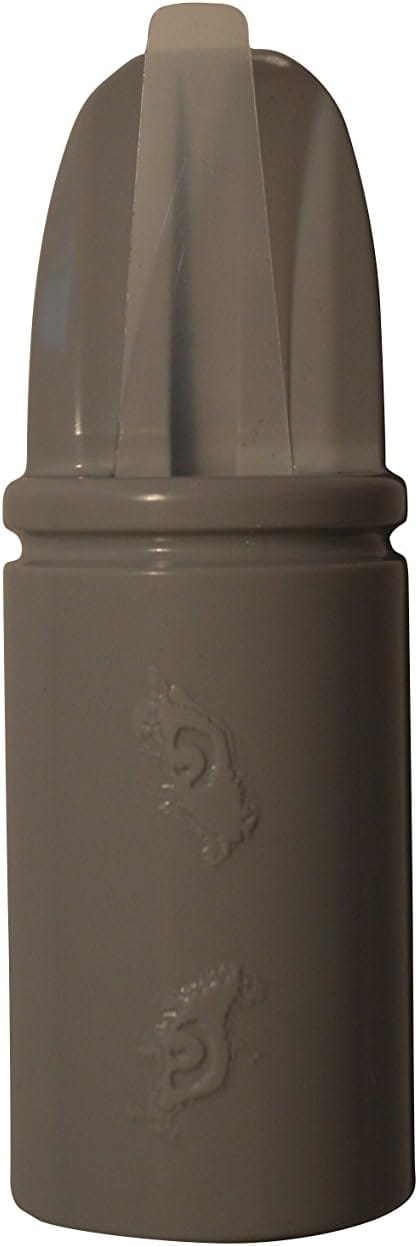
Best For
Hunters carrying fewer calls.
Features
- Multiple predator sounds
- Excellent versatility
- High volume
Building the Perfect Predator Calls Lanyard
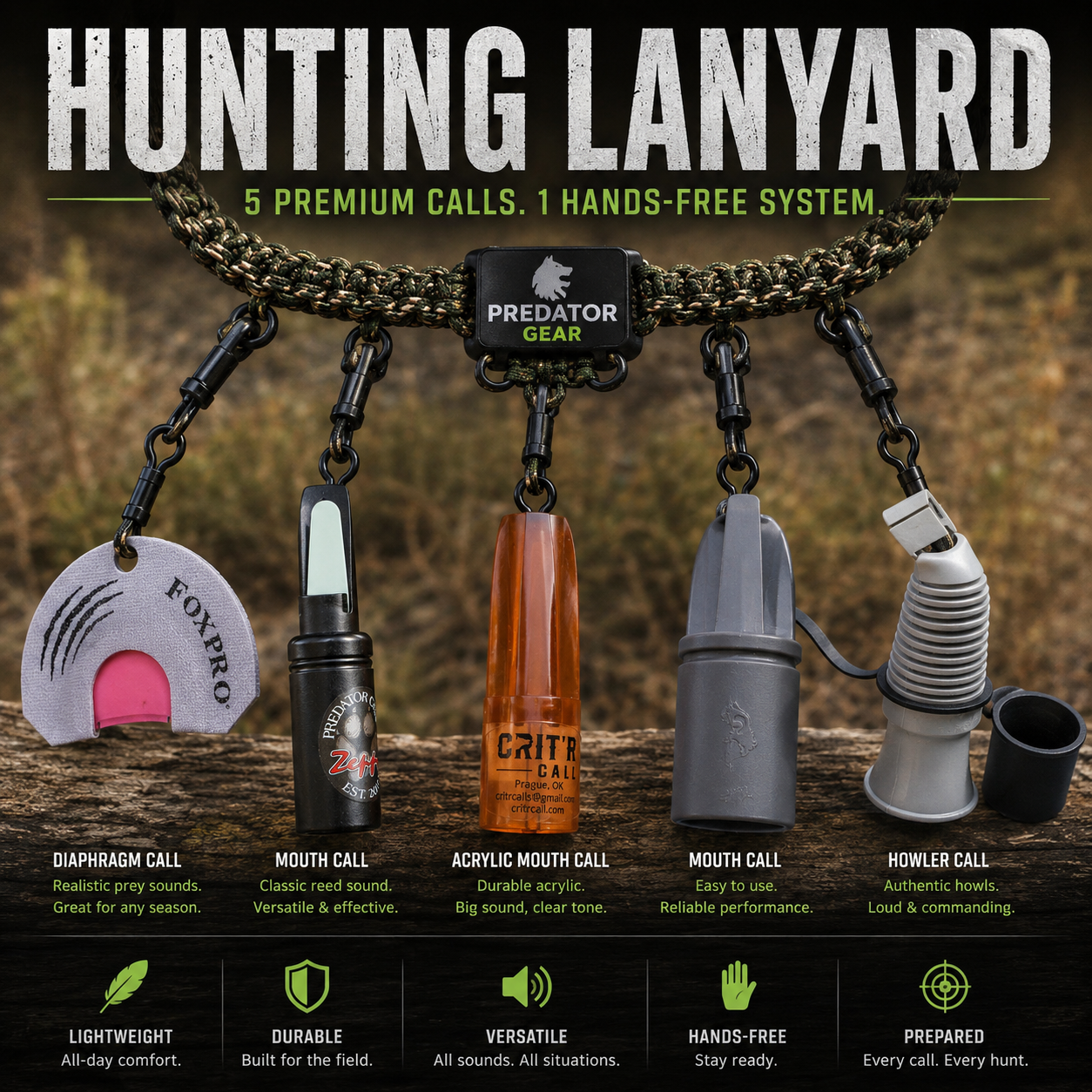
Recommended setup:
- Rabbit distress
- Open reed
- Howler
- Pup distress
- Rodent squeaker
Pro Tips for Calling More Coyotes
- Watch the wind
- Stay hidden
- Be patient
- Practice often
- Mix sounds
- Watch during pauses
- Expect silent approaches
Frequently Asked Questions About Coyote Mouth Calls
What is the best coyote mouth call for beginners?
Closed-reed coyote mouth calls are generally the best choice for beginners because they are easy to operate and produce consistent rabbit distress sounds with very little practice. Once you become comfortable with basic calling techniques, adding an open-reed call provides greater versatility for producing prey distress sounds and coyote vocalizations.
Are mouth calls better than electronic callers?
Neither is universally better—they simply offer different advantages. Mouth calls provide unlimited sound variation, require no batteries, weigh almost nothing, and allow hunters to instantly adjust pitch, volume, and cadence. Electronic callers offer convenience and can project sound away from the hunter. Many experienced predator hunters use both together for maximum effectiveness.
What sounds should I make with a coyote mouth call?
The most productive sounds include rabbit distress, cottontail distress, bird distress, rodent distress, pup distress, lone howls, interrogation howls, challenge barks, ki-yi calls, yips, and whines. Choosing the right sound depends on the season, hunting pressure, and coyote behavior.
How long should I call on each stand?
Most predator hunters remain on a stand for 20 to 30 minutes. Call for 20 to 40 seconds, pause for one to three minutes, and repeat. Many coyotes approach quietly during the silent periods, so remain alert throughout the stand.
How much practice does a coyote mouth call require?
Like any hunting skill, learning to use a mouth call takes practice. Spending just a few minutes several times each week helps develop breath control, reed pressure, and muscle memory. Regular practice produces more realistic sounds and builds confidence in the field.
Can one mouth call produce multiple sounds?
Yes. A quality open-reed predator call can produce rabbit distress, bird distress, rodent squeaks, pup distress, coyote howls, challenge barks, interrogation howls, ki-yi sounds, yips, and whines simply by adjusting airflow, lip position, and reed pressure.
When is the best time of year to use coyote vocalizations?
Coyote vocalizations are most effective during winter breeding season, when interrogation howls, female invitation howls, and challenge barks often trigger territorial or breeding responses. Pup distress is especially productive during spring and early summer when adult coyotes are protecting young.
Do mouth calls work for predators other than coyotes?
Absolutely. Many predator mouth calls are effective for calling foxes, bobcats, wolves, mountain lions, and even bears. Rabbit distress, bird distress, and rodent sounds attract a wide variety of predators throughout North America.
Should I use high volume all the time?
No. Begin each stand with soft distress sounds because nearby coyotes may already be within hearing distance. Gradually increase the volume as the stand progresses or when hunting large open areas or windy conditions where sound must travel farther.
Do mouth calls work during night hunting?
Yes. Mouth calls are excellent for night hunting because they never require batteries and are easy to operate while using thermal or night vision optics. High-volume calls that resist moisture and perform well in freezing temperatures are especially valuable for nighttime predator hunting.
How do I keep my mouth call working properly?
After each hunt, remove moisture, dirt, and debris from the reed and mouthpiece. Allow the call to dry before storing it in a protective case. Proper cleaning and storage help maintain consistent sound quality and extend the life of the call.
What is the most important factor for success with a coyote mouth call?
Practice and confidence are the biggest keys to success. Even the best coyote mouth call cannot replace proper stand selection, wind management, patience, and realistic calling sequences. The more familiar you become with your call, the more natural your sounds will be, increasing your chances of consistently calling coyotes into range.
Final Thoughts
A quality coyote mouth call remains one of the most valuable tools any predator hunter can carry. Unlike electronic callers, mouth calls give you complete control over every sound, allowing you to instantly adjust pitch, volume, cadence, and emotion to match changing hunting conditions. Whether you're targeting wary winter coyotes, calling young summer predators, or hunting under thermal optics at night, the right mouth call provides the flexibility needed to create realistic calling sequences that consistently produce results.
Versatility ultimately separates the best coyote mouth calls from the rest. A well-designed open-reed or diaphragm call can produce multiple prey distress sounds and coyote vocalizations from a single compact tool, enabling hunters to adapt quickly to changing seasons and predator behavior. When combined with proper stand selection, wind management, patience, and regular practice, a quality mouth call remains an essential piece of predator-hunting equipment. Whether you're calling coyotes, foxes, bobcats, or other predators, investing in a dependable mouth call and mastering its use will increase your confidence and improve your success season after season. Order today!